

Stockholders of San Clemente-based medical device maker Glaukos Corp. (NYSE: GKOS) got an early Christmas gift last month, as the product failure of a competitor firm in the emerging micro-invasive glaucoma surgical (MIGS) sector sent the company’s stock up about 40% to an all-time high, while adding about a billion dollars to its market value.
Now, the challenge for the 17-year-old firm is to convince Wall Street, ophthalmologists and prospective recipients of its devices that Glaukos won’t suffer the same fate as its competition.
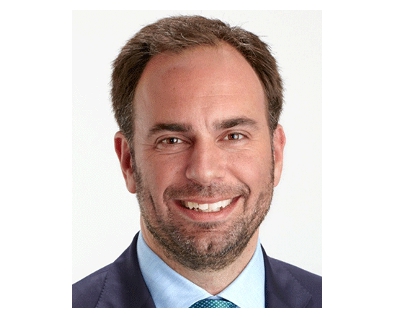
“We’ve seen the same information you have,” Chief Financial Officer Joseph Gilliam said during a Sept. 5 investor presentation, a week after Fort Worth, Texas-based competitor Alcon pulled its MIGS device, the CyPass Micro-Stent, from the market, citing a lack of efficacy. “It’s been a busy seven days.”
Alcon, a division of Swiss pharmaceutical company Novartis AG (NYSE: NVS) that has a large base of employees in Irvine and Lake Forest, has stated that it hopes to reintroduce the CyPass product in the future.
Glaukus and Alcon are two of the four firms—Irvine-based Ivantis Inc. and New Jersey-based Allergan PLC are the others—that have received Food and Drug Administration approval for their respective MIGS offerings, which are implantable stents designed to drain excess fluid from the eye to alleviate intraocular pressure.
High pressure, caused by an imbalance in fluid production and drainage, damages the optic nerve and can cause glaucoma and permanent vision loss.
Glaucoma is the world’s second-leading cause of blindness, affecting more than 80 million people around the world, according to the National Institutes of Health. Drugs make up the bulk of the glaucoma treatment and prevention market, but MIGS devices are the fastest-growing sector in the field; industry projections call for $900 million in revenue by 2021, up from $100 million in 2016.
MIGS procedures are not stand-alone procedures, but conducted in conjunction with cataract surgery.
Based on the data they’ve seen, Alcon’s issues are “not market-related, but specific to the product,” Gilliam said, during a presentation at the Wells Fargo Healthcare Conference in Boston.
That said, the FDA likely will “have more stringent reviews” for MIGS devices going forward, he said.
13 Years of Testing
Glaukos—a pioneer in the MIGS device category—has history in terms of product performance, Gilliam told attendees at the Sept. 5 conference.
The company is “13 years” into testing its product and has plenty of data to support its safety, he said.
“It might be different if we were two to three years in,” said Gilliam, who also serves as senior vice president of corporate development for the company.
Alcon pulled its product based on new analysis of five-year post-surgery data.
Glaukos recieved FDA approval for the first MIGS device, iStent Trabecular Micro-Bypass, in 2012. It also received approval for a second generation device in June.
He said with one less company advocating for MIGS, Glaukos plans to increase marketing efforts to increase awareness and adoption.
“One benefit of having additional competition is that additional shared voice, additional marketing dollars and additional feeds on the street talking about the category,” he remarked of Alcon’s exit. “With CyPass being withdrawn … moving forward, it’s on us to continue market awareness and grow adoption.”
Despite the Alcon setback, the MIGS industry will continue to grow, according to Thomas Brunner, president and chief executive officer of the nonprofit Glaucoma Research Foundation in San Francisco.
“MIGS is here to stay,” said Brunner. He pointed out that patient adherence to medication is a constant challenge for drugmakers and their ophthalmologist partners, making surgical devices an attractive option.
While Alcon’s recall raised questions about MIGS—the company said five years post-surgery results showed patients, who underwent CyPass Micro-Stent and cataract surgery, experienced “significant endothelial cell loss compared to the group who underwent cataract surgery alone,” Brunner said it’s important to note that each MIGS device is different, such as the location where the implant is placed in the eye.
“Like any new treatment it will take many years to find which patients benefit the most and have the least risk of a poor outcome,” Brunner said.
In regards to Alcon’s recently reported post-surgery results, “we haven’t seen [those types] of corneal health issues” in follow-up studies, Gilliam said.
Stock Spike, Then Dip
Wall Street seems receptive to Glaukos’ confidence in its product.
The company’s stock price jumped from $45 to $68 in a matter of days after the Alcon announcement.
Since then it has fallen a bit, to $63 as of last week, giving it a $2.2 billion market value.
Large shareholders in the company include Janus Henderson Group, Capital World Investors and Vanguard Group, according to public filings.
Alcon’s issue had an outsized effect on Glaukos’ stock; the next big stock mover could be a court case taking place it the firm’s backyard, regarding it and Ivantis, which in early August got FDA approval for its Hydrus Microstent product, its first MIGS device.
Glaukos sued venture-backed Ivantis in April alleging its Microstent device infringes on Glaukos’ iStent. Ivantis disputes the allegations and has filed its own counterclaims.
Both Glaukos’ iStent and the Ivantis’ Microstent are placed in Schlemm’s canal—the eye’s natural drainage pathway—while the Alcon and Allergan MIGS devices are inserted elsewhere in the eye.
A scheduling conference regarding the Glaukos and Ivantis litigation is set for Monday, Sept. 17 at 10 a.m. before U.S. District Judge James Selna at the Ronald Reagan Federal Building in Santa Ana, according to court filings.
Gilliam noted at the Wells Fargo conference that his company had not filed for a preliminary injunction against Ivantis as part of its lawsuit. The company’s yet to disclose its legal strategy in the matter, he said.
