
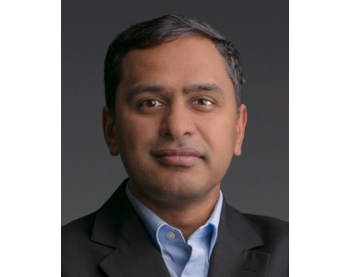
Artificial intelligence is currently the trendiest buzzword in Silicon Valley’s venture capital world, according to Rahul Kashyap.
“Everyone is in love with AI. AI is the current mega-trend in Silicon Valley. If you have it, it’s easier to raise funding.”
If anyone can spot an investment in AI, it’s the worldwide chief technology officer at Cylance Inc., the privately held security software maker in Irvine that uses it to prevent malware from infecting computers.
Prior to Cylance, Kashyap was chief security architect at Bromium, a Silicon Valley security startup that attracted investments from top venture capitalists, such as Andreesen Horowitz and Intel Capital.
But it was at McAfee Inc. where Kashyap made a mark, leading worldwide threat research from 2007 to 2011. It was also there that he met Stuart McClure and Ryan Permeh, who in 2012 started Cylance, where sales jumped 283% in fiscal 2017 to an estimated $231 million.
Kashyap has been instrumental in building several key security technologies, such as web-application firewalls and microvirtualization. He’s been awarded patents, written research papers, spoken at security conferences, and was named to Silicon Valley’s 40 under 40 by the Silicon Valley Business Journal in 2013.
The 39 year old, a graduate of India’s Birla Institute of Technology & Science, has been offered chief executive jobs but turned them down because he said he has more to do at Cylance.
This year, the company entered the consumer market with the CylancePROTECT Home Edition. It’s working on products to satisfy European government privacy needs, and plans to offer an integrated platform of its products.
As a side job, he’s an adviser to The Hive LLC, a Silicon Valley-based incubator for companies disrupting the security, big data, and Internet of Things sectors. He estimated he’s mentoring about a half-dozen companies there.
In his spare time, he follows a “personal passion” to encourage Los Angeles high school students to learn computer skills.
Kashyap, who lives in Foster City and commutes from Silicon Valley, visited the Business Journal’s office to discuss with Financial Editor Peter J. Brennan how investors can spot AI. Here’s an edited excerpt of the conversation.
How would you describe Cylance?
Cylance is focused on the end-point security industry, desktops, laptops, servers. What we’re displacing are legacy anti-virus companies—the McAfees, Symantecs—that have been there for decades.
It’s a well-established vertical within cybersecurity. It’s very fragmented. Just because you solve one problem doesn’t mean you solve all the problems.
The total addressable market for the end-point security industry is $10 billion. We are enterprise-focused, but we launched a low-cost product to consumers a few months ago.
What is your competitive advantage?
McAfee is a well-established brand, but it slows down machines, it isn’t efficient, and it still gets infected. It’s still not as effective as you’d expect it to be.
How would you describe your job?
I’m responsible for products, which means the strategy, the industry trends, which direction we are supposed to head. Security is a fast-paced industry. Products that were made 10 years ago are obsolete in some departments. My job is to make sure our products are relevant at solving real-world problems for our customers. It’s a pretty big problem. It’s a fun job.
How do you define artificial intelligence?
I’d divide AI into two areas. One is the Hollywood style that goes beyond the realms of human intelligence. That is a separate study.
What we do is tied to a specific problem. For example, AI to play chess and defeat humans is a narrow application for the game of chess. That AI cannot take on other things. Our focus is AI to prevent malware infections. It’s a narrow and specific-use specification.
Ten years ago, malware was in a few hundred thousand viruses. But when you’re dealing with malware on an internet scale with billions of pieces of malware, humans cannot manage it.
We’re leveraging our knowledge of malware and automating that into a vast training area that we have created. How we train the AI is the secret sauce of Cylance.
What is the difference between AI and data analytics?
Data analytics is a very basic analysis of data, such as an Excel spreadsheet converted into a pie chart.
AI is using deep algorithms where you predict what the next data set will be.
What does a shrewd investor like you look for to determine if a company really has AI?
I advise a lot of VC firms in the Valley. They keep confronting this problem all the time—is it really AI, or is it just a buzzword?
I built some simple metrics that anyone without an AI background can identify.
First, companies are built on people and talent. If a company says it has AI, look at the background. Are there employees who have Ph.D.s in mathematics and statistics? It doesn’t mean they’re the best at AI, but at least they have some foundation. Look at the background of the engineers. How much time have they spent in AI? There are not enough data scientists who have the skills—that’s the hottest job in the market.
It’s not a 100% perfect way of looking at it, but you get an estimation of the quality of the people and their capabilities.
Two, I ask pointed questions. I keep on digging. Is the company using off-the-shelf software? AI needs dedicated planning and advanced skills. Just taking something off the shelf doesn’t make you an AI company. If they are doing that, fine, but they have to demonstrate how it’s better than what anyone else is doing.
Then I do a technical due diligence, asking more questions about AI. Then I ask security questions to understand their expertise in the area.
What excites you when you’re evaluating whether to invest in a company?
I have a trick question. After I listen to the pitch, I say, “This is not for you.”
Their reaction determines where they are in the journey of becoming an entrepreneur. If someone says no to you, and you walk away, you’re not ready to be an entrepreneur. Being a successful entrepreneur is how you deal with no.
If you challenge me, then I’m ready to listen to you. If you are mentally tough, suddenly avenues open up.
That sounds like the TV show ‘Shark Tank.’ What do you think of the show?
Really? I don’t watch ‘Shark Tank’ that often. Maybe I should.
What turns you off?
In the technology industry, people have this thing that they know too much.
I used to be one of those guys when I was in grad school where I thought I was the smartest guy in the room. As I have progressed through life, the less I know. Being humble is important to me.
If you are confident, I love that. If you are overconfident, I don’t like that.
It’s a delicate line. If you are overconfident, it becomes a weakness very fast. You have to do a personality analysis. Sometimes I’ve made wrong judgments. Once I mistook a very young guy to be overconfident, but he was actually persistent. The way he talked sounded arrogant, so he just needed some polishing in skills of coming across.
The more I spend time mentoring, the more I myself learn.
What’s a mistake you made?
In the early 2000s at my first startup, I built a very complex solution, and it was very advanced.
We thought we had the best product in the market. People didn’t see the value. The lesson learned is that we sometimes get too engulfed in the problem. We think as engineers and stop thinking as consumers.
No matter how advanced your solution is, if consumers cannot appreciate it and cannot see the value, they won’t use it.
Every time I’m mentoring entrepreneurs, I keep reminding them that ultimately, your solution will be successful only when people use it. The user experience and customer satisfaction are keys.
Why is so much more money invested in Silicon Valley than in OC?
Perhaps because Silicon Valley is an established, dense population, and they create their own circle of influence around them.
There should be more here. Orange County has a good pool of talent, and it has the universities. I love the weather—I can actually walk on the beach here.
What do you think of Veritone (NASDAQ: VERI), an OC-based company touting its AI?
I don’t know the company. If it’s in media advertising, that’s a different vertical.
Why did you leave Silicon Valley to work in OC?
I’ve known both of the founders from the McAfee days. Cylance was the first to come up with an AI-based approach. They are onto something big here, so I took on the role.