

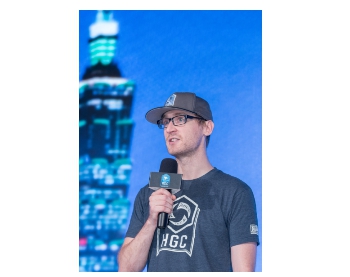
Rumors are swirling as free agency opens up in Blizzard’s new Heroes Global Championship.
Star players Daneski and Kure might be on their way out at Team Freedom, replaced by Lutano and Yoda.
SpaceStation Gaming could be parting ways with TalkingTrees and TigerJK in favor of Tomster, Cauthon, Prismaticism or Jschritte.
Releasing and signing players in the immediate weeks following the finals is a new wrinkle developed by league Commissioner Sam Braithwaite. The Huntington Beach native established HGC this year, and leads budgeting, event planning and contracting for the organization, which has attracted millions of fans around the world.
HGC is part of a growing cadre of esports leagues and competitions around the world ranging from small invitations to mega leagues that award millions in prize money and hold tournaments in stadium-size venues. It falls on the upper end of the spectrum, considering its payouts. Blizzard has several other leagues based on its other titles.
“The No. 1 goal was consistency,” Braithwaite told the Business Journal in an interview at the Anaheim Convention Center during Blizzcon, the annual fanfest hosted by Irvine-based Blizzard Entertainment Inc. this month that attracted a record crowd of more than 30,000, plus millions of online viewers.
Blizzard is Orange County’s largest software maker, employing 2,000 at its Spectrum headquarters and more than 4,000 worldwide. It posted record sales last year of $2.4 billion, up 55% over 2015, with operating income of roughly $1 billion, up 81%.
Braithwaite’s first few months as the Esports Franchise Lead for “Heroes of the Storm” took him to Europe, Korea and China, where he met with the game’s best players, as well as team owners and sponsors.
“Heroes” is a free-to-play online brawler featuring characters from hit Blizzard franchises “World of Warcraft,” “Diablo” and “StarCraft.”
The discussions were all over the map, delving into more serious issues, such as fair compensation and player rights, to casters and commentators, esports content searches and providers, and training.
“We spent several months trying to figure out what was right for our game,” Braithwaite said.
While some fine points were lost in translation, some key themes prevailed, including establishing rules, regulations and salaries for the 32-team international league.
Evolution
Each five-player team is guaranteed $100,000—a big departure from last year’s disjointed network of exhibitions around the globe that primarily rewarded the top four teams in major events.
The game’s top players, which draw supplemental income from sponsorships, streaming subscriptions and other tournaments outside of HGC, essentially agreed to take less money so that colleagues could earn more.
“What we’ve tried to do with HGC is create a foundation in which all of our players are taken care of,” said Braithwaite, sounding more like a player rep than commissioner. “It’s all about creating stability and infrastructure.”
The 28 year old would know.
Braithwaite, whose gaming handle is Milkfat, turned pro at 15, traveling through California, Arizona and Nevada for gaming tournaments, as well as to a few competitions in Europe and Asia. A trailblazer in the infancy of esports, he was a team owner, had his own line of keyboards, ran a website that tracked the segment, and established one of the largest video game leagues of its day, DXD, from his parents’ house.
At 22, he set a Guinness World Record at Howie’s Game Shack in Mission Viejo for playing “Heroes of Newerth” for 76 straight hours. He said he prepared himself with months of training.
He was hired months later by the game’s publisher, S2 Games, to lead the esports division of the Kalamazoo, Mich.-based company.
As a child he spent countless Friday nights with his father, sifting through titles at Fry’s Electronics. The elder Braithwaite would buy a game, and they’d play it through the night until bedtime.
There are photos of him as a 6 year old sitting on his older brothers’ laps playing the first two editions of “Warcraft.”
“My brothers would smuggle me down in laundry baskets past my bedtime so my parents wouldn’t find out, and prop me in front of the computer and let me watch them play,” said the Edison High School grad.
As a teen and young adult, he was good enough to compete against other pros but not good enough to be the best.
“I realized that, but I wanted to still do more,” he said. “I wanted to help build the infrastructure and support systems around esports to be able to create career opportunities for guys like me.”
That was impossible a decade ago. Many sponsors, including Monster Energy, didn’t even provide financial compensation, instead paying ambassadors with product. In this instance with cases of its signature energy drink.
“It’s very different these days,” Braithwaite said.
Especially for HGC players such as Mike “Glaurung” Fisk and Ben “Cattlepillar” Bunk. The roommates have a three-bedroom apartment in Irvine, though they play on opposing teams. Most of their days consist of at least eight hours of game play, scrimmages and livestreams.
“There’s a lot of variance within the field on how much money you can make,” said Fisk, 20, who started his pro career six years ago and plays for the Roll 20 team in the HGC North America division. “I can go from a minimum of $45,000 to $145,000” a year.
His team’s performance in the final months of the year will dictate earnings.
Bunk, 24, competes for Germany’s Tempo Storm. He said he doesn’t envision many more years as a pro. He plans to go to school or branch out in the industry or another.
“Maybe two years more at most,” he said. “You have to be fully focused the entire time. This was never a goal I had in my life.”
Their teams, Tempo and Roll 20, were eliminated in the quarterfinals at Blizzcon, earning $20,000 in prize money each.
Going Pro
HGC is comprised of four regions: North America, Europe, China, and Korea, which have eight teams each. The top teams from each region qualify for four international tournaments, including the annual HGC Finals at Blizzcon, where Korea’s MVP Black, considered the best Heroes team in the world, took home the $500,000 grand prize in the $1 million-purse tournament.
Teams representing Australia/New Zealand, Latin America, Taiwan, and Southeast Asia compete in their own HGC events throughout the year and can qualify for all four international events.
HGC flew every player early in the year to a summit in Anaheim where they discussed rosters and new regulations. The league hired pro trainers for rookie onboarding, providing sessions on talking with the press, creating and maintaining a brand, and using social media, among other topics.
It’s all patterned after the NFL’s annual rookie transition program.
In some cases, HGC designed team logos and graphics, and essentially handed over intellectual property to team owners.
The league is working on other initiatives to bolster the system, including supporting coaches and implementing a sixth player on rosters—the league currently has no female players, though it did earlier this season.
It recently began using pro players to cast certain HGC events.
“We want to make sure we’re providing opportunities outside of being a pro player,” Braithwaite said. “For a lot of these guys, this is their livelihood.”
