Editor’s note: Dr. Glenn Roquemore, who was president of Irvine Valley College for 18 years, is the Secretary and Education Committee Chair of the Flying Leatherneck Historical Foundation, which is scheduled to open its museum in Irvine’s Great Park. Jacqueline Huynh and David Copp are assistant professors in aerospace engineering at UCI. The Business Journal’s annual report on the OC engineering industry begins on page 11.
At the University of California, Irvine, the Henry Samueli School of Engineering is buzzing with activity as students immerse themselves in hands-on learning.
At the heart of UCI’s engineering program is the philosophy of translating theory into practice. To help realize this philosophy, the department of Mechanical and Aerospace Engineering (MAE) offers more than 20 interdisciplinary project courses that enroll 300 to 400 students every term.
The goal of these projects is to prepare well-rounded engineers who can tackle complex, real-world problems. The school of engineering is supporting these efforts by opening a new Office for Experiential Learning and an engineering makerspace.
These provide students with state-of-the-art tools and resources to build essential skills and bring their ideas to life while also connecting them to industry through design reviews and co-op and internship opportunities. In this way, UCI’s engineering programs blend theoretical knowledge, practical and hands-on experience and industry connections for effective engineering education.
One key aspect of UCI’s engineering projects is the commitment to interdisciplinary collaboration, which is critical for solving society’s current engineering grand challenges.
While two-thirds of the students in these projects come from mechanical and aerospace engineering backgrounds, a quarter hails from electrical engineering and computer science, and the remaining students represent other departments, creating a rich diversity of knowledge and perspectives.
These interdisciplinary projects foster an environment that mirrors the professional world students will enter after graduation, and these diverse student teams consistently perform well in national and international competitions.
The projects undertaken by UCI engineering students are as diverse as the teams themselves. Teams work together to design and build rockets, race cars, autonomous drones, underwater vehicles, assistive medical devices, satellites, and airplanes, among other innovative creations.
Student Project Competitions
Local industry and professional societies play a crucial role in the success of these projects, providing both funding and mentorship. For example, in the MAE department, there are active student chapters of the American Society of Mechanical Engineers (ASME) and the American Institute of Aeronautics and Astronautics (AIAA).
These societies, along with other organizations such as SAE International and RoboNation, host collegiate student design project competitions that UCI project teams participate in.
The students also benefit tremendously from personal interactions with engineers from local companies in Orange County who help students push the boundaries of their knowledge and skills to prepare for engineering careers. This connection to industry not only enhances students’ learning experience but also opens doors for future career opportunities.
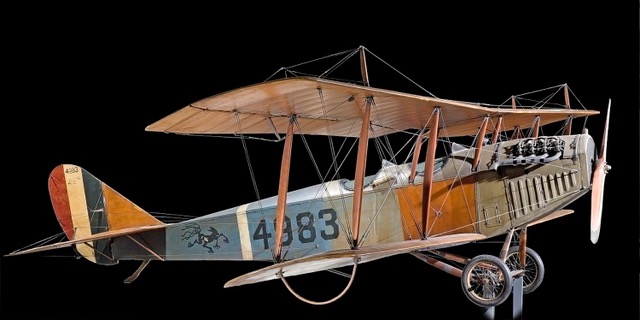
Perhaps one of the most ambitious projects currently underway involves more than 75 students working in close collaboration with the Flying Leatherneck Aviation Museum (FLAM), located at Irvine’s Great Park. The project’s objective is to build a full-scale replica of a World War I Marine Corps biplane, the Curtiss JN-4 “Jenny.” This project not only challenges students’ engineering skills but also connects them with the community and helps preserve the area’s historical heritage.
The initial collaboration came about via a connection between the Flying Leatherneck Historical Foundation’s (FLHF) President and CEO, retired Brigadier Gen. Michael J. Aguilar, and former UCI MAE Department Chair, Professor Roger Rangel. Aguilar, the Secretary for the FLHF Dr. Glenn Roquemore, and current MAE Department Chair, Professor Julián Rimoli, then met to discuss excellent student opportunities building a 1917 bi-plane for the museum.
The Jenny project became a reality thanks to a generous donation of aircraft components and design plans from the Quilter Family Foundation. Dr. Roquemore has been selected to lead the construction of the aircraft with the support of museum volunteers and members of the Experimental Aircraft Association.
Dr. Roquemore’s experience lecturing for eight years in engineering at UCI, partnering to launch the UCI–Irvine Valley College (IVC) Engineering Academy, and facilitating IVC’s involvement with UCI in the 2015 U.S. Department of Energy’s Solar Decathlon, combined with a central focus on education for the new Marine Corps Aviation Museum, further laid the foundation for collaboration.
The museum is set to open in early 2027. The 48-plus aircraft are going through restoration at a good pace, and the museum looks to break ground in September. As visitors enter the Flying Leatherneck Aviation museum, there will be a historic A-4E Skyhawk jet. Visitors then come to a rotunda where the Jenny will hang.
Leading the project from UCI’s side are mechanical engineering graduate students Silvia Tinelli and Stuti Patel serving as project managers, and MAE Professors David Copp and Jacqueline Huynh serving as advisors who embraced the opportunity to organize students on the project and develop a course so that the students would receive credit for their work.
“Being part of this project team has been an extraordinary experience,” Tinelli said. “The FLAM staff and volunteers work alongside us to tackle complex engineering challenges, bringing invaluable experience and insight that help us overcome each new hurdle.”
The Engineering Needed for a 1917 Biplane
Multiple aspects of engineering are involved in constructing a 1917 biplane, especially one that will be suspended in the new museum’s rotunda. The JN-4 Curtiss Jenny was, among other uses, the trainer plane for the U.S. Marine Corps. Pilots would then migrate to the DH-4 De Havilland—the first Marine Corps aircraft used in combat. Plans are in place to build the DH-4 after the museum opens.
The more than 75 students are split into subteams working on the main wings, the fuselage, the engine and propeller. In addition, the students are honing their skills by practicing project planning, organization of roles and responsibilities and teamwork.
Patrick Nguyen, a senior aerospace engineering student leading the fuselage subteam. said, “as an aerospace engineer who’s passionate about aircraft design, this opportunity with FLAM is the best thing I could ask for! It is an amazing opportunity to get hands-on experience with like minded students and professionals.”
The aircraft is being built as a replica, with all the engineering specifications, but it is not FAA-approved for flight. The students are 3D scanning and printing the exposed parts of the engine, propeller and radiator to reduce weight on the hanging aircraft. The 1917 OX-5 engine will be displayed beneath the aircraft as a separate exhibit.
As these students graduate and enter the workforce, they carry with them not just a degree, but also a wealth of hands-on experience, and they leave behind a legacy for future students and the community. Stuti Patel remarks on her experience on the project:
“My passion for aviation began at a young age, and this project has provided the perfect opportunity to transform that childhood dream into reality. The FLAM staff’s dedication to preserving aviation history while fostering educational opportunities is truly inspiring. Their collaborative approach and genuine enthusiasm for involving students in meaningful work has made this partnership both professionally rewarding and personally fulfilling.”
As UCI’s Henry Samueli School of Engineering continues to grow and evolve, it remains committed to hands-on learning, interdisciplinary collaboration and community engagement. This collaboration with the Flying Leatherneck Historical Foundation is a testament to that ongoing commitment.