
Pacific Premier Bancorp Inc. in Irvine has long been an underdog.
It didn’t have the support of heavyweight Wall Street investors like Irvine-based Opus Bank did, or the glamour of Hollywood like Banc of California Inc. in Santa Ana enjoyed.
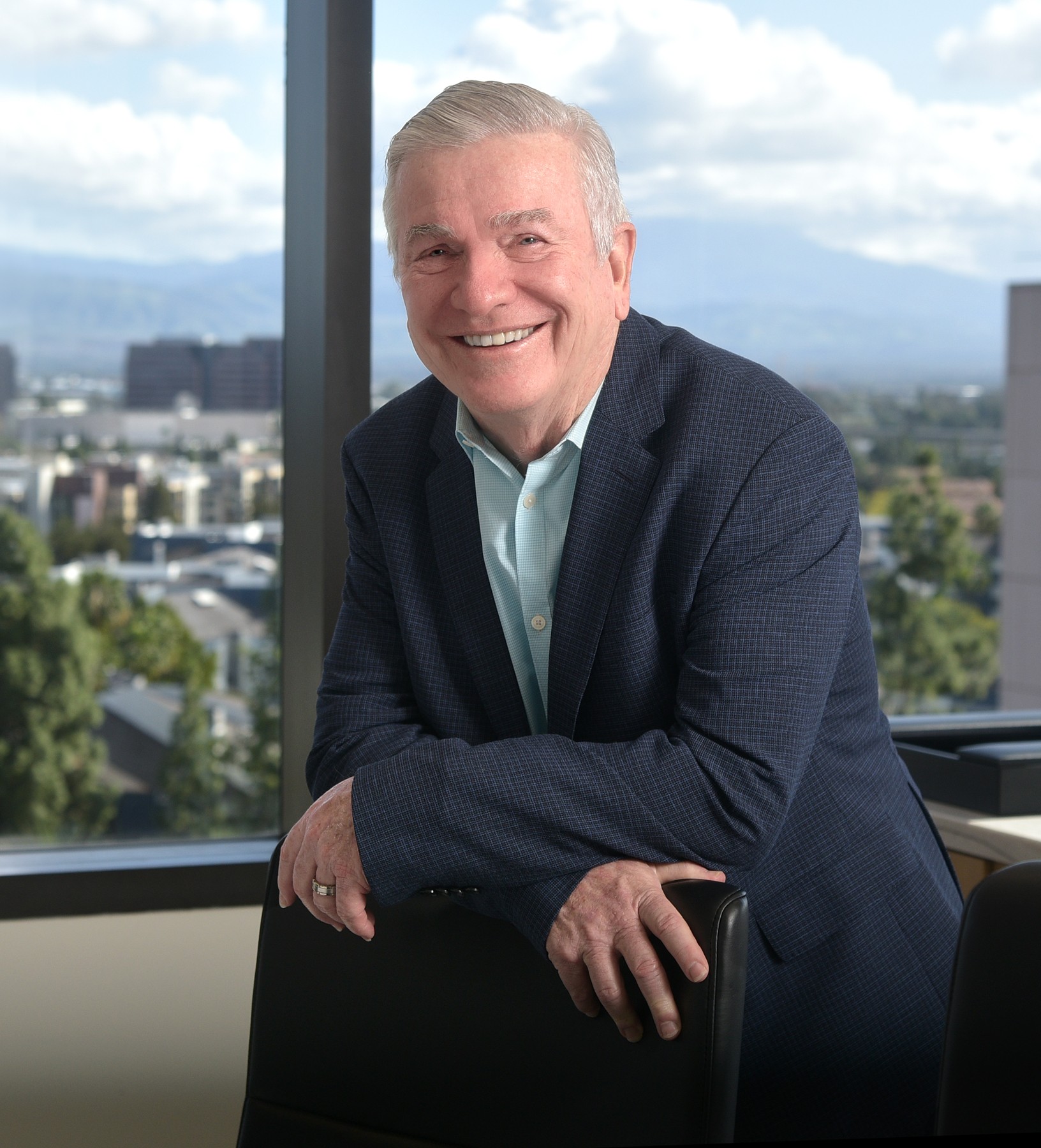
It does have Steve Gardner, a hockey-loving MBA dropout who in 2000 took over a failing bank specializing in subprime loans and built it into Orange County’s largest bank by market capitalization, $1.6 billion. Since 2009, the stock has become a mythical 10-bagger, rising tenfold to above $40 this past month.
“It’s nice to get the recognition from the market and investors,” Gardner said during an interview at his 12th-floor office near John Wayne Airport. “The market is pretty efficient. Those that spend the time to understand it are reaping the rewards.”
Pacific Premier’s assets soared 79% this year to $6.4 billion and a No. 3 ranking on the Business Journal’s list of banks with headquarters in OC (see story, page 28). Most of the past year’s growth came through the acquisition of Heritage Oaks Bancorp, a Paso Robles-based bank with $2 billion in assets. Pacific Premier last week completed the acquisition of Irvine-based Plaza Bancorp, which raised its assets to $7.8 billion.
“Steve has done a fantastic job,” FIG Partners LLC analyst Tim Coffey said, who has an outperform rating and a $46 target price. “They are growing organically and complementing it with acquisitions. His strategy is the reason for the success.”
Fullerton Grad
Gardner, 56, grew up in Hacienda Heights and earned a bachelor’s degree from California State University-Fullerton. He attended California State University-Long Beach for a master’s in business, but said he had to drop out to support his family. His background included a stint as an executive at Hawthorne Financial responsible for credit administration and portfolio management.
In 2000, he became chief executive of Riverside-based Life Financial Corp., which owned Life Bank. That same year, his wife, Carol, gave birth to quadruplets (see related story, this page).
Life Financial, which began in 1983, became a high flier in the late 1990s by focusing on subprime mortgages. Its stock reached as high as $130 before crashing to under $3 in 2000. During Gardner’s first year on the job, the bank reported a loss of $20.8 million.
“When I came in, we were lacking capital, we were hemorrhaging substantial losses. There were substantial problem loans,” he recalled.
Desperate Financing
He put into place “a plan to get control of the company” that included layoffs, the selling of branch offices, and a name change. At the time, regulators said the bank needed capital, but it was in such poor condition during a recession that it couldn’t find any investors, Gardner said. He approached Ezri Namvar, an Iranian immigrant who owned a real estate investment company and agreed to loan $12 million to the bank.
“Thankfully for us and our shareholders and employees, he made that investment,” Gardner said.
In 2003, the bank raised capital to pay off the loan. Namvar was a director on the board for only one year and then left, with Gardner merely saying, “We realized it wouldn’t be a good fit from a director standpoint on our board.”
What Gardner didn’t say is that Namvar’s reputation eventually angered investors and he was sentenced in 2011 to seven years in federal prison for stealing $21 million from clients, according to the FBI.
It’s clear that Gardner is astute at judging risks. The bank didn’t need government funding during the 2008 financial crisis. Nowadays, about 0.02% of Pacific Premier’s assets are nonperforming, an astonishingly low amount by banking standards.
“Steve is a very intelligent bank executive from a risk management standpoint,” FIG analyst Coffey said. “He understands the importance of staying away from products where he might not understand all the risks.”
Rivals
Gardner said his bank has implemented a number of metrics before issuing loans, such as the history of a borrower’s cash flow.
“I don’t know if there is any secret sauce. We do the basics really well.”
Since 2010, both Banc of California and Opus Bank made big splashes in the OC banking scene.
Opus Bank, founded in 2010 by Stephen Gordon, was backed by heavyweight Wall Street investors Elliot Associates LP, Starwood Capital Group Global LP and Fortress Investment Group.
Banc of California grabbed many headlines by spending $100 million for the naming rights of a new $350 million soccer stadium in downtown Los Angeles. Prior Chief Executive Steve Sugarman had family connections to Hollywood mogul Peter Guber.
Banc of California and Opus Bank are retrenching this year, cutting asset growth.
It begs the question of why Pacific Premier succeeded.
“A lot of banks have tried to emulate what Pacific Premier does,” Coffey said. “It has a unique loan production model that is focused on business development more than other banks.”
Spread Lender
Pacific Premier is a “classic bank” that’s a spread lender, generating interest off its loans and to a smaller degree fees, Gardner said. Its specialty is small and middle-market businesses “of every variety,” he said. When asked what his bank’s reputation is, he replied, “We’re straight shooters.”
“We don’t do anything exotic,” he said. “We operate with a sense of urgency. The pace of business is so fast. Many business owners operate in a mindset of 24/7. We need to have that mindset, as well.”
Gardner said some businesses may not know about its ability to handle clients with up to $750 million in annual revenue by offering the same services they would find in larger banks.
It’s also clear that Gardner is particular in picking industries to lend to. Pacific Premier’s net interest margin, a key metric of profitability for banks, is often 100 basis points higher than rival banks in OC. Gardner said there are two reasons.
The bank has a low cost to deposit as its customers want high service and rely on the bank for information. About 38% of its deposits are noninterest bearing compared to 20% industry standard, Coffey said.
The second reason is that Pacific Premier focuses on specialty lines with higher yields, such as owner-occupied commercial real estate and Small Business Administration-guaranteed loans known as SBAs. In 2014, it bought Columbus, Neb.-based Infinity Franchise Capital, one of the nation’s leading franchise restaurant lenders, to expand into higher-margin loans for franchise owners of top-tier restaurants like Kentucky Fried Chicken and McDonald’s.
It stays away from low-end home mortgages, which he calls commodities. Banc of California agreed with Gardner when it jettisoned its home mortgage unit this year, cutting its employee count in half.
Acquisitions
To complement the organic growth, from 2011 to 2016 Gardner made six bank acquisitions to gain about $1.66 billion in assets.
Some of those purchases were troubled banks that had limited downsides because of government guarantees, Coffey said. Gardner then parlayed the company’s rising share price to acquire Heritage Oaks in April, a deal valued at about $482 million.
“Because he paid all of it with stock, the book value went up after the deal, which is unusual,” Coffey said. “It’s one of the reasons his stock price went up.”
Gardner’s success leads to speculation about whether he is shopping his own bank. He acknowledges that he often meets with chief executives of other large banks. No other bank has approached him about an acquisition, he said. Gardner noted its stock price makes Pacific Premier one of the most expensive banks of its size in the country to acquire.
For now, he’s said the high stock price is permitting him to hunt for more acquisitions, most likely on the West Coast.
The bank is preparing to top $10 billion in assets within a few years, a goal that may soon make it the biggest by assets in OC.
Even though Gardner owns shares and options worth more than $20 million, he has no plans to retire.
“I love what I do.”