

Irvine’s Uniloc USA Inc., a small, privately held maker of security software, may be forever known as the company that took on Microsoft Corp.—and won big.
Earlier this year, Uniloc won a six-year patent infringement lawsuit and saw a $388 million jury award against the Redmond, Wash.-based software superpower.
Uniloc accused Microsoft of infringing on a patent for software that ties programs to a specific computer to prevent copying on other PCs.
The company claimed Microsoft used Uniloc’s “physical device recognition” software—which distinguishes a computer from millions of others out there—to prevent copying of its Windows XP operating system and Office suite.
But the fight isn’t quite over for Uniloc. The company is waiting for a Rhode Island judge to hand down a final judgment on the award.
“We are week to week” awaiting word in the case, Chief Executive Brad Davis said.
Uniloc initially sought $560 million before March’s jury award. The company hasn’t seen any of the settlement as the legal process works its course.
It is seeking interest on the award and an injunction that would ban the sale of Microsoft programs found to have infringed on the patent.
For its part, Microsoft has filed post-trial motions seeking to overturn the award. Barring that, it plans to appeal the verdict. Or Microsoft could strike a settlement deal.
Uniloc, which has about $100 million in yearly sales, had little choice but to take on the world’s biggest software maker, according to Davis.
“If the largest software publisher in the world is using your intellectual property without your permission and apparently for free, we can’t realize our value proposition,” he said. “It’s just not possible.”
According to Davis, Microsoft approached Uniloc in the late 1990s and looked at its software for a potential licensing deal.
“They kicked the tires and said, ‘No thanks,’” he said. “And then a few years later it showed up in the market.”
After Uniloc sued, there were attempts to settle with a licensing deal, “but the parties never even got close,” Davis said.
The win has brought a lot of attention to low-profile Uniloc, which got billed as a victor in a David and Goliath drama.
“We knew it would be a big shot in the arm in terms of people getting to know Uniloc,” Davis said.
The win has made “doors open easier,” he said.
“The general awareness of Uniloc and our core tech platform has increased,” Davis said. “Of course there are a lot of ways to get that recognition outside of a six-year lawsuit. But it’s certainly a welcome byproduct.”
Uniloc has received calls from potential suitors, according to Davis. Instead, the company is looking to go public.
“In terms of an exit, we would plan on doing an initial public offering in 18 to 24 months,” Davis said.
The challenge is in making Uniloc known for more than just being a thorn in Microsoft’s side.
“This litigation is not what we do at Uniloc,” he said. “It’s a necessary process, but meanwhile we are going to market with our products.”
Uniloc USA is part of Australia’s Uniloc Corp., which is little more than a holding company.
There’s a board in Australia. But most of Uniloc’s operations are in Irvine, where it has 25 workers near John Wayne Airport.
The company’s Australian roots trace back to founder Ric Richards, who in the early 1990s filed a patent for the technology behind the company’s software.
While the Microsoft case focused on software for PCs, Uniloc has found other uses for its technology.
It’s also used to prevent software copying on phones and other hand-held devices.
And Uniloc uses the same technology to secure networks run by companies that need to ensure only certain people have access to software or computers.
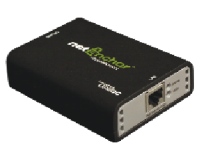
Uniloc’s NetAnchor device is designed for companies in utilities, surveillance, traffic control, ports and railways.
Software customers include the European arm of Japan’s Sega Corp., Chapel Hill, N.C.-based Merscom LLC, another game publisher, and Dutch publishing software maker Markzware BV, among others.
Uniloc’s software identifies physical traits about the guts of a computer, iPhone or other device.
“Because authentication is based on physical things, it’s very difficult to spoof it,” Davis said. “Instead of pulling an address, we pull hundreds of serial numbers off the components and the configuration of your computer to create this unique identifier.”
Davis compares it to charting a map to an individual’s DNA.
