

COSTA MESA — Veritas Aortic Solutions, a medical device startup focused on improving treatment for patients with aortic disease, has raised $12 million in seed funding.
Funds from the round will support a first-in-human study evaluating the company’s minimally invasive device for conditions affecting the first segments of the aorta, the largest artery in the human body.
Veritas was spun out of Massachusetts-based inQB8 Medical Technologies LLC late last year.
The privately held medical device incubator was co-founded by partners of 20 years Dr. Arshad Quadri and J. Brent Ratz. Quadri, a cardiac surgeon by training, serves as Veritas’ executive chairman and chief medical officer while Ratz is CEO.
“It’s expensive to get through the whole development cycle, so it was imperative we attract outside funding to be able to invest further in the team and the technology to get through the next level of testing,” Ratz told the Business Journal.
With the funding, Ratz said that the company hopes to start first-in-human trials before the end of this year.
Alternative to Open-Heart Surgery
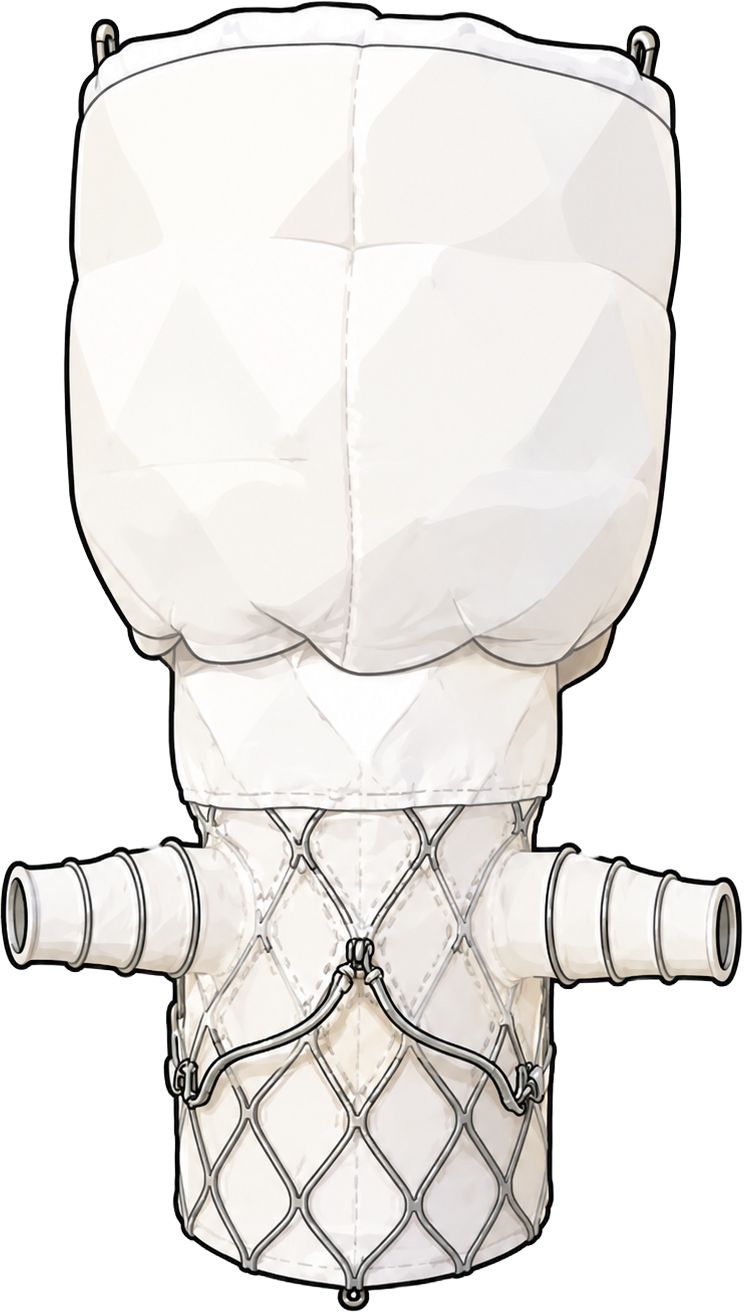
The Veritas Transcatheter Valved Aortic Root Conduit is a single permanent implant.
It’s designed to seal off the diseased or damaged part of the aorta and restore healthy blood flow to the coronaries and rest of the body. The system’s delivery catheter eliminates the need for open-heart surgery and allows for “precise positioning and controlled deployment of the implant,” the company said.
While endovascular options for other parts of the aorta are available, open-heart surgery remains the only option for the sections Veritas is specifically targeting, according to Ratz.
“There’s been no solutions for these patients because of the complexities of the aortic root other than open-heart surgery, and that in itself carries a very high risk,” he said.
Rates of death and illness associated with current surgical treatments are as high as 65%, according to Veritas.
Ratz said that early on they realized they needed a comprehensive device that addressed the complex anatomy of the aorta, including the aortic root, aortic sinuses and coronaries.
Veritas’ device includes a bioprosthetic aortic valve and the company’s patent pending Chameleon Eye technology for coronary prefusion or supplying oxygenated blood to the heart muscles.
“By doing that, we can isolate whatever the disease portion of the aorta is from the blood flow, and now we get adequate flow through the valve and through the coronaries to the rest of the body” Ratz said.
Portfolio Companies
Veritas is the fourth company to come out of inQB8.
Ratz and Quadri co-founded inQB8 in 2018 to identify the most critical unmet needs in the cardiovascular space and has offices in Massachusetts and Irvine.
“We’re really plugged into the medtech scene in the area and have a lot of contacts out there, so early on we set up an inQB8 shop out there,” Ratz, who is based out of Boston, said about establishing a presence in Orange County.
Another company created by inQB8 is Irvine-based CardiAQ Valve Technologies, a developer of a transcatheter mitral valve system that was bought by Edwards Lifesciences Corp. for $350 million last year.
inQB8 also developed the MonarQ Transcatheter Tricuspid Valve for patients suffering from tricuspid regurgitation, which was acquired by Chinese medical device company Peijia Medical in 2021.
Its more recent portfolio company, Relief Cardiovascular Inc. in Irvine, is developing a smart transcatheter implant designed to monitor and adjust renal vein pressures. The company in March announced positive 90-day data from a first-in-human study funded by a $12 million Series A round that closed last January.
