

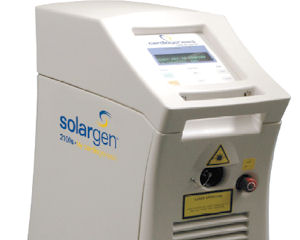
Cardiogenesis Corp., an Irvine medical device maker, is being bought for $22 million by Georgia’s CryoLife Inc.
Cardiogenesis, which had sales of $11.3 million last year, makes devices used to treat people with angina, a buildup of plaque in the arteries that can result in chest pain.
Its devices, including the YAG laser and single-use fiber-optics, are used for angina patients who don’t respond to standard treatments.
The laser and disposables are used to create channels through heart tissue to stimulate blood flow to the area, a process called transmyocardial revascularization.
Most patients who undergo the procedure already have had heart bypass operations and angioplasties.
CryoLife
Kennesaw, Ga.-based CryoLife, which has annual sales of about $117 million, makes replacement heart valves and other devices and processes cardiovascular tissue.
CryoLife’s products include CryoValve SG, a pulmonary heart valve with Food and Drug Administration clearance for replacing diseased, damaged, malformed, or malfunctioning native or prosthetic pulmonary valves.
The companies said they expect the deal to close in May.
CryoLife’s offer values Cardiogenesis at 43% more than what the company was worth on Wall Street before the deal was announced.
Cargiogenesis’ Irvine facility is set to eventually close, said D. Ashley Lee, CryoLife’s chief financial officer.
No initial layoffs are planned at Cardiogenesis, which has 34 workers. CryoLife is expected to determine how many workers it needs by year’s end, he said.
Some Cardiogenesis workers may be offered jobs with CryoLife, according to Lee.
The lease on Cardiogenesis’ 7,800-square-foot facility at 11 Musick in the Irvine Spectrum expires in November, according to the device maker’s annual report with the Securities and Exchange Commission.
Cardiogenesis’ executive chairman, Paul McCormick, said the device maker “was pleased to be joining CryoLife” and that its heart surgery sales force, geographic scale, expertise and resources would help cardiogenesis expand sales of its devices.
Pipeline
Buying Cardiogenesis brings CryoLife a pipeline of potential products, according to CryoLife.
The Company said the current market potential for surgical procedures that Cardiogenesis operates in is estimated at greater than $175 million a year.
CryoLife believes that Cardiogenesis’ transmyocardial revascularization procedure coupled with delivering stem cells or other biologics could eventually increase the estimated U.S. market potential to more than $700 million.
Cardiogenesis has developed the Phoenix delivery device, which combines delivery of biologics to the heart muscle with transmyocardial revascularization.
Phoenix has received European regulatory clearance. CryoLife said it plans to start selling Phoenix in select European markets in the second half of the year, with a wider rollout in 2012.
CryoLife is expected to pursue a premarket approval for Phoenix in the U.S. at an undetermined time, said Matt Dolan, a medical device analyst with Newport Beach-based Roth Capital Partners LLC who follows CryoLife, in a report.
“Overall, we view this as a positive deal for CryoLife” although transmyocardial revascularization “remains a niche opportunity based on its clinical reception today,” Dolan said.
Cardiogenesis will represent a profitable stream of recurring revenue with its single-use devices for CryoLife, Dolan said.
CryoLife’s management could justify the buy based solely on Cardiogenesis’ revenue and margins, he said. But “we remain cautious on the growth prospects for (transmyocardial revascularization), which has struggled to enter the mainstream of cardiovascular care over the past several years,” Dolan said.
Challenges
Cardiogenesis has had its share of challenges.
Through Dec. 31, the company had an accumulated deficit of $172.4 million.
In 2006, former chief executive Michael Quinn left Cardiogenesis in the wake of what the company called “conduct that the executive committee believes violated the terms of his employment agreement” in a federal filing.
Quinn left Cardiogenesis after the company lost its listing on the over-the-counter Bulletin Board stock exchange.
The delisting came after Cardiogenesis didn’t file its 2005 annual report and its first-quarter report in 2006.
Cardiogenesis now trades on the low-profile Pink Sheets exchange.
