

Local wealth managers are not about to jump into high-risk, potentially high-yielding stocks just yet, but they appear much more comfortable making some strategic adjustments to their portfolios and steering away from lower-yield bonds.
Fixed-income investments such as bonds are typically billed as relatively safe, because payments are regular and the return of principal at maturity is set in place. The move back into equities first surfaced about a year or two ago, but wealth managers now are embracing the strategy broadly.
“We were fairly encouraged coming into this year,” said Mark Binder, wealth adviser at the Newport Beach office of Merrill Lynch Wealth Management, part of Bank of America’s financial advisory business. “Valuations coming into this year were very attractive. We raised equity allocations going into this year, which seems to have been the right thing to do.”
Global Troubles
Binder cited Greece’s debt crisis and other issues in Europe and the Middle East as factors that drove his team to react conservatively to the market last year.
“There was a tremendous amount of geopolitical risk, which manifested itself in the market,” Binder said. “What you’re finding this year is that … the headline risk as it relates to Europe seems to have been mitigated somewhat.”
Binder said his team still takes a conservative approach overall, but it is adding credit exposure at a gradual pace and staying relatively short in its fixed-income side in light of the expectation that interest rates will increase.
“That might happen sooner if we see inflation rising,” Binder said.
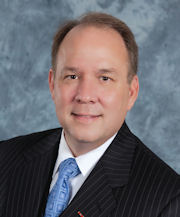
Interest rates are also a concern for Marc Foster at UBS Financial Services Inc.
Inflation Concerns
“I do believe inflation is going to kick in,” said Foster, managing director of the Foster Wealth Management Group, a UBS team in Newport Beach. “People with traditional bond portfolios are going to get slaughtered.”
Foster said he’s been navigating away from fixed-income assets into alternative investments.
“We’ve been aggressive, trying to transition into high-dividend-paying securities as an alternative,” he said. “We also did a lot bond-buying in the redevelopment agencies of California. The state Supreme Court ruled to close them down. That was an opportunistic area for us, and we bought these things at steep discounts.”
“Hybrid Securities”
His strategies also included tapping into bank trust-preferred securities, which are products sold by bank holding companies to raise regulatory capital. These are “hybrid securities” that share characteristics of debt and equity.
“Transitioning people out of the traditional [bonds] onto some of those types of securities will help keep their portfolios intact,” Foster said.
Irvine-based advisory firm Burnham Gib-son Financial Group Inc. remains focused on fixed-income exposures for risk-averse clients.
“But we do diversify within our fixed-income segment,” President Darin Gibson said. “We wouldn’t change the allocation or the mix between equity and fixed-income. But within the fixed-income exposure, we have to be prudent about the quality and the duration of the portfolio.”
Burnham Gibson has 23 advisers and staff who provide pension consulting and comprehensive planning to institutional and individual clients. The firm manages $500 million in assets and has a concentration of clients in Orange County, while catering to investors nationwide.
Comfort Level
“Our clients are predominantly retirees, and by the time they come to us, they want to see reasonable growth and predictable income streams,” Gibson said.
Bringing a level of comfort to clients has been a key factor in driving growth at Pence Wealth Management in Newport Beach.
“We make sure the clients know how we think,” Chief Investment Officer E. Dryden Pence said. “People today are really looking for strategies that they can understand. A lot of multifaceted strategies aren’t what make them comfortable.”
The focus on income and dividends has “begun to play itself out more dramatically in the last two years,” Pence said.
“That’s what has driven a lot of [growth],” he added. “Even when the market has been highly volatile and giving people a lot of concern, we’ve been able to weather that storm very well.”
Long Beach-based trust and investment management firm Farmers & Merchants Trust Co. also is taking advantage of the gains available from dividend-paying companies.
Lively Dividends
“2011 proved that dividend-paying stocks are still alive,” said Kevin Tiber, senior vice president and chief operating officer, who splits his time between the Laguna Hills and Long Beach offices. “They did very well.”
Tiber said Farmers & Merchants is probably more conservative than some others.
“There’s been a big push to high-yield debt or lower-grade corporate bonds entirely,” Tiber said. “I’ve noticed it’s been a theme the past couple of months. We’re not comfortable chasing that yield.”
Neither is the firm impressed by statistics and economic indicators.
“While there are some signs of stabilization here in the U.S., we think there’s a lot of manipulation occurring, adjustments that are being made,” said Jay Ferrara, vice president and investment officer at Farmers & Merchants’ Laguna Hills office. “We’re still conservatively positioned relative to the equity market.”
Ferrara’s team manages about $2 billion of assets total.
“It continues to grow a little bit,” Ferrara said. “And there’s a potential that we may increase our exposure in Orange County [by] moving our OC office to across the street from John Wayne (Airport) in August or September. I think the opportunities are better as you move toward the Newport Beach and Irvine area.”
Sustaining Growth
The question for Ferrara is whether the industry can sustain the growth.
“We’re better than (we were in) 2011 and 2010,” he said. “But I think realism has to come into the picture. Everyone has opinions, and listening to them is important. But making decisions is our responsibility. That’s what we’re paid for.”
UBS’ Foster said he’s concerned of a potential shortage of wealth managers in the future.
“Our industry is having a difficult time finding and holding people,” he said. “The successful brokers right now are gray Baby Boomers. Someone needs to take that [space], but the industry hasn’t trained to fill that void. Right now it’s hard, but in five years from now, there will be a crazy hiring spree. That’s a huge opportunity for young people to come in.”
