

Federal banking regulators last month reached an agreement with their Chinese counterparts to improve cooperation between the two countries—a move that could have long-term implications for Southern California’s robust Chinese-American banking industry.
Under the agreement, the Federal Deposit Insurance Corp. will cooperate and share information with Chinese regulators regarding the management and resolution of troubled banks with branches in both countries.
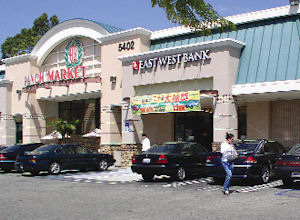
The move was prompted by East West Bank’s November acquisition of United Commercial Bank, which had several overseas branches.
East West, owned by Pasadena’s East West Bancorp Inc., became the largest Chinese-American bank in the country with the blockbuster acquisition. East West also is one of the larger ethnically focused banks operating in Orange County.
To complete the buy, East West got help from the FDIC to get approval from Chinese regulators to assume control of United Commercial’s Chinese branches.
“From the FDIC’s perspective, that was new territory and it did present some challenges,” said Andrew Gray, an FDIC spokesman.
The effects of the agreement could be particularly acute in Southern California, which is home to a large Asian-Amer-ican population and the country’s three publicly traded Chinese-American banks—East West, Cathay Bank and Preferred Bank.
Chris Stulpin, an analyst with Great Falls, Mont.-based D.A. Davidson & Co. who follows East West and Cathay, said the FDIC’s announcement is not earth shattering. But it is a positive step in relations with Chinese regulators, who are notoriously difficult for U.S.-based banks to deal with.
Gray said the FDIC is pursuing similar agreements with other countries, but he declined to specify which ones.
Debit Fee Ban Bill Advances
A bill that would ban merchants from imposing fees on debit card purchases cleared a major legislative hurdle.
Senate Bill 933, by Sen. Jenny Oropeza, D-Long Beach, passed the state Senate earlier this month on a 22-9 vote and now moves on to the state Assembly for consideration.
The bill bans surcharge fees that merchants sometimes impose when customers use debit cards. These fees, which range from about 40 cents to 75 cents per transaction, help merchants recover the cost of processing fees levied by banks and credit card companies.
Similar surcharges on credit card transactions were banned under a state law nearly 20 years ago.
Debit card surcharge fees are typically found at mom-and-pop retail outlets. One major retail chain, BP Arco, also levies the fee at its service stations and ampm minimarts. It opposes Oropeza’s bill.
Consumer groups contend the surcharges are unfair because they are tacked on after a customer buys a product.
At some stores, when customers learn about the surcharges, they switch to credit cards or cancel their purchase altogether.
IndyMac Depositors
A pair of California lawmakers has introduced a bill to retroactively raise the insurance limit on deposits held at IndyMac Bank, a move that could help former customers recover hundreds of millions of dollars lost when the thrift failed in 2008.
The Investor Deposit Yardstick Act, introduced last month by Reps. Jane Harman, D-Venice, and David Dreier, R-San Dimas, would raise the deposit insurance limit from $100,000 to $250,000 for depositors at the former Pasadena savings and loan, which now operates as OneWest Bank.
According to the lawmakers, the bill could help 6,500 former IndyMac depositors recover $233 million.
“Our bill will restore to IndyMac customers what they suddenly lost in July
2008, and treat them as equals to other Americans whose savings were swallowed by the economic crisis,” Harman said in a statement.
IndyMac had become one of the nation’s largest independent mortgage originators and ran its loan operations from Irvine. It specialized in more risky Alt-A loans and was hammered by losses in the early days of the housing crisis.
Regulators seized the thrift in 2008 amid a catastrophic run on deposits. IndyMac’s assets later were sold to a group of investors who formed OneWest.
Regulators initially estimated that as much as $1 billion in IndyMac’s deposits were above the insurance limit at the time of its failure, a number that was later reduced by about half.
Shortly after the failure, the federal government raised the deposit insurance limit from $100,000 to $250,000—a change that will last through 2013—but it was not applied retroactively.
In addition to IndyMac, the bill would apply to 1,500 depositors of five banks in other states that failed around the same time.
—Los Angeles Business Journal
