

The initial provisions of healthcare reform haven’t yet led to many major changes in everyday operations at local hospitals, where officials are focused on preparing for the full effect of legislation to roll out over the next three years.
Portions of the healthcare reform law that already have gone into effect include the ability for parents to keep their dependent children on insurance policies until age 26, the elimination of lifetime limits for coverage and the end of denials of coverage to children with pre-existing conditions.
“Those things are not impacting the hospital industry or physician groups very much at all—it’s more of a cost impact on health plans,” said Mitch Morris, a healthcare practice leader with Deloitte Consulting LLC’s Costa Mesa office. “Having said that, they are all looking ahead with uncertainty.”
The reform plan is slated to be complete by 2014, when its landmark requirement for nearly all Americans to have some sort of health insurance coverage is expected to go into effect.
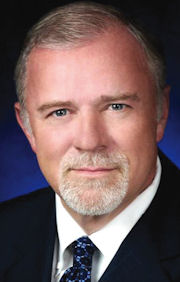
“We’re obviously spending a lot of time trying to understand it—it is a work in progress,” said Saddleback Memorial Medical Center Chief Executive Steve Geidt. “As it stands today, right now, I’d say it hasn’t affected us a lot.”
Saddleback has campuses in Laguna Hills and San Clemente and is the No. 7 hospital operator in Orange County (see story, page 34; List, page 36). The hospital is “positioned well to be able to tolerate some of what’s coming our way,” Geidt said.
He attributed the readiness to Saddleback’s experience with managed care, where insurers pay fixed fees and require hospitals to assume some of the financial risks of caring for patients.
Saddleback, along with others owned by Fountain Valley-based MemorialCare Health System, has made investments that are expected to pay off when it comes to healthcare reform.
One was electronic medical records (see Q&A, page 32). Another has been a move to work closely with home healthcare providers and hospices.
Geidt said those are “ways we can care for people other than in the most expensive part of the delivery system, which is the hospital.”
Meanwhile, healthcare reform could see minor to moderate changes in coming months.
Last month, the Republican-controlled House of Representatives made what’s considered a symbolic vote to repeal the reform law. It’s considered symbolic because Democrats still control the Senate and President Barack Obama has said he would veto any repeal bill that came to his desk.
The president has indicated, however, that he’s willing to work on the margins of the historic legislation.
“I think President Obama’s comments at the State of the Union—that it’s not going to be repealed, but it’s going to be tweaked—is accurate,” Morris said.
“Tweaks” Expected
Obama said he was willing to work with Republicans who have proposals to improve the law or lower healthcare costs. Among other things, he repeated a willingness to limit malpractice lawsuits against doctors, which has been a long-simmering battle between the two political parties.
Morris said that hospitals and doctors are expecting to see lower reimbursements in any case.
“How fast it goes down and how much it goes down (has yet to) be determined but the consensus is it will go down,” he said.
Morris said that any increases in the number of patients seen at hospitals stemming from healthcare reform won’t necessarily ease financial pressures.
“If you’re losing money on each patient, getting more patients makes your problem worse,” he said.
Not everyone sees increasing numbers of patients as a foregone conclusion.
The full reform package eventually could allow more people to have effective relationships with their doctors and sufficient access to treatment, said Marcia Manker, chief executive at Orange Coast Memorial Medical Center in Fountain Valley, a sister to Saddleback Memorial.
That could put the healthcare system in a position where “we care for them ahead of time, before they have an acute-care need, so you’re just reserving your high-cost hospital beds for the types of diagnoses they’re appropriate for,” Manker said.
