

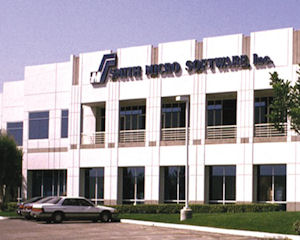
Aliso Viejo-based Smith Micro Software Inc. plans to cut about 20% of its work force—more than 100 employees—and close some offices as part of a restructuring plan.
The company makes software for cell phones and connecting mobile devices to wireless networks. It has more than 500 employees, according to Business Journal’s list of largest software makers based here, with about 200 in Orange County.
The cuts are needed “to bring the company’s operating expenses better in line with revenues,” according to a recent filing with the Securities and Exchange Commission.
The restructuring plan, expected to take effect during the current quarter, “involves a realignment of organizational structures, facility consolidations/closures and headcount reductions.”
Smith Micro ranked No. 12 on the Bus-iness Journal’s list of largest software companies by revenue with $118 million in sales for the 12 months through March, down one spot from a year earlier.
Problems have been bubbling since the beginning of the year. They spilled over last month when the company announced third-quarter revenue projections below Wall Street expectations.
Smith Micro provided a third-quarter revenue outlook of $12.6 million.
Analysts on average had forecast revenue of $13.8 million.
The company is expected to report third-quarter earnings Nov. 2.
Smith Micro’s dim view on revenue sent its shares down more than 12% to a market value of about $42 million in recent weeks.
New York-based Standard & Poor’s Financial Services LLC last week removed Smith Micro from its SmallCap 600 Index. It said Smith Micro’s market value “is no longer representative of the small cap market space.”
Companies on the SmallCap 600 make up about 3% of U.S. stocks and have an average market value of about $840 million. Smith Micro had one of the lowest market values in the index.
Smith Micro has seen declining revenues in each of the last three quarters as big customers flock to other software providers, according to Kevin Dede, a managing director and telecommunications analyst at New York-based Brigantine Advisors LLC.
“Many of their customers are using alternative software packages to connect to mobile hotspots,” said Dede, who stopped recommending the stock in February. “The company is in a tough spot.”
Smith Micro did not respond to requests for comments for this story.
· Headquarters: Aliso Viejo
· Business: software
· Founded: 1982
· Ticker symbol: SMSI (Nasdaq)
· Market value: about $42.5 million
· Notable: cutting 20% of work force as part of restructuring spurred by falling revenue
The company’s bread and butter is selling software that’s used by big cell phone service providers. Among its largest customers are Verizon Wireless Inc., a unit of New York-based Verizon Communications, Kansas-based Sprint Nextel Corp. and AT&T Inc. of Dallas.
Those carriers accounted for two-thirds of Smith Micro’s $130 million in revenue in 2010, according to SEC filings. Verizon and its affiliates accounted for 40%.
Verizon has a high inventory of Smith Micro’s connectivity software, primarily USB data modems, as it migrates to its “4G long term evolution network,” according to Dede. The 4G network, which launched late last year, promises to boost download speeds and allow users to do more with their smart phones.
The shift to 4G has been slower than originally anticipated but is generally seen as an eventuality. It appears the shift has decreased the need for one of Smith Micro’s major products and left the company with a gap in its lineup for now, according to Dede.
“Verizon’s enterprise customers have basically stopped buying connectivity devices,” Dede said. “Smith Micro needs to adjust its cost structure based on new revenue levels until sales of other software starts to catch on.”
Some of its other software does over-the-air updates and helps mobile devices to connect to a carrier’s network.
Dell, HP
The company also does what’s called connection management software for computer makers such as Dell Inc. in Texas and Palo Alto-based Hewlett-Packard Co.
Smith Micro has acquired numerous companies in the past decade and will aim to consolidate or close some of them as part of the restructuring plan. It has already renegotiated a lease for a 55,600-square-foot operation in Pittsburgh, according to Dede.
The company has a 52,700-square-foot headquarters in Aliso Viejo with leases that expire in 2016 and 2022, according to SEC filings. Other U.S. locations include 21,000 square feet in Mountain View under lease until 2014; a 14,400-square-foot location in Chicago under a lease until Aug. 2012; and a 15,300-square-foot space in Watsonville under lease until 2018.
A 7,700-square-foot facility in Herndon, Virginia, and a 4,200-square-foot space in Austin, Texas, had leases set to expire earlier this year.
International Offices
Smith Micro has international operations in Stockholm, Sweden; Belgrade, Serbia; Oslo, Norway; and Vancouver, Canada. Those leases are one to three years, according to SEC filings.
Implementing the restructuring plan is expected to cost the company $2 million to $2.5 million. The charges will be recorded in the current quarter and are primarily related to severance packages, according to the filing.
