

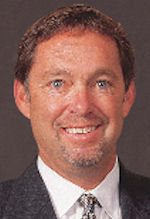
An investment in a cup of joe turned out to be a deal of a lifetime for Paul Heeschen.
Heeschen, who runs Newport Beach investment firm Heeschen & Associates, was the big winner in a $290 million buyout of Irvine-based Diedrich Coffee Inc., where he’s chairman and majority owner.
In a deal set to close this month, Vermont-based Green Mountain Coffee Roasters Inc. is buying Diedrich, a seller of coffee to stores, restaurants and offices that just a few years ago was left for dead.
Heeschen’s 58% stake is worth about $170 million in the buyout (before his costs to exercise warrants). That’s a rich re-turn on an estimated $9 million he’s put into Diedrich since 1992.
“It’s been a wild and fun ride,” Heeschen said.
The sale caps off a shift that has played out at Diedrich in the past few years.
Diedrich used to run coffeehouses and was the No. 2 behind Starbucks Corp. in the 1990s. But the company’s expansion bid brought big losses.
In 2004, Diedrich sold the international operation of its Gloria Jean’s coffeehouse chain to Australia’s Jireh International Pty. Ltd. for $16 million upfront plus an additional $7.3 million.
The company got rid of the last of its Diedrich coffeehouses in 2006, when it sold 40 of them to Starbucks.
Diedrich sold all remaining coffeehouses in 2009 when it sold its Gloria Jean’s Gourmet Coffee & Teas in the U.S. to Praise International North America, an affiliate of the Australian group that bought the international Gloria Jean’s a few years earlier.
Starting in 2005, a smaller Diedrich started turning its focus to selling coffee to stores, restaurants, offices and coffeehouses. The switch helped drive a turnaround.
By early 2009, Diedrich’s profits and shares were soaring—they ended 2009 up about 9,500% with a market value of about $200 million, including diluted shares.
The driver: a new type of coffee gizmo known as the K-Cup.
K-Cups allow you to brew a single cup of coffee in a special machine by putting one of the K-Cups into a slot where coffee grounds and a filter would go on other machines.
They’ve been a hit among companies looking for ways to cut back on the cost of coffee provided for employees.
Green Mountain’s Keurig Inc. developed K-Cups and licensed them to Diedrich. Green Moun-tain made a consumer push for holiday sales of K-Cup brewing machines and coffee cups.
Diedrich’s growing sales of K-Cups got the attention of Green Mountain, and erstwhile suitor Peet’s Coffee & Tea Inc. of Emeryville.
From November to early December, Green Mountain and Peet’s exchanged or matched offers for Diedrich.
Peet’s first offered $213 million in cash and stock for Diedrich in November.
The bidding war ended in early December when Peet’s declined to match or top Green Mountain’s $290 million offer.
Green Mountain was determined to prevail to consolidate production and sales of K-Cups, according to Mitchell Pinheiro, an analyst with Philadelphia-based Janney Mont-gomery Scott LLC.
Producing and selling K-Cups is about twice as profitable as collecting royalties from licensees, Pinheiro said.
“Green Mountain seems committed to rolling up its K-Cup licensees,” said David Tarantino, an analyst with Milwaukee-based Robert W. Baird & Co.
Diedrich has seen a handful of chief executives, different investors and even a failed 2007 buyout bid by Berkeley-based coffee distributor Coffee Pacifica Inc.
Heeschen has been a constant since 1992, when he invested $1 million in Diedrich.
The company got its start in 1984 when Martin Diedrich opened coffeehouses selling beans as well as freshly brewed coffee.
Martin Diedrich left in 2004 and now runs Kéan Coffee in Newport Beach and Tustin.
There have been six Diedrich chief executives since 2000, not including Heeschen’s stint as interim co-chief executive and current chief J. Russell Phillips, who is leaving with the buyout.
Heeschen sold some stock in Diedrich’s 1996 public offering, recouping an original investment that grew to $2 million by then.
He went on to put an additional $7 million in Diedrich.
