After a devastating year and a half for the hospitality industry, there are strong signs of life for Orange County’s hotel sector.
Disneyland’s reopening and an end to many pandemic-related restrictions—including travel bans and mask mandates—have brought a return of consumer confidence in the region, specifically the hard-hit city of Anaheim.
As a result, occupancy rates are starting to move upwards, with hotel operators preparing for a busy summer.
“What we are finding is there is a lot of pent-up demand with travelers wanting to get out of the house and travel,” said Pam Ryan, general manager of the Inn at the Mission in San Juan Capistrano, which opened in September and has seen several sold-out weekends since.
Bill O’Connell, who counts six hotels in Anaheim as chief executive of hospitality firm O’Connell Hotel Group, notes that average occupancy rates at his local properties have risen from about 15% last year to north of 50% currently.
“We expect to be at about 70% to 75% occupancy this summer,” O’Connell said. “We are gradually climbing out of the hole.”
JW Marriott
One of O’Connell’s Anaheim properties includes the JW Marriott Anaheim hotel that opened last August next to the Anaheim GardenWalk shopping center and a short walk to Disneyland, and the Anaheim Convention Center.
O’Connell Hotel Group developed the 12-story development with Orange-based Prospera Hotels, with a development cost of roughly $300 million.
The 466-room Marriott was the largest hotel in California to open in 2020, and it is now the 17th-largest hotel in the county.
This week’s list ranks the largest hotels in OC, with a minimum cutoff of 250 rooms.
The 55 hotels on the list include 23,523 rooms, up from 22,575 rooms a year ago.
The list includes a few local properties that remain closed as a result of the pandemic. This includes two notable Irvine Co. properties: the 536-room Hotel Irvine and the 295-room Fashion Island Hotel.
The Newport Beach-based company’s Resort at Pelican Hill has remained open throughout the pandemic.
New Hotels
Three hotels opened in the county since last year’s list, all in Anaheim, including:
• The 613-room Westin Anaheim Resort, the No. 6 largest hotel in the county and Anaheim’s second four-diamond resort not on Disney grounds, joining the JW Marriott Anaheim (see story);
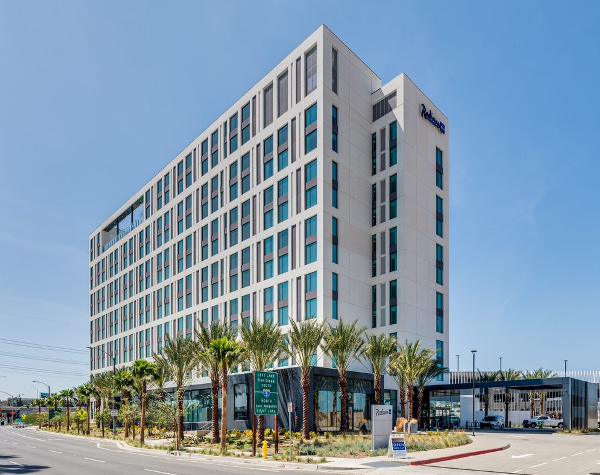
• The 326-room Radisson Blu Anaheim, No. 32 out of the 55 hotels on this year’s list; and
• The 308-room Hotel Lulu in Anaheim, a Best Western boutique hotel owned by San Diego-based J Street Hospitality Inc.
Expect future hotel development in Anaheim to slow, with fewer rooms in planning and construction financing harder to come by.
“I think all of the hotels that were in the development stage are completed now,” said O’Connell, estimating that north of 5,000 rooms have been built in Anaheim in the past four years.
“While we have opportunities to develop in Orange County, we don’t have plans to do so in the immediate future,” O’Connell said.
Coastal Markets
Tourism markets like Anaheim that rely on convention center and theme park business were hard hit by the coronavirus, while coastal hotels fared better, with demand stemming from local residents and tourists from nearby cities.
Such was the case at the Surf & Sand Resort, a 167-room hotel that overlooks the Pacific Ocean.
“Our location in Laguna Beach drove a lot of demand over the past year, and we’re only seeing that demand grow as those who missed out on their annual trip here last year plan to return this summer,” said Chris Newton, the resort’s director of marketing.
Newton expects to soon see an increase in business from out-of-state visitors, a segment that was largely cut off last March.
This is also the case for the Inn at the Mission, which plans to capture demand from new travelers, as well as the return of the local weddings market.
“We recently hosted our first wedding which was amazing, and every weekend in July we have a wedding on the books,” Ryan said.
Staffing Headwinds
Hotels reported that their employee base dipped just 2.6% from last October to 7,474, as properties continue to call employees back following major furloughs in 2020. Furloughed employees are included in the employee count. Many hotels are still operating well below full capacity.
Many operators pointed to staffing challenges as the biggest headwind coming out of the pandemic, with properties competing with each other, as well as unemployment benefits when recruiting locally.
“We have already had to adjust our wage rates several times based on what we are seeing in the market,” Ryan said.
O’Connell notes that his firm employs about 1,000 employees across six hotels; half of which have returned.
“We’re calling back everyone, but many jobs are still going unfilled,” he said.