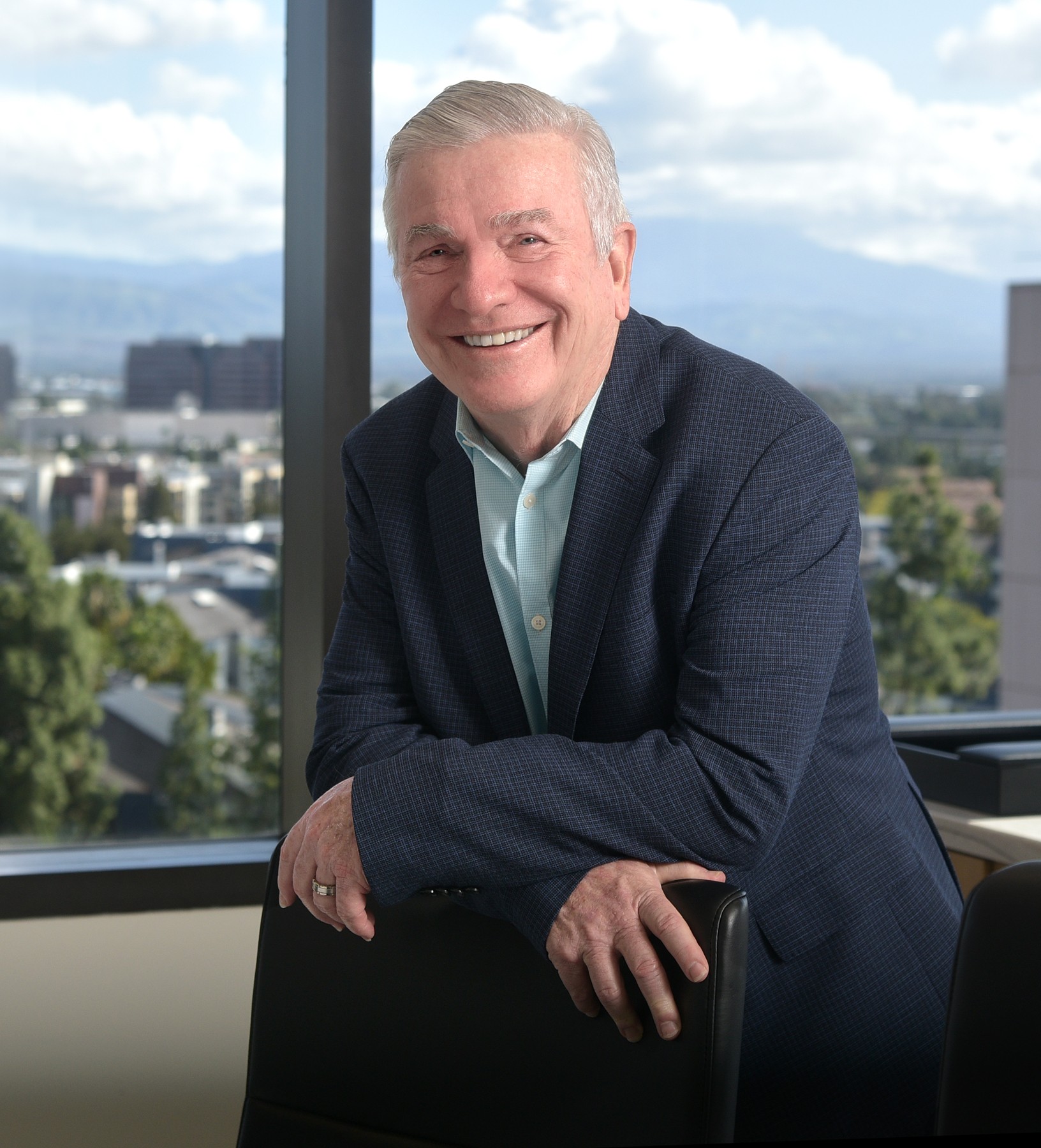
Mercury General Corp. (NYSE: MCY) is an insurance holding company headquartered in Los Angeles where about 100 work at its 41,000-square-foot facility.
However, out of its seven offices, its biggest two by far are in Brea where they occupy 236,000 square feet to manage its insurance businesses and its information technology center. Of its 4,600 employees, about 1,600 work in Orange County. The vast majority, about 1,400, are in Brea, including Chief Executive Gabriel Tirador.
“Most of our operations are in our Brea facilities,” Tirador told the Business Journal last week. “There’s good talent pool in Orange County, a lot of good universities.
“Housing costs are high but still reasonable. It’s a convenient location, somewhat central in Southern California.”
Mercury by itself surpasses all companies on the Business Journal annual list of insurance brokers in Orange County (see page 25).
This week’s list shows the 22 biggest brokers in Orange County generated a combined $845.6 million in revenue in 2019. By contrast, Mercury reported $4 billion in revenue in 2019.
“We primarily distribute our products through independent agents,” Tirador said. “Our founder was an independent agent. We feel very strongly about the relationships we have with our agents.”
Mercury Insurance ranked as the fourth-largest private passenger automobile insurer in California overall, with $5.9 billion in total assets. Mercury also writes automobile insurance in 10 other states and homeowners insurance in nine other states, including Arizona, Georgia and New York.
About 75% of its premium revenue, around $2.8 billion, is derived from auto insurance, particularly in California. Homeowners insurance accounts for about $600 million, or 16% of its business.
It also generates about $217 million in commercial auto insurance, or about 6%. It provides other business lines such as mechanical and umbrella insurance that represents around $138 million.
“We are the No. 1 independent agent company in California,” he said.
Cuba Native
Mercury got its start in 1962 when George Joseph began selling insurance policies (see story, page 28). Joseph, who is still chairman, gradually built the business and expanded to Brea in the 1980s.
In 1998, Mercury hired Tirador as chief financial officer. Tirador, a native of Cuba whose parents fled there when he was 4 years old, had previously worked as an auditor at KPMG LLC and as a controller at Automobile Club of Southern California.
Tirador became president in 2001 and then took on the CEO role in 2007.
“I used to have two offices,” said Tirador, a resident of Tustin. “Years back, I decided I don’t need to be in Los Angeles.”
A Value Stock
Like other firms, about 95% of his employees have been working from their homes since the pandemic began, something that he doesn’t expect to change until the company can ensure the safety of its employees.
The drop in traffic during the coronavirus also caused less driving and hence fewer accidents.
Last month, Mercury said its “Giveback Program” has returned $128 million to customers in premiums in a four-month period since the start of the pandemic.
Just like the stock market, its results have been on a roller coaster ride.
It reported second-quarter net income jumped 175% to $228.2 million from the same period a year ago. That compares to a first-quarter loss of $139 million.
The wild swings are because the company must include investment losses or gains in the income statement as part of mark-to-market accounting rules.
In the first quarter, it reported net realized investment loss of $251.3 million, a category that changed to a second-quarter gain of $158.4 million.
Its shares have also been topsy-turvy, rising to $64 a year ago, before falling to $35 in March and now hovering around $43 at press time, giving Mercury a market value of about $2.3 billion.
What does Tirador need to do to convince investors that Mercury’s stock is worth more?
“If we continue to improve our earnings, our operations, long term the stock will take care of itself. Right now, the technology sector is really hot, and their valuations are in the stratosphere. Value stocks are not as in demand.”
Mercury also has “a very attractive” dividend yield of about 5.9% based on its stock price, Tirador added.
No $200 Bumpers
Long term, assuming the frequency of accidents return to pre-COVID-19 levels, he doesn’t see rates for autos nor homes coming down because of the rising costs to repair increasingly sophisticated vehicles, the increase costs of bodily injury payouts and in homeowners the increased risk of wildfires.
“Bumpers used to cost $200 to fix. Now they have a bunch of electronics and cost much more,” he said.
While Silicon Valley is trying to take over other industries, it’s having a tougher time in insurance, he said.
“Insurance is not like selling a TV,” Tirador said. “There’s a lot of fraud. Having a superior claims and underwriting operation is essential to be successful in this business.”
Insurance fraud is the second most costly white-collar crime in America behind tax evasion, accounting for at least 10% of property and casualty claims, Mercury said.
For example, Mercury in March issued a press release warning that organized crime rings are falsifying insurance policies to use homes to illegally grow marijuana. In another case, one investigator found that a policy’s water loss was staged, and his findings saved Mercury $50,000. The policyholder was sentenced to 17 years in prison for that fraud and others.
Insurance companies are using technology to improve their offerings.
“Where we’re focused is how to squeeze costs out of our system without compromising” the company’s services, he said.
Mercury allows consumers to buy insurance online without the presence of an agent.
Still, most insurance is sold by an agent. He predicted the role of agents won’t be going away soon to be taken over by automated process online.
“What we find is when you’re young, you may not want an agent, you may not want or need the advice,” he said. “As you evolve, you get married, have kids, buy a house, the advice of an agent is important. I still believe that at least for the foreseeable future. The bigger segment will still want to interact with an agent.”