Acorns Advisers LLC is growing much faster than a typical oak tree.
Since the 2014 launch of its web app, which rounds up spare change from customers and places the money in an investment account, assets under management at the Irvine-based company have increased to more than $1.5 billion. Its number of clients jumped from 4.5 million in January to 5 million as of last week.
It’s impressing investors such as BlackRock Inc. and Comcast Corp., which has brought along a partnership with business channel CNBC.
The micro-investing company to date has raised $250 million from investors including two Nobel Prize winners, basketball and Hollywood stars and the wife of the publisher of the New York Times.
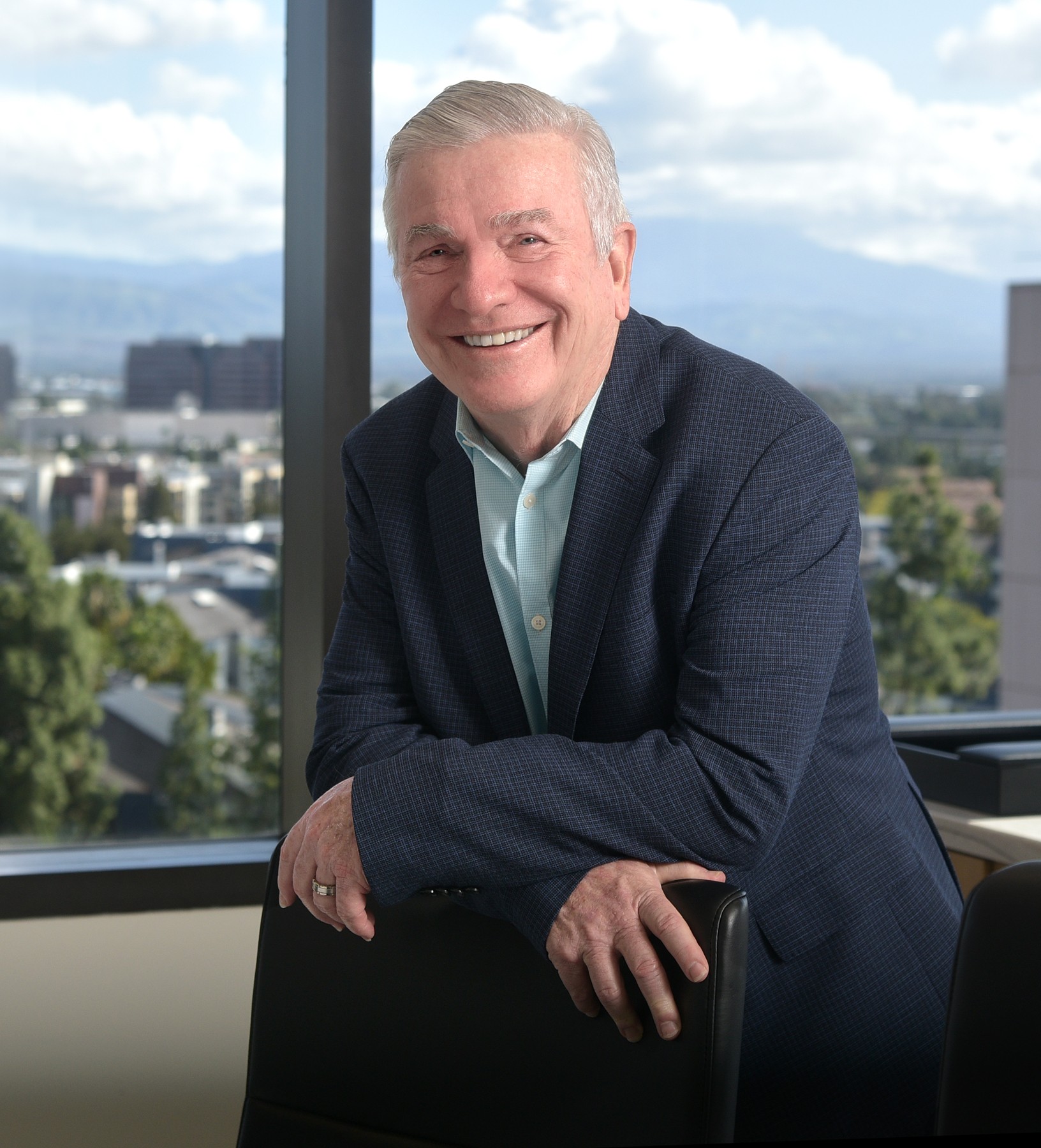
“Everybody believes in the mission and the social impact of Acorns—that’s why everybody is getting behind the company,” Chief Executive Noah Kerner told the Business Journal.
Acorns has become so hot that it may soon be Orange County’s newest unicorn—a private tech company that surpasses $1 billion in valuation.
The company’s latest round of funding in January gave Acorns an $860 million value.
To put that in perspective, Newport Beach-based United Capital Financial Partners Inc.—No. 2 on Barron’s 2018 list of Top 40 Independent Financial Advisors—grew its assets to $25 billion as of last month, when it announced it was being sold for $750 million to Goldman Sachs.
While Acorns is a registered investment adviser, placing No. 28 on our list of RIAs (see list, page 31), it isn’t valued like a traditional wealth manager because it’s positioned as a fintech, valuation experts told the Business Journal.
Such fintech companies lack a typical infrastructure like retail branches and their products more easily meet the newest financial regulations, whereas traditional money managers have other legacy businesses not created for the modern regulatory environment, said James Marshall, who is the Southwest markets deals leader for PricewaterhouseCoopers LLP.
Perhaps Acorns’ most important edge is a business model that can scale quickly to attract millions of millennials who may generate high amounts of future wealth.
The ability of such companies “to attract, retain and cross-sell this customer cohort, at scale, is exactly the kind of growth in revenue and profitability for which investors are willing to pay a premium,” Marshall said.
“Disruptive players in the banking and wealth management business have a number of advantages that are leading to premium multiples of assets under management and book value that you don’t see in traditional players,” he said.
One Dollar Times 50
Acorns was founded by Walter Cruttenden and his son Jeff.
The idea began when Jeff, who was immersed in investing since childhood, noticed that many of his classmates at Lewis & Clark College in Portland, Ore., were interested in investing but were turned off by high initial costs, expensive commissions and the endless choices of stocks, bonds and exchange-traded funds.
“It’s difficult to part with $50, but it’s much easier to part with one dollar 50 times,” Jeff Cruttenden told the Business Journal in a 2014 article. “We set out to build an entirely new type of broker-dealer.”
“Investing is best done early and often, and too many people put it off,” added Walter Cruttenden. “We think this is a simple way for people to earn average market returns over the long term.”
Walter Cruttenden is known locally for starting in 1984 what eventually became Roth Capital Partners LLC, which is now the largest investment bank based in Orange County.
Walter Cruttenden was also the founder and chief executive of E-Offering, the investment banking arm of Menlo Park-based E-Trade Group Inc., which became the top provider of online initial public offerings before its $328 million sale in 2000 to Wit Capital Group in New York. It was later sold to Charles Schwab Corp.
Earlier this year, Walter Cruttenden began Newport Beach-based Ant Transaction Machines, a service that would allow users to be paid up to $100 a month for allowing collection and use of their personal data by online companies like Google, Facebook and Amazon.
DJ Turned CEO
Kerner, a graduate of Cornell University where he studied psychology and economics, has a resume not often seen in the wealth management world.
At age 16, he began as a disc jockey in New York City night clubs and DJ’d for artists such as Jennifer Lopez.
He’s founded three companies including Noise, which developed products like apps and marketing campaigns for over 200 products, including Facebook’s first app and Amazon’s first white-label store.
He became familiar with the financial world by working for eight years with Chase, creating its first credit card for students to reward responsibility rather than spending—a 500,000 card portfolio—and redeveloping Chase’s travel rewards experience, which trended to $1 billion in sales.
Kerner was featured as a “Top 30 Under 30” in Billboard Magazine, a Fast Company “Innovation Agent,” and one of AdWeek’s “Top 20 under 40.” He also advises and invests in a variety of fast-growing startups.
Noise was sold in 2013 to coworking landlord WeWork, where he became an investor and its first chief marketing officer before leaping to Acorns in 2014.
3 Revenue Streams
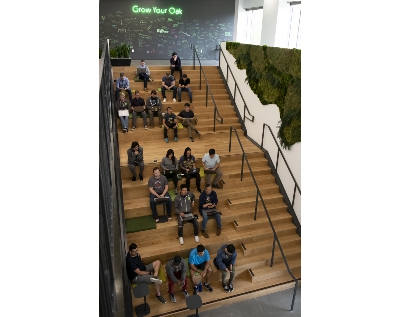
Acorns is up to 300 employees with a goal of hiring 100 more this year, the majority in Irvine, as well as its offices in Portland, Delaware and New York City.
It’s moved into a renovated 91,100-square-foot building that once housed Broadcom at UCI Research Park (see story, page 61).
Kerner declined to reveal how much revenue the company is generating, except to say last year the company doubled its sales.
“We’re growing nicely,” Kerner said.
It has a three prong strategy to increase sales.
• It charges a subscription ranging from $1 to $3 a month.
“It’s easier for people to understand subscription pricing; we don’t make people do the math,” he said. “We don’t take money from assets. That kind of opacity leads to lack of trust.”
It currently has 5 million accounts, implying it’s generating at least $5 million a month, or $60 million a year.
That model creates far more revenue than the 1% annual fee an asset manager typically charges, which would be $15 million on $1.5 billion in assets.
“We have an ambitious goal of 100 million Americans,” Kerner said.
• It offers “Acorns Spend,” which is a branded debit card tied to a checking account that charges $3 per month. The company already has 413,000 such accounts since its December launch. The card promises to invest up to 10% of a user’s purchases at locally-frequented stores.
“Our vision is a financial wellness system,” Kerner said. “It’s more than just a bank.”
• It partners with brands like Oakley, Kohl’s and 1-800-Flowers.com, which advertise on the Acorns website. When consumers spend money on those brands, a portion goes back into the consumers’ account at Acorns.
Grow with Customers
Kerner said 40% of its customers are over 35 years old. That means 60% are under that age, representing an audience highly sought by advertisers and investors.
“The reason we like young people is because the earlier you start, the better off you are,” he said.
Acorns could be considered a “robo-adviser” where users have minimal contact with human beings. Wealth managers say robo-advisers are fine for consumers with relatively small investments, but individuals who have to make decisions that affects millions of dollars of their assets generally don’t want to rely on an algorithm.
Kerner said the majority of its clients now have $600 to $700 each and Acorns will accommodate their future needs.
“We will grow with our customers,” he said. “We will be adding products and services to meet expanding needs.”