A nondescript apartment complex along the Pacific Coast Highway is the headquarters of one of the world’s most innovative film companies.
MacGillivray Freeman became famous as the father of modern IMAX movies like “Everest,” “National Parks Adventure” and “To Fly,” which is still shown 50 years after its debut at the Smithsonian Institution’s National Air & Space Museum in Washington, D.C. The company has worked with world famous movie stars like Jeff Bridges, Liam Neeson and Matthew McConaughey.
It remains a family-run business with Shaun MacGillivray as president and his sister, Meghan, as vice president in charge of production, while their mother, Barbara MacGillivray, is director of research. Father Greg MacGillivray, who began the business with Jim Freeman in the 1960s, is chairman and still pops in every so often.
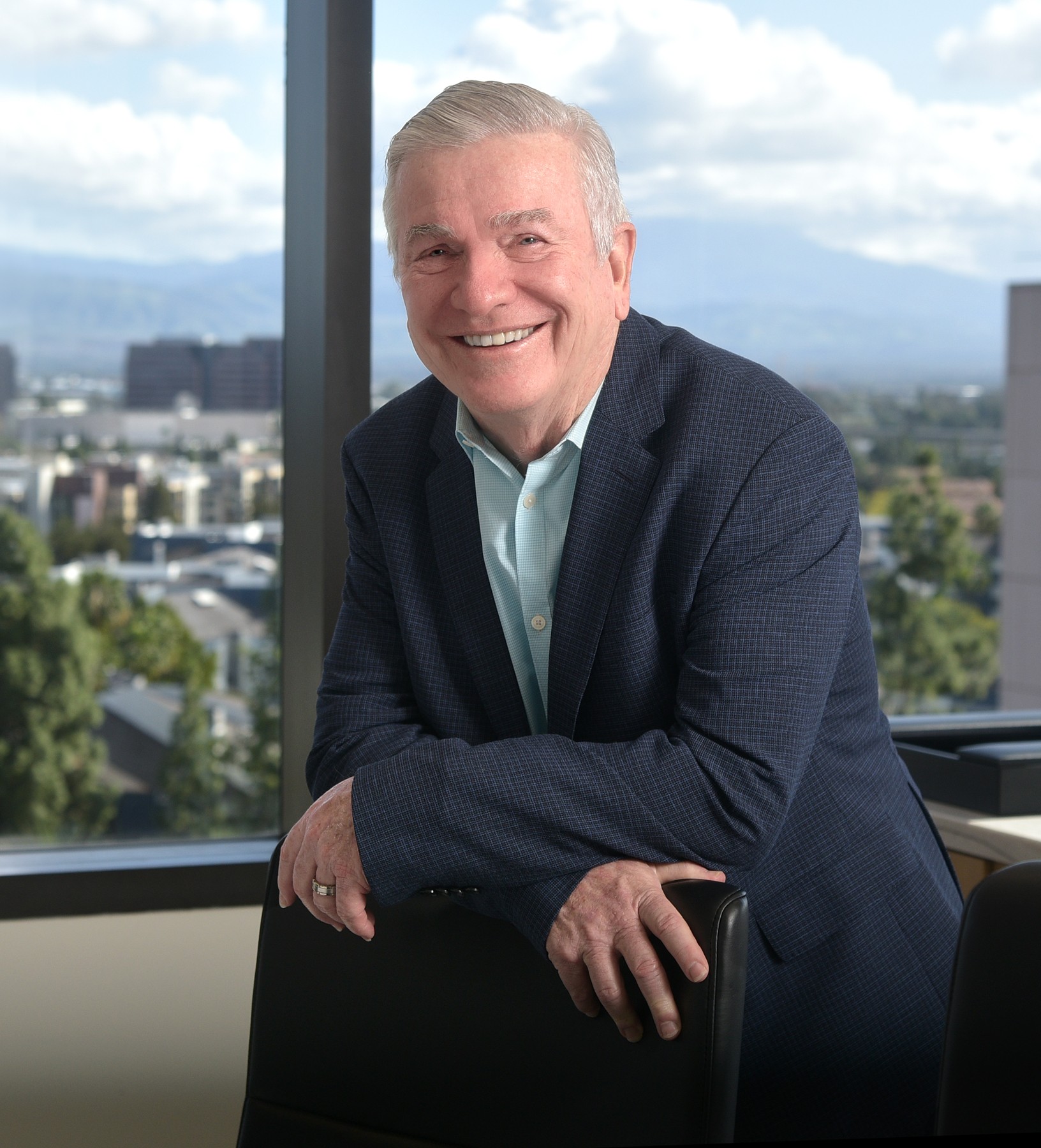
“My dad in a lot of ways is considered the Steven Spielberg of IMAX filmmaking,” Shaun MacGillivray told the Business Journal during an interview at the company’s 50-seat studio.
“But he’s also incredibly collaborative and just somebody who is fun to work with. He’s been a mentor to me in a lot of ways.”
The company is not resting on its laurels. It has produced more than 40 IMAX and giant-screen films, helping define the modern large-format documentary category. It’s providing a film for the upcoming Flying Leatherneck Aviation Museum at the former Marine Corps Air Station El Toro.
It’s worked with local companies, such as Irvine-based Edwards Lifesciences, to feature its innovative heart catheter, TAVR, in the film “Superhuman Body: World of Medical Marvels.”
“What they’ve done when it comes to TAVR is incredible science and engineering,” Shaun said. “It was a fantastic experience working with them.”
Its largest and most expensive project to date was for the world’s biggest aquarium, SeaWorld Abu Dhabi, a $1.2 billion development that opened in 2023. The company put together a film that’s the next step beyond IMAX—shown on a 50-foot-high 360-degree LED screen with a 700-foot circumference.
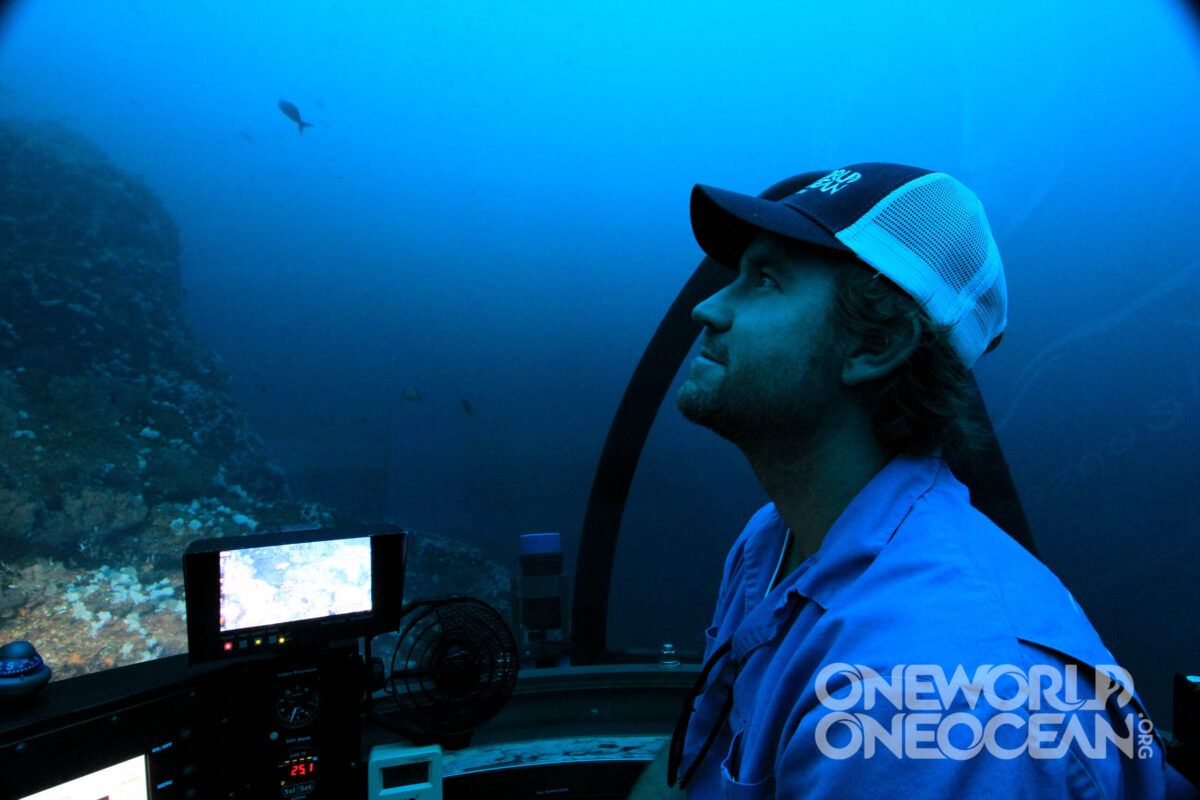
“We filmed all over the world, capturing the most beautiful underwater sequences where people really feel like they are there in that sea world,” Shaun said.
Despite its success, it remains a lean, highly specialized team of about 25 employees, producing large-format films that have reached hundreds of millions of viewers globally across theatrical, educational and streaming platforms. This week, the Business Journal is highlighting a variety of small Orange County companies as well as our annual list on SBA lenders.
The 350-Pound Grouper
Shaun was inspired by his father’s work at age 13 while snorkeling on the film set in Palau in the South Pacific, where he witnessed a grouper the size of a refrigerator swim past.
“I saw this 350-pound grouper looking at me, and I’m looking at it. Some people get a chance to experience that but not many. I grew up on location; I was a cheap extra in a lot of these movies,” he laughed. “And early on, I fell in love with seeing the process of it.
“I always thought when I was growing up, if I was able to figure it out where I could do that for a living, later on, how special and kind of amazing that would be.”
Shaun received a Master of Fine Arts degree in filmmaking from USC, where he learned storytelling and met creative professors and students.
About a decade ago, he gradually assumed the role of president and has since overseen the development and production of more than 20 films across theatrical, educational and global streaming platforms.
“It’s hard to pick your babies, but I’m very proud of our film “To the Arctic.” That was a film where we went to Svalbard, Norway, and we filmed a mother polar bear and her two cubs for about five days straight.
“They became the central characters in this incredible story. We had Meryl Streep as the narrator, and we partnered with the World Wildlife Fund and Coca-Cola on the project.”
The Difference from Hollywood
The studio operates differently from typical Hollywood filmmakers.
MacGillivary Freeman’s model is to find partners such as museums and science centers, as well as corporate sponsors; he’s raised more than $40 million for IMAX educational films.
By contrast, Hollywood typically relies on revenue from theatrical releases and streaming services.
“Our films play for six months to sometimes years, whereas in Hollywood, it’s like a week or two,” MacGillivray said.
“What makes us unique is we’ve developed these incredible partnerships with museums and science centers across the country and around the world, and being able to tell big stories that are around certain topics that are important to youth and important to the world to know about, and then find the right partners that care about those topics and make it so that these films don’t feel like just a film, but they feel like events in their own right.”
More than a Film
The company is increasingly focused on the future of immersive storytelling, including large-scale experiential environments and global educational initiatives tied to its films.
The company typically works on three to five films at a time, and they all usually land on streaming services like Netflix and Amazon Prime Video.
“We’re always thinking about how these films can be more than a film? How can they educate kids differently? So, the idea is for a kid to see a film and say, ‘Okay, maybe I can do that when I grow up.’ We want to open their eyes, light the spark.”
The company has built a subscription-based streaming platform, “Movies for Families,” which is a small part of its business to date, he said. It’s also developing an app for the Apple Vision Pro.
He declined to reveal its revenue figure, saying it often fluctuates due to the timing of new films.
The company plans to stay in Laguna Beach, which is 70 miles south of Hollywood.
“I think my dad was pretty smart when he thought that he wanted to be close enough to Hollywood while not being in Hollywood. And I think Laguna Beach has an incredible creative and artistic community. And we’re excited that we’re a small piece of it.”
The ‘Everest’ Backstory
MacGillivray Freeman’s most famous IMAX film was “Everest,” which involved taking giant cameras to the top of the iconic mountain.
It took the documentary world by storm, setting several attendance records when it opened in 1998.
What’s less known were the rescue efforts of the film crew in a disaster that took the lives of eight people on two other expeditions trying to climb the mountain.
That tragedy became the subject of a famous book, “Into Thin Air,” by Jon Krakauer and eventually two separate films.
The MacGillivray Freeman film team was at the base camp at 18,000 feet when they heard about the unfolding tragedy and helped coordinate the rescue efforts with their telecommunications equipment, which was the best on the mountain.
At that time, Shaun MacGillivray was a high school student in Laguna Beach, where he monitored the unfolding disaster by satellite phone.
“When it came to Everest, it was an incredibly iconic experience for me, just being a witness to my dad when he was hearing the story of what was happening on the mountain and having to make decisions on the spot.”
Shaun was astounded when he saw the rough cuts.
“I was thinking, ‘This could be a really big film.’ And then it became a really, really big film and obviously was incredibly impactful for my dad and our company.”
“Everest” became the highest-grossing giant-screen documentary of all time and helped establish the giant screen format globally.