

Dutch health tech startup Alphabeats is moving its corporate headquarters from the Netherlands to Orange County.
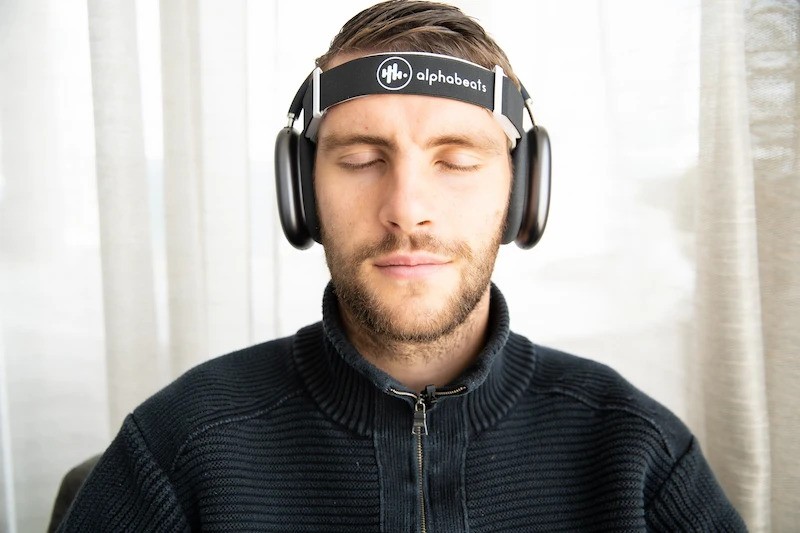
The company, founded in 2019, develops wearable electroencephalogram (EEG) technology to enhance sleep, focus and recovery, and believes there’s a bigger market for its products in the U.S.
Overseeing the move is its new Chief Executive Jorrit DeVries, whose appointment was announced last month.
“If you think about athletics and sports, there is no bigger market than in the U.S.,” DeVries told the Business Journal.
The company timed the announcement just ahead of major sports events such as the 2026 FIFA World Cup, where a portion of the matches are set to be held in Los Angeles, as well as the upcoming 2028 Summer Olympics.
DeVries, a former Spotify executive, hopes to increase brand awareness for Alphabeats through partnerships with professional athletes.
Alphabeats was recently named an official mental performance partner of USA Triathlon’s Project Podium, a young athlete development program based out of Arizona State University.
Music-Focused Career
No physical location has been selected yet for its HQ.
In the meantime, the company is “embracing” a hybrid model like how it does in the Netherlands, according to DeVries.
The company’s research and development will remain in Eindhoven, Netherlands with the commercial side of the business moving to the U.S.
“If you think about the marketing business, basically how we want to grow the company going forward, will be done out of Orange County,” DeVries said.
DeVries joined Alphabeats a year ago as board advisor, then became chief commercial officer and president before starting as CEO in October.
Prior to Alphabeats, he was the former global head of category development at Spotify and held previous roles at Samsung, Vodafone and record label Warner Music.
He moved to the U.S. with his wife in 2014 and is currently living in Laguna Beach.
Getting Into the ‘Alpha State’
Alphabeat’s EEG headband tracks and regulates brain activity with the aim of helping people tap into the “alpha brain state.”
The brain produces alpha brain waves during moments of relaxation and decreased mental activity, making it easier to focus without any interferences.
DeVries calls Alphabeats a “brain gym” for competitive athletes.
The accompanying app uses popular music to train the brain. When the app detects that the brain is distracted, it will modify how the song sounds and return to normal once the brain is back in focus.
“By doing that consistently, these athletes are able to tap back into what they learned or how they how they felt while they while they were listening to the music,” DeVries said.
The company suggests that people use alphabeats between eight to 12 minutes a day a couple of times a week.
Its audio technology was developed over 10 years ago by health tech company Philips in the Netherlands and has been featured in several research papers published by Tilburg University.
DeVries said Alphabeats launched a U.S. pre-order campaign in April with general availability in May.
It has raised approximately $4.2 million to date, converted from $3.75 million euros, with backing from Dutch venture capital firms such as DeepTechXL.
The next goal for Alphabeats is to raise an extended seed round in the U.S., or the equivalent of a Series A in the Netherlands, to help increase sales and marketing.
Alphabeats expects to close the round, which has yet to be announced, sometime early next year, according to DeVries.
