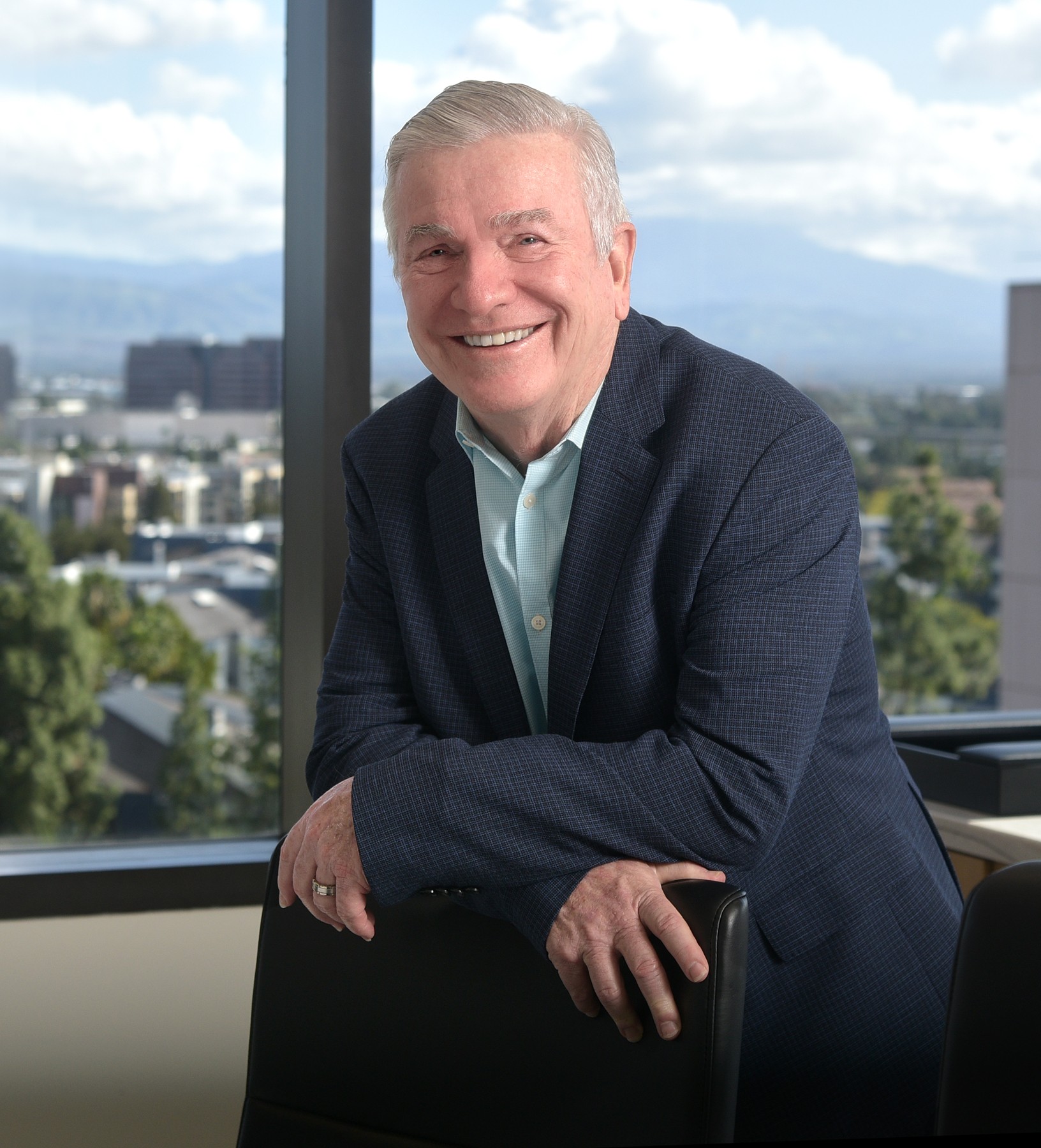
Emmanuel “Manny” Roman sure knows when to make an entrance.
Since he joined Newport Beach-based Pacific Investment Management Co. in late 2016 as chief executive, the firm has added about $220 billion in assets under management to an eye-popping $1.7 trillion.
Of course, it’s a lot easier to shine on a stage shared with Chief Investment Officer Dan Ivascyn, who oversees at least 230 portfolio managers handling more than 100 funds investing around the world.
About 93% of PIMCO’s assets topped their benchmarks in the trailing three-year periods as of Sept. 30, according to the most recent quarterly report of parent company Allianz SE. The period, a key benchmark to grade portfolio managers, also coincides with Ivascyn’s tenure as CIO.
The performance during the period is the main reason large institutional investors poured funds into PIMCO last year, Ivascyn said in an interview.
“In this business, the portfolio manager gets credit for the success. It’s really the team that drives returns. The team is underappreciated in asset management. PIMCO has a strong sense of partnership.”
Ivascyn’s own Income Fund, which is co-managed by Alfred T. Murata, ranked No. 1 in the trailing three- , five- and 10-year periods, according to Morningstar Inc. As of Dec. 21, it was eighth in its category, with an 8.29% return last year.
The fund currently has $105.3 billion in assets, almost four times its 2014 size, and is now the world’s biggest actively managed mutual fund. It’s also larger than the Total Return Fund made famous by legendary bond investor and PIMCO co-founder Bill Gross, who departed in 2014 in a flurry of acrimonious headlines.
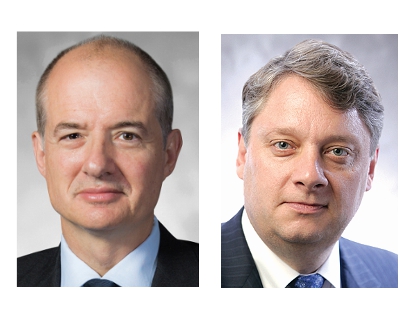
PIMCO’s rebound from the tumultuous period, its performances and its asset inflows, are three reasons the Business Journal picked the pair of executives as its businesspeople of the year in the finance category.
“One thousand days on from Gross’ departure, the firm has emerged as a force to be reckoned with,” said a Morningstar report issued in November. “The foundation of PIMCO’s investment process hasn’t changed, but the team, led by Ivascyn, has sought to bring more quantitative rigor to its decision-making and minimize the influence of behavioral biases.”
Boston and Arsenal
They are an unlikely pair. Ivascyn, 48, is a Boston sports fanatic who’s spent most of his business life in Newport Beach. Roman, a 54-year-old native of France who collects French wines and art and is a big fan of British soccer team Arsenal, honed his craft in London, one of the world’s busiest financial hubs. Both have MBAs from the University of Chicago.
No one could have foreseen their meteoric rise five years ago at PIMCO, then at the apex of its success as one of the world’s biggest bond funds. Its assets had more than doubled to $2 trillion from 2008, when Gross and colleagues accurately predicted the subprime real estate crisis. The biggest fund, Gross’ Total Return, reported 4.82% increase that year during the financial crisis, beating its category by an impressive 9.5 percentage points and whipping the S&P 500 Index by 43 percentage points.
Gross was the unquestioned “Bond King,” who Morningstar named bond manager of the decade. Chief Executive and Co-CIO Mohamed El Erian also made himself a household name, coining terms like “the new normal” and writing award-winning business books.
Then at the height in 2013, the underperformance began, the Total Return fund that Morningstar ranked No. 1 under Gross in 2008, sank to No. 60, and returned (1.92%). Assets started flowing out. In 2014, both El Erian and Gross departed, followed by stories about performance, backstabbing and peculiarities. The Wall Street Journal reported in September 2014 that Gross forbade traders “to speak to him or even make eye contact …” The pair’s exodus caused large institutional investors to consider whether anyone could follow in Gross’ footsteps.
One of Hundreds
When Ivascyn was chosen as chief investment officer the year Gross departed, he had officially emerged—no longer the relative unknown, one of hundreds of portfolio managers employed at PIMCO, where he’s worked since 1998.
He made his mark starting in late 2007, when he and Murata began Income Fund by investing in a wide variety of cheap debt. The timing was fortuitous because bargains were plentiful. The two won big by investing in undervalued assets, such as nonagency mortgage-backed securities. Their bond fund reported equity-like returns, including 19% in 2009, 20% in 2010 and 22% in 2012. Ivascyn’s former boss described him as “a beast” of a worker, who would spend his free time on weekends studying prospectuses. Morningstar named the two 2013 fixed income fund managers of the year.
Even so, institutional investors, who are legally obligated to avoid controversy, cast doubt on PIMCO’s leadership. By the end of 2015, the firm reported assets of $1.4 trillion—a $600 billion decline from the 2013 height.
PIMCO announced in June 2016 that it would cut 3% of its workforce, or 68 employees, leaving it with about 2,200. A month later, Doug Hodge exited the chief executive post, replaced by Roman.
Then Came Manny
Roman’s background as a top executive included 18 years at Goldman Sachs, where he was co-head of worldwide equity derivatives. In 2005, he joined GLG Partners Inc., an investment manager that was purchased in 2010 by London-based Man Group PLC, the world’s largest actively traded hedge fund and widely viewed as an industry bellwether.
Since Roman joined PIMCO, he’s outlined plans to push into hedge funds, real estate and other alternative assets. Importantly, he didn’t use the first six months to make drastic cuts or install outside executives—as new CEOs often do in such scenarios. Roman stanched an outflow of portfolio managers, many of whom could be stars of their own at other wealth firms. In January he named 17-year PIMCO veteran Kimberley Stafford as head of Asia Pacific; in June he elevated PIMCO veterans Robin Shanahan and Peter Strelow, both managing directors, to co-chief operating officers. Ivascyn said the new boss allowed his managers to focus on investing.
Meanwhile, PIMCO settled two lingering lawsuits. In late 2016, it agreed to pay $20 million to the Securities and Exchange Commission to settle charges the firm misled investors about an exchange traded fund. Significantly, it avoided a scandalous trial in March that could have revealed details about its bonus system—known for rewarding tens of millions of dollars to high-performing managers—by settling with Gross for a reported $81 million.
Much of the firm’s recent growth has come overseas, an area where Roman has made his mark, Ivascyn said. PIMCO is eying growth abroad, particularly in Asia, he said.
“What Manny has done is set a very high bar across the firm,” Ivascyn said.
In a sign of good things to come, PIMCO is planning to add 200 employees this year.
Wait, There’s More
To top off 2017, Ivascyn’s GIS Income Fund doubled in size to $31.2 billion, becoming the biggest mutual fund in Europe.
Roman’s 2017 can be likened to the Rams’ first-year head coach Sean McVay— a complete turnaround with many of the same players. Both have tough acts to follow.
PIMCO’s asset flows were already starting to turn positive when he arrived as a result of prior decisions by Ivascyn and his team, said Miriam Sjoblom, Morningstar’s director of fixed income strategies.
“We’re watching to see what Manny’s impact will be on PIMCO in the years ahead,” she said. “The thing that Dan has done so well is making sure that the PIMCO investment team gets the most out of all of its resources and that the success of the firm doesn’t depend on any one individual.”
That’s probably the best explanation for why Ivascyn doesn’t mind sharing the stage with Roman.