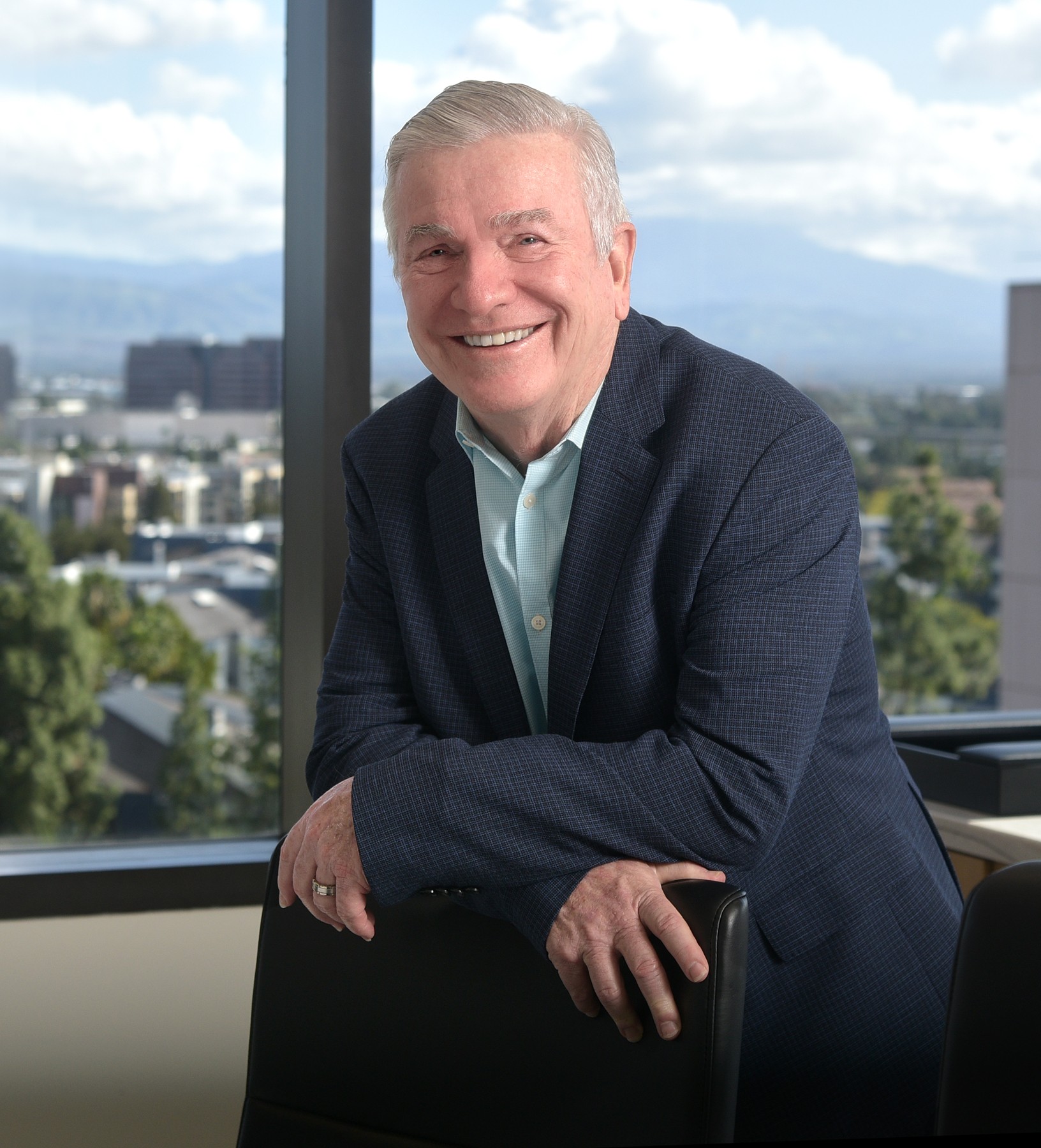
Sleep is providing a window into our health, particularly psychiatric problems, according to Dr. Ruth Benca, a world-renown expert on sleep.
“If someone has a sleep problem, it’s more likely there are some psychiatry issues than any other medical problems,” Benca said.
Benca, who is chair of the Psychiatry & Human Behavior School of Medicine at the University of California-Irvine in 2018 restarted the UCI sleep center.
She’s designed a new, 6,000-square-foot facility in Newport Beach, which is in the recently built Newport Heights Medical Campus along Birch Street, and has recruited doctors from a variety of fields, such as Dr. Kevin Im, who won a 2014 national award for a sleep study, Dr. Rami Khayat, the center’s medical director and expert on the effects of sleep apnea on cardiovascular diseases, and Dr. Behrouz Jafari, an expert in pulmonology.
“We’ve built this beautiful facility and have an all-star group of physicians,” Benca said.
The center now has five physicians and is open five days a week with eight beds. She’s aiming for this clinic to expand to seven nights a week and then to open more sites and labs throughout UCI Health clinics, and to also provide more home testing. At least 20% of the U.S. population has a significant sleep disorder.
“Sleep cuts across every medical specialty,” Benca said. “Inadequate sleep or sleep disorders causes a whole range of health risks.”
The Study of Sleep
UCI previously had a sleep center that closed in 2010 after more than 30 years following the departure of the program’s director and not enough patients to pay for the program.
That Center for Sleep Medicine, one of the first in the nation to receive accreditation by the American Academy of Sleep Medicine, treated sleep apnea, narcolepsy and restless leg syndrome.
During a tour of the revived UCI Health Sleep Medicine Center, Benca showed off one of the eight rooms reserved for patients to stay overnight.
The patients who spend the night in these rooms are connected by a series of wires hooked to various parts of the body. Sometimes, patients wear a swimming-like cap with up to 256 electrodes.
At a nearby control room, doctors, nurses and others monitor the sleep patterns, looking for signs like apnea, rapid eye movement or excessive sleep. One monitor showed the shadow-like image of a person lying in bed at 9:30 a.m. the day of the visit.
“This person is still sleeping from the night,” Benca said.
This is a difference from other sleep centers that sometimes will rouse a patient at 5 a.m. and boot them out of bed, Benca said. She prefers to let the patients sleep as long as they need to find their true patterns.
The center conducts more than standard tests, such as using infrared technology to measure oxygen saturation in the brain. Dr. Anjalee Galion, a doctor from Children’s Hospital who studies pediatric sleep disorders, often spends a night at the facility studying a child with neurology disorders.
While physical health problems are often easier to diagnose because they involve relatively simple things like blood tests for diabetes, mental problems are more difficult to identify, Benca said.
In the past decade, scientists are beginning to understand that certain disorders exhibit patterns in different parts of the brain. For example, certain brain signals may point to a higher probability of schizophrenia, which she called “the most debilitating and deadly disorder in psychiatry.”
“One of the problems in child psychiatry is that it’s very difficult to make diagnosis early on because a lot of disorders look similar,” she said. “If we can identity early, we can provide treatment that will make long-term prognosis much better.
“We’re using sleep as a window on the brain to understand psychiatric disorders.”
Likes Sleep
After growing up in a Chicago suburb, Benca earned an undergraduate degree from Harvard University and then an MD and a Ph.D. in pathology from the University of Chicago. During her residency in psychiatry at that university, she became fascinated by the role of sleep.
“It’s a third of our lives and we tend to ignore it,” she said. “Inadequate sleep or sleep disorders causes a whole range of health risks.”
She worked with pioneers in the field, such as the late Dr. Christian Gillen of the University of California-San Diego. Benca has served as principal investigator for many research studies funded by agencies including the National Institutes of Health and the Department of Defense. She has served as president of the Sleep Research Society and on the board of directors of the American Academy of Sleep Medicine.
She went to the University of Wisconsin where she developed that school’s sleep center. She arrived at UCI in 2016.
“My career is trying to understand the relationship between sleep and psychiatric disorders.”
Sleep Misunderstanding
It’s not just the public, but the medical profession that doesn’t understand the connection between sleeping and other problems. She’s trying to encourage doctors to pay close attention to patients who discuss sleep issues.
“Sleep problems are often the tip of the iceberg,” she said. “People are much more comfortable talking about their sleep problems than they are about psychiatric symptoms, which is taboo.
“Unfortunately, psychiatrists and other healthcare providers don’t pay enough attention to sleep.”
For example, studies have shown that insomnia is “highly predictive” of people who are likely to develop eating disorders and who commit suicide. Some sleep studies have omitted people with suicidal indications because a death could ruin the study, she said.
“The popular belief among healthcare providers is don’t give sleeping pills to suicidal people because they’ll get more depressed or commit suicide. We actually found that when these patients are carefully monitored, treating their insomnia helps them become less suicidal more quickly.”