

John Sackrison is the voice of an $11.3 billion auto dealer industry in OC that’s balancing headwinds from vehicle parts shortages, with the tailwinds of electrification.
There’s also the continued impact of the pandemic. The Newport Beach-based Orange County Automobile Dealers Association, where Sackrison presides as executive director, was forced to cancel the annual Orange County Auto Show that would have taken place through this past weekend.
That marks the second year in a row the event had to be shelved, with this year’s cancellation on account of rising concerns of the COVID Delta variant and stringent state restrictions for event organizers.
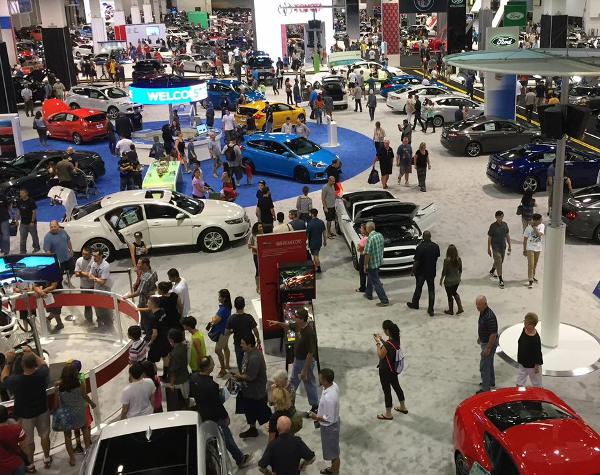
The auto show typically sees tens of thousands of people over the multiple-day event at the Anaheim Convention Center. It’s among the county’s largest conventions, and is the eighth largest auto show in the country.
The Business Journal had a chance to catch up with Sackrison to talk about the current trends moving the automotive market today and what’s top of mind among dealers; OCADA represents the area’s 120 franchised dealers.
What follows is an edited version of that conversation.
Let’s start with the most recent news out of OCADA, which was the decision to cancel the Orange County Auto Show. What’s the impact on the industry by not having the show?
The industry product planning time period is about five years that it takes to go from the drawing board to actually getting the product out to the consumers. The cars have continued to launch, but a lot of consumers don’t know about them, so it’s a big miss for the consumers. It’s a big miss for the manufacturers and it’s a big miss for the dealers.
[The cancellation] was a combination of the Delta variant, but it was also the state mandating that every attendee be vaccinated which, for a family-oriented show, eliminates any children 12 years and under. So, we felt that it was going to impact our attendance.
I think the state had concerns in mind when they put out the mandate that they did. It was fascinating. We reached out to the California Department of Public Health for guidance on what all these things meant, and it didn’t seem like they were very familiar with [the variety of] events. I think they had concerts in mind when they put out the mandate. We’re very supportive of creating healthy spaces for events and our whole communities, but it just hadn’t seemed like they had consulted anyone in the industry when they came down with any of these mandates.
Some automakers tried their hand at virtual vehicle launches. If they found success in those, are you concerned that could take away from the desire to spend marketing dollars at auto shows?
The Orange County Auto Show’s very consumer focused, where there’s other shows that are very focused on the media launches of the product. Those are the things they’ve done virtually and, candidly, I think they’ve done well.
Digital plays a huge role in marketing. The auto industry’s a great example of that. As the first or second largest purchase a consumer makes, you can get a ton of information online, reviews. All sorts of wonderful information on a vehicle. But the consumer’s ability to see, touch and sit in and, at our show, test drive in one place is what has made auto shows so effective for so long.
The term experiential marketing seems like a relatively new term, but it’s one that’s literally been around for decades in the automotive space.
How has the current chips and parts shortage impacted dealers?
It’s a huge challenge for our industry, and it’s not just chips as you said. It’s chips. It’s steel. It’s all pieces of the puzzle. Vehicles have thousands of parts in them and they can’t be built with parts missing, so it’s a huge supply chain issue and it’s plagued our entire industry. I can’t really think of a manufacturer that has not been significantly impacted by this. It’s challenging for them and it’s very challenging for the dealers.
What do you think the rest of this year looks like then for dealers in terms of the business?
I think it’s going to continue to be a challenge, but they’re adapting and the consumers are adapting, too. I think most people are aware that there’s a shortage of new vehicles right now. So, where traditionally a consumer would go to just about any dealership, walk into a lot and be able to drive off with a car in a relatively short timeframe, everyone has recognized that’s much more of a challenge today.
There was an interesting headline earlier this year that pitched the idea of the driveway being the new dealership, driven by digital purchasing and home delivery. How does that trend change the face of dealerships in the future?
Well, the online presence is already huge. That’s where the vast majority of dealerships are spending their marketing dollars, as well as the manufacturers. During COVID, dealers had to adopt and they did so quite successfully. They’re willing to meet the consumer wherever they are. I think that takes a specific customer to do that and, when I say specific, it’s somebody who has done all their shopping already.
So, I don’t see it as a threat. I see it as just an adaptation, and I think it’s going to be the minority of people.
Some of the newer start-ups have talked about their model being a direct-to-consumer model, Tesla and Rivian being examples. Do you see this model eclipsing the traditional dealership most of us know today?
I don’t see it as a longer-term trend. I think what some of the newer manufacturers don’t always recognize are the challenges that come along with being a retailer. It’s a completely different mentality. We’re not all good at everything and being able to build a product, market it and then manage the distribution, the sales and, most importantly, the service of the vehicles, that’s one of the biggest challenges. That’s where a dealer network provides a lot of value to a manufacturer because they have an incentive to repair those vehicles quickly and keep the customers happy so they can continue to buy from them.
That dealership has built a relationship of trust with you. That’s what’s missing in the puzzle of the direct model. There’s nobody advocating for the consumer at that point.
Some manufacturers are talking about subscription programs. Are dealers seeing an appetite for those from consumers?
Its fascinating to me. These have actually been around for a number of years now in different forms and none of them that I’ve seen have been successful. The concept is an interesting one, but there weren’t a lot of consumers crying out ‘I’d like to subscribe to a car.’
New methods of transaction can be intriguing and capture the minds. Experimenting is a healthy thing, but I haven’t seen any of them really meet with success by any measurement.
There has been some local dealer M&As.; Do you think we’ll see more deals in the future?
We’ve had a consolidation trend that has been underway for decades. It’s gone at a relatively even pace. We’ve seen maybe a little bit of an acceleration of it in the last two years or so, but not a significant one. I think there’s going to continue to be consolidation as one of the biggest challenges in California is trying to stay in compliance with the regulatory environment. When you have multiple stores, it makes it easier to have that compliance officer or an attorney on staff than to be able to afford that investment for a single point. I give regulatory as an example, but there’s other areas where economies of scale can help.
What legislation or policies are dealers closely monitoring at the state or federal level right now?
Electrification of our industry. That is an area where there’s a great drive in California and at the federal level to start to truly support the electrification of the automotive industry, and that’s something that we’re thrilled about. This is a very exciting time in our industry. We have currently 18 fully electric vehicles on the market and in the next year there’s probably going to be an additional 25 to 30, so this is happening fast. OC’s electric vehicle market share we’re over 11% now.
Do you think that’s perhaps contributed to why OC is home to so many electric vehicle companies, their service centers and the battery makers?
Absolutely. They want to be where the market is and they want that for a number of reasons, but one of them is they want to understand the market. When you live, your kids go to school and you work in a community, you get to understand their culture and you get to understand what drives them to their purchase.
For more on the area’s auto industry, see this week’s Special Report, starting on page 25, and stories elsewhere in this week’s print edition.
