
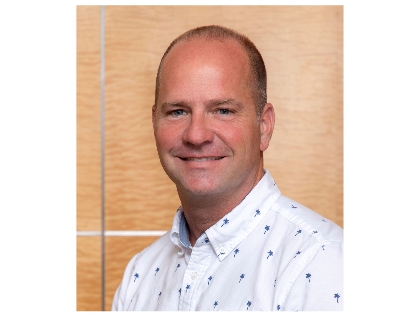
Lantronix Inc. Chief Executive Paul Pickle says he sees a healthy pipeline of possible acquisitions, and he recently came through with another purchase—the second largest of his seven-month tenure at the $72 million-valued firm.
The Irvine-based computer networking products maker (Nasdaq: LTRX) recently agreed to buy Intrinsyc Technologies Corp. of Vancouver, Canada, for about $26 million in cash and stock.
Intrinsyc’s combo of hardware and software offerings are used in a variety of applications for mobile devices and Internet of Things products, including robotics, wearables, and automotive uses.
Lantronix is paying $11.5 million in cash plus stock for Intrinsyc, whose shares trade on Canada’s stock exchange. The firm earned $25.7 million last year, compared to Lantronix fiscal year 2018 net revenue of $45.6 million.
Intrinsyc’s existing shareholders will own about 16% of Lantronix’s common shares once the deal is complete.
Microsemi Model
It’s the type of deal Pickle expected to make when he joined Lantronix in April.
Before that, he had spent about 17 years at Aliso Viejo-based Microsemi Corp., where he served as president and chief operating officer until the chipmaker was sold to Microchip Technology Inc. of Phoenix for $10.3 billion in 2018. Most of Microsemi’s executive team departed immediately after the deal closed.
Microsemi made dozens of acquisitions during his tenure, and in doing so had become one of Orange County’s largest chipmakers.
“I knew I wanted to do M&A. The board was asking me to do M&A when I came in,” said Pickle, who succeeded Jeff Benck as CEO of Lantronix.
The company’s first purchase under Pickle was Maestro & Falcom Holdings Ltd., a supplier of wireless IoT products including components for global navigation satellite systems, back in July for $4.9 million.
Perfect Environment
“We’ve got a few more in the pipeline. The environment’s perfect,” Pickle told the Business Journal in late October, prior to the disclosure of the Intrinsyc acquisition.
“We certainly hope to pick up some pieces fairly cheap.”
Expect more dealmaking going forward.
Lantronix provides secure data access and management products for IoT, where vending machines and hundreds of other devices are connected to the internet for remote monitoring and control.
The company’s connectivity products are deployed inside millions of machines serving a wide range of industries, including industrial, medical, security, transportation, retail, financial, environmental, and government.
The IoT market segment is forecast to grow from about $3 trillion in 2014 to $8.9 trillion next year, marketing researcher Statista predicts.
Lantronix has a total of about 200 employees, with about half of them in Irvine.
Next Steps
Pickle said the company will “definitely” be expanding into software, adding: “In the last few months [we’ve been] revamping our software offering.”
“As we bring out new products in software for hardware that’s already been deployed, customers can sign up for that and choose to use it or not,” he said.
The company also sees good growth prospects from “distributed data centers” on the edge of computer networks, to help companies manage data, as Pickle pursues a two-pronged strategy of internally generated growth in addition to acquisitions.
Microsemi Ties
Pickle joined Lantronix not long after his former boss at Microsemi, James “Jimmy P” Peterson, took a sizeable stake in the firm through his Peterson Capital Group.
Other connections include David Goren, a fellow Microsemi alumnus. He now serves as vice president of legal and business affairs for Lantronix.
Pickle said Goren’s experience with mergers and acquisitions make him “a natural fit” for the company’s plans.
Another person he brought on board is Jonathan Shipman, whose résumé includes stints at YouTube, Twitch, and eBay, and who now serves as Lantronix vice president of strategy.
“It’s kind of interesting to bring a software guy into a hardware company,” Pickle said of Shipman.
“He understands both sides of the fence and has a perspective of knowing what our customers are looking for. That was a great nudge to get us off dead center and move into that software direction.”
Shares of Lantronix are largely flat for the year, and are off nearly 40% from the start of August 2018. Pickle expresses confidence about the firm going forward.
“We’re looking up. Things are going well,” he said, noting that Lantronix does business with companies including American Express, Bank of America, Verizon, AT&T and Deutsche Telekom.
The company last week disclosed it had earned about $12.7 million in net revenue last quarter, up 4% from year-ago levels.
Trade Tariffs
Pickle said the U.S. trade tariffs on goods made in China helped push the company to move production from China to Thailand and Malaysia starting in January, in a transfer that took six months to complete.
“That was costing us money,” Pickle said of production in China. “It hasn’t actually been that inexpensive to manufacture in China for quite some time. The labor rates have come up. So, there are other reasons why you wouldn’t necessarily want to go there.”
He predicts the China-U.S. standoff will calm down no matter which party wins the White House next year, saying: “We don’t have to deal with this problem for very long.” In fact, in recent weeks, there have been some indications the two sides may be getting closer to phasing out at least some of the tariffs.
Lantronix has some production in Germany, a new facility in India and still maintains outposts in China and Hong Kong.
Jimmy P Confidence
Pickle said he has a “good relationship” with his former boss Peterson, who last year became a significant Lantronix investor.
Peterson told the Business Journal “this time they got it right!” in response to Pickle taking the reins.
“While I appreciate that vote of confidence, I have to say Jeff did a phenomenal job,” Pickle said of his predecessor. “The company grew under his watch.”
Pickle said Peterson “has plenty of suggestions for me. I just can’t respond to him,” given the bars against disclosing non-public information.
“We want to make sure that we go back and just not optimize what we have, but go back to basic blocking and tackling, product development, strategic plans and do a better job there” while continuing the financial improvement that Benck made, according to Pickle.