

Brian Niccol’s coming home, and he’s buying lunch.
The former Taco Bell Corp. chief executive who took the same job at Chipotle Mexican Grill Inc. in March is the driving force for bringing Chipotle’s headquarters to Newport Beach, a decision Chipotle announced last week.
When the move is completed by year-end, the fast-casual burrito builder vaults into the upper echelons of OC-based restaurant chains—it will be No. 2 with $4.5 billion in systemwide sales, behind only Irvine-based Taco Bell’s $9.8 billion—and No. 3 in local publicly traded companies with a $12 billion market cap, behind Edwards Lifesciences Corp. at $29 billion and Skyworks Solutions Inc. at $18 billion, and ahead of HCP Inc. at $11 billion.
Those three are all in Irvine, and as Chipotle turned heads with its Wednesday press release it also raised eyebrows for noting it will be in Newport Beach—generally pricier with less capacity for big moves than other OC options.
The chain has 400 corporate employees in its hometown Denver digs, and most of those roles, though not all of the people filling them, are expected here. Others will head to Columbus, Ohio; Chipotle will exit Denver and close its New York offices.
Culture Shift
Why OC?
One big reason is the seismic corporate culture shift it will cultivate.
“It definitely distances Chipotle from its history, [which] might be a good thing,” said Jeff McNeal, president of restaurant and hospitality consultants Fessel International in Monrovia.
He cited Chipotle’s recent woes—food safety concerns that made national headlines in 2015 and 2016.
Chipotle’s $4.5 billion in 2017 revenue returned the chain to its 2015 performance; 2016 revenue declined $600 million as same-store sales dove 20% on reports of illness from eating its food. Same-store sales grew 6% last year as average unit volume rose from $1.87 million to $1.94 million, which was down from $2.42 million in 2015.
After opening 229 locations in 2015 and 243 in 2016, it added 183 last year and plans a similar number this year.
McNeal also noted Niccol’s need to put his stamp on Chipotle.
“A new guy in that position [who] want[s] to take control of the company” could do far worse than moving far from its longtime home.
Denver-founded in 1993, Chipotle launched and anchored a vibrant, foodie-focused Colorado restaurant company community, crafted a U.S. industry niche of fast-casual competitors, and was then surpassed by its own success.
“We have a tremendous opportunity at Chipotle to shape the future of our organization,” Niccol said in the news release announcing the move. “We are transforming our culture and building world-class teams to revitalize the brand and enable our long-term success.”
Talent Pool
Niccol brought new blood to Chipotle, the move the latest infusion. Look for more.
OC’s talent pool is part of his recovery plan. The consolidation and move “will help us drive sustainable growth while continuing to position us well in the competition for top talent,” he said.
Talent that could come from Taco Bell.
“This is his backyard,” McNeal said. “It gives him a chance to poach.”
Taco Bell didn’t so much lose a chief executive as gain a neighbor—and a competitor for executives.
Niccol’s Chipotle team includes former Taco Bell colleagues Chief Marketing Officer Chris Brandt and Tressie Lieberman, executive director of customer engagement marketing. Headhunters know Taco Bell as go-to proving grounds for execs moving up.
In 2015 the Business Journal detailed the fast food chain’s prowess in producing and promoting top talent. Former El Pollo Loco Holdings Inc. Chief Executive Steve Sather worked there before joining the Costa Mesa-based chicken chain, and brought several other Taco Bell execs onto its senior team during his tenure.
Taco Bell “let you take risks as long as the performance was there,” Sather said at the time.
OC chains Pieology Pizzeria in Rancho Santa Margarita and Bruxie Gourmet Waffle Sandwiches LLC in Santa Ana have tapped Taco Bell for talent, as have Farmer Boys in Riverside and Pasadena-based Blaze Pizza LLC.
Office Space
Taco Bell employs about 800 people at its Irvine Spectrum-area offices.
Chipotle plans to move 150 of its 400 corporate roles to a “shared services center” in Ohio. Newport will be its base for the rest—operations, business development, marketing, communications, finance, supply chain, food safety, technology, HR and other corporate functions.
McNeal said he thinks about 100 of the remaining 250 employees will relocate. Some won’t want to move, he said, and relocation costs to Chipotle, along with its corporate culture remaking, could produce executive openings here.
“It ties into doing things differently,” he said.
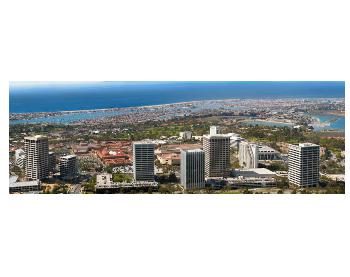
Multiple real estate sources told the Business Journal that Chipotle will move to a high-end office in Newport Center, and could take about two floors, enough for about 200 employees. Specifics haven’t been given, and as of late last week a lease wasn’t finalized.
Chipotle is being represented locally by Steve Card, senior managing director with the Newport Beach office of tenant representation firm Savills Studley. Card declined comment, as did Newport Beach-based Irvine Co., which owns most of the premier office space in Newport Center.
High Finance
Chipotle has 98,000 square feet in two buildings in Denver, and in December, before it named Niccol chief executive, it signed a 15-year lease for 152,000 square feet at a new 40-story glass skyscraper developed by Hines, the Denver Business Journal and a CoStar Group report said.
Annual rates for its current digs are $30 a square foot, CoStar said. The new building’s space is $50, a local broker said, or about $630,000 a month.
Hines said in a statement that Chipotle and its brokers are responsible for finding tenants. A second real estate source said it would also be on the hook for vacating space in New York.
“New York, Denver and OC are three of the top markets in the country,” he said. “It’s expensive to get in, expensive if you break a lease, and expensive overall.”
Chipotle’s direct investment in Niccol includes $2.2 million in signing bonus and salary, first-year performance-bonus potential of $1.8 million to $2.7 million, and an options package vesting over the next three years valued at about $30 million on the grant date of March 5, according to the company’s 8-K filing with the Securities and Exchange Commission. A long way to March 5, 2021, but the stock package is worth more than $30 million today.
CMG shares traded last week at $433, up 35% from $320 the day Niccol took the helm.
Más Marketing
Meanwhile, there was an April 25 quarterly report and conference call when Chipotle posted revenue of $1.1 billion, a year-over-year increase of 7.4%, on same-store sales growth of 2.2%.
Chipotle shares closed up 24% on the report.
“We had a very nice quarter,” said Chief Financial Officer John Hartung, crediting Niccol and CMO Brandt—on the job seven and five weeks, respectively—for some of the results, based on a redirection of marketing dollars.
“This brand needs to be leading culture, not reacting to it, and the people that are loyal to this brand, that’s what they want to be a part of,” Niccol said on the call, his first since joining Chipotle.
“All the innovation and the fundamentals that we put in place are going to, I think, attract people not only to work here but attract people to continue to be our loyal customers.”
His words echoed rhetoric from Taco Bell, which has positioned itself as a lifestyle brand rather than just a fast-food joint—backed by a marketing budget of about $375 million and defined by a heavy social media presence to push systemwide sales to $9.8 billion, up 19% during Niccol’s three-year tenure.
It’s made Taco Bell a regular overachiever for parent company Yum Brands Inc. in Louisville, Ky.
Other changes Niccol’s considering hint at Taco Bell’s popular breakfast and late-night menus. He sees a chance to expand Chipotle’s 10 a.m. to 10 p.m. store hours, and with “some marketing and some product innovation” turn “down times into transaction-driving times [without] introducing a whole new food platform.”
More details about Chipotle’s strategy will be given during a special midquarter investor conference call on June 27, but in April Niccol noted five areas of focus.
• Grow sales, transactions, margins and restaurants.
• Elevate brand relevance and further brand purpose.
• Build the right structure and capabilities to sustain performance.
• Create a people-recognition and innovation culture.
• Run great restaurants that deliver best-in-class financial performance.
“I’m excited about the long term,” Niccol said on the call.
— Mark Mueller contributed to this report.
