

If a Chipotle employee can’t taste the difference between good guacamole and great guacamole, well, they may be suited to work elsewhere.
That’s because Chipotle Mexican Grill Inc. Chief Executive Brian Niccol and his team have spent the past two years focused on a back-to-basics game plan driving what they say is “food with integrity.”
Niccol stepped into the top spot in March 2018, at a time when the company’s image and its stock had been pummeled by bad press and was in need of a reset.
Operations under the former Taco Bell CEO were quickly refined to ensure quality food, while a reshuffled C-suite overseen by Niccol focused on the build-out of digital marketing efforts centered on a new rewards program, and redesigned store layouts designed to improve the customer ordering and pick-up process.
The results of those efforts: one of the more striking corporate turnarounds in recent history.
Analysts estimate Chipotle sales in 2019 will rise 14% to $5.5 billion and the firm (NYSE: CMG) has seen its stock nearly triple since Niccol’s arrival, including a 73% boost in 2019, adding about $12 billion to its market value in the past 12 months alone.
With a market capitalization of $24 billion, Chipotle is now firmly entrenched as Orange County’s second-largest public company.
Niccol is the Business Journal’s pick for Business Person of the Year.
“As I look back over the last year, God, we got a lot done,” he said.
The Right Talent
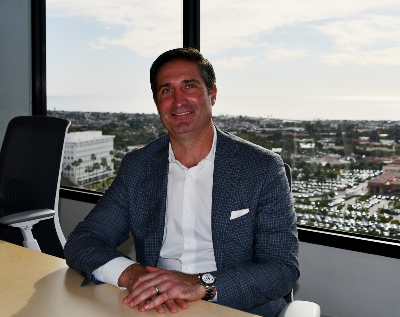
“Obviously, there’s terrific financial results and terrific operating performance and some great innovation on digital,” Niccol said, sitting on the 14th floor of Chipotle headquarters in Newport Center, after having just come from a visit to one of the company’s more than 2,500 restaurants.
“But I don’t think any of those things would be nearly as powerful if we didn’t have the right culture with the right people.
“The reason we got so much done is I think we got the right leaders focused on the right things, and they’re holding themselves and their teams accountable to getting those key projects done.”
How did he recruit the best of the best?
Niccol’s draw is his reputation as a great executive, Howard Penney, an analyst at Hedgeye Risk Management LLC in Connecticut, told the Business Journal last year.
“People want to work for him,” Penney said. “People like that attract talented people.”
Penney also predicted Chipotle could be the “greatest turnaround the [restaurant] industry has ever seen,” at a time its stock was at about $533.
Its shares now trade at nearly $870.
Newport Beach Relocation
Niccol’s reign as Chipotle chief began with the company’s relocation from Denver to Newport Beach, in a move he said was about recruiting the right talent to get the company where it needed to be, especially as tech’s role in the firm’s turnaround came to the forefront.
“We really wanted to be where the food culture that we wanted to create exists, and then also wanted to have access to the technology talent that we knew we would need to really transform the business,” Niccol said of the move.
The tech talent has had its impact already: Chipotle’s rewards program, not even a year old, already has some 8 million members, and has effected a digital transformation that’s now become the center of a $1 billion source of business.
Innovation, Focus
One aspect of the company’s turnaround focused on the basic idea that “fast food can be really good food. It doesn’t have to be what everybody knows fast food to be,” Niccol said of the basic tenet founder Steve Ells built Chipotle on. Another side to the turnaround has been a turn to innovation and the future.
“When I got here Chipotle had a lot of ideas, and I would say the challenge was picking which idea the organization was going to focus on and see through,” Niccol said.
“There were some things that, frankly, weren’t on some people’s radar, and there were other things that were just not being executed in a way where there was conviction to getting it accomplished. And the biggest example I use is on the digital side of things. It wasn’t like there weren’t any ideas around here to do ordering in the app or online ordering or a rewards program. It just wasn’t the priority.”
Niccol and team gained clarity on what to prioritize and have made headway.
Tech at Your Service
A second make line is now installed in every Chipotle, meaning there is a second line in the kitchen that is fully dedicated to the speedy fulfillment of digital orders that went from around 5% of sales to closer to 20%, or $1 billion.
Chipotlanes—similar to a drive-thru—for mobile customers not looking to get out of their vehicles to pick up their already-placed orders in a matter of seconds are being rolled out. Pick-up shelves in-store for those mobile orders are also in place, along with a rewards program.
“What’s great about that is this sets us up for really becoming, I call it, a digital powerhouse,” Niccol said.
“At the same time, we’ve also got to be very focused on just executing operations, which is you’ve got to have great food, and the other thing, too, is speed. We had lost our operational knowledge on how to make Chipotle food really fast for the customer.”
Employee Buy-In
To incentivize employees, there’s been lower medical costs ($5 for prescriptions and $15 for a doctor’s visit), mental health benefits, debt-free degrees, an expanded tuition reimbursement program and English as a Second Language offered to employees and their families.
Niccol and team are already looking to what’s next, as they continue to refine what they’ve already implemented. The company in December said it would begin testing a new restaurant design at a handful of locations, touting a sleek and modern appearance, with an open floor plan, full view of the kitchen to play up the culinary and fresh ingredients aspect, and a walk-up window for mobile orders and delivery.
Chief Technology Officer Curt Garner noted in a statement “by better suiting our restaurants to accommodate the digital business, we’re able to finalize orders more effectively and provide a better overall experience for our guests.”
This now sets the stage, Niccol said, to continue innovating on the experience.
“I think what’s really exciting is now that we have the system in place, we can start to leverage things like voice and video,” Niccol said. “Those capabilities didn’t exist the way they exist today and we’re going to figure out how we put this into the business. We also created [a] live chat so if you have questions or we didn’t give you the best experience, we want to fix it real time. The way I would think about it is more access and speed, less friction.”
Textbook Case
Keeping a close eye on all of those programs and how they’re being implemented at the store level and received by consumers is a constant.
The CEO is in restaurants at least once a week, whether that’s local stores in places such as Santa Ana or Huntington Beach, or those he needs to hop on the plane to see.
That control of the overall restaurant experience is partially what was attractive about the industry to the executive in the first place.
Niccol didn’t start out wanting to work in restaurants. Instead, his first job was at Procter & Gamble in brand management, on the path to general management.
“What I did find that I really loved about my time there was I started to realize, wow, your economics class really came to life,” he recalled of his time at P&G.
“People respond to incentives and people respond to positioning, and if the positioning of your product or brand matches up with people’s values or some incentive, they will be a very loyal customer. And I just love the psychology of why people behave the way they behave. Slowly, but surely, that just migrated me into restaurants and retail.”
While packaged goods was fun, the idea of leaving a brand’s story in the hands of the retailer was a challenge.
“I had to count on the retailer to then resell the Crest or the Scope,” Niccol said.
“When you get into restaurants, not only do you create your product, you now also own the restaurant experience and that’s what got me excited about going into restaurants. It just furthers the idea of, well, why do people make the decisions that they make?”
Good food and the people, he said, are what have kept him in the business.
“So that’s how I ended up in this, and luckily it’s worked out,” Niccol said smiling as he prepared to dash off to yet another appointment.
“So far so good.”
Trending: Niccol on What Will
Drive Business in 2020
Digitization
“It’s this digitization of access to food. You see this probably present in a lot of digital businesses now, so we’re going to be putting it into the Chipotle business.”
Mindful Sourcing
“When we say cultivate a better world, the reason why we’re saying that is because it goes beyond just having access to great food. We want to make sure the way we get access to that great food is done in a responsible way, supporting local farmers. Thinking about the footprint we’re creating and leaving behind is really important.”
Sustainability
“There’s a real trend towards getting as close to the source of food as possible and doing it in a sustainable way. We haven’t talked much about this and we need to figure out at Chipotle how we talk more about it. Sustainability goes hand in hand with, in our opinion, [the company principle of] food with integrity. We want to make sure that we get access to great food done in a responsible way, supporting local farmers and thinking about the footprint we’re creating and leaving behind.”
Plant Based Foods
“People are more open to plant-based foods. You’re going to continue to see a trend [of more] cauliflower rice—I mean, I’m amazed right now. Cauliflower seems to be having a moment. It’s indicative of this trend of wanting more plant-based solutions. People are still wanting to eat chicken or steak, but you definitely see more willingness to move between vegetarian, meat and less grains or less gluten. Pretty much every style you want to eat, you can access at Chipotle.”
—Kari Hamanaka
