

Brandman University drew national attention three years ago when it rolled out a form of higher education known as competency-based learning.
The idea was to offer an online-only bachelor’s degree in business administration that would test students on knowledge they didn’t know before they started a program in order to shorten the time needed to earn their degrees, an approach that also helps reduce tuition costs.
“Brandman MyPath” now includes a bachelor’s degree in information technology, and this fall will debut a master of arts in organizational leadership. The university also announced this year that it will introduce a master of social work, an online-only master in psychology degree, and two programs focusing on data analytics in partnership with Redlands-based international mapping and data firm Esri.
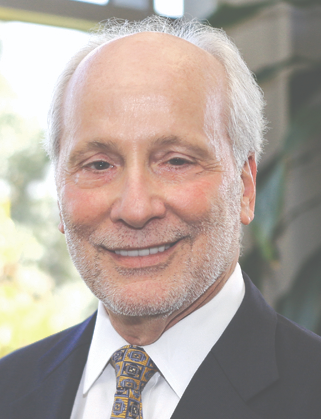
Brandman Chancellor and Chief Executive Gary Brahm said that offering additional programs will help the university boost enrollment and help graduates stand out in a competitive job market.
“The people who are getting raises and whose salaries are increasing are the people with degrees or advanced degrees,” Brahm said. “The proportion of jobs requesting a degree are increasing, so it’s only going to get worse.”
The university’s new programs come at a time when firms like Walt Disney Co. are announcing initiatives to support employees’ education following the December passage of the Tax Cuts and Jobs Act.
Disney announced in January that it would make an initial $50 million investment into an ongoing education program to cover tuition costs for its hourly employees. Nearly 88,000 employees will be eligible to pursue higher education and vocational training, according to the company.
Herb Callahan, senior director of human resources at Irvine-based food supplier Golden State Foods, said that three years ago the company was looking at ways to enhance its leadership development and training program.
“During that period, numerous associates made recommendations in regards to Brandman, and some were even enrolled in their degree programs,” he said. “We decided to partner with Brandman by pairing our tuition reimbursement with a tuition discount offered by Brandman.”
Callahan is a Brandman alumnus. He received his master’s degree in business administration and doctorate of education in organizational leadership.
Roots
Brandman was founded in 1958 as Chapman University College. It was a single-classroom program at the former Marine Corps Air Station El Toro base near Irvine before its growth led to Chapman University spinning off the institution in 2008 as an independent, not-for-profit university.
Brandman is still part of the Chapman system since Chapman appoints its board members, Brahm said. He added that the only thing it shares with the Orange-based institution is a library because Brandman operates its own student services, from admissions to financial aid.
Brahm joined the university as founding chancellor after serving as chief operating officer at Chapman for 13 years.
The San Fernando Valley native said that running Brandman gave him a chance to be innovative in a system that often takes a traditional approach when it comes to educating working adults, but his father wasn’t convinced.
“My dad thought I was crazy. He said, why would you leave Chapman?” Brahm said, laughing. “Would we have grown larger if we used the Chapman name? Probably, but that would’ve meant limiting what Chapman does and limiting what we’ve done. We have spent our time developing an approach that’s been really successful.”
The school’s six-year graduation rate for full-time students is 82%, and for eight-year graduates it’s 83%, according to figures from the U.S. Department of Education. National University has a rate of 76% for eight-year students, while Grand Canyon University is 37%; both are comparable to Brandman in offering programs to working adults.
Patrick Dirk, co-founder and chief executive of Troy Group Inc., has served on the university’s board for the past five years. His friend Paul Musco presented the opportunity.
“When Paul asked me to go on that board, at first I thought, well, do I want to do another board,” Dirk said. “But once I understood the mission, I happily joined.”
Dirk cited the university’s low default rate of 5.5%, coupled with its high graduation rate, as a reason for supporting its programs.
“One way of measuring whether you’re a diploma mill or a true high-quality organization like Brandman is the default rate,” he said. “If I get a diploma and I can’t get a job, I never pay you for that education, so my default rate is very high.”
Dirk added that he also shares a similar background to the students Brandman serves. The executive went back to school to earn his master’s degree in accounting at the University of North Dakota. At the time, he was married with three kids and his wife, Mary, was expecting a fourth child.
“I’ve been to a lot of college graduations,” he said. “I have 14 grandkids, [but] when you go to a Brandman graduation, it’s such a major family event because they know the family is part of the sacrificial process of getting that education. It’s an amazing [and] touching experience.”
Setting the Pace
Brandman has an operating budget of $100 million and 23,000 degree and certification students.
The Western Association of Schools and Colleges-accredited university has 27 campuses in California and Washington, including six military bases and three community college locations.
While the number is projected to increase this fall, there are 57 bachelor, master and doctoral degrees that are taught online, on-campus and through its competency-based program.
Brandman said about 87% of its students are working adults, the school tailoring to them with majority evening and weekend classes. Its student population is also comprised of 22% active or military veterans.
Brahm said its vision is to be the leader in the evolution of adult learning. He cited its competency-based program as an example.
“Institutions have a very hard time doing it because it’s a different faculty model, it’s a different staffing model, it’s different in every way,” he said. “That’s what makes it a disruptive innovation.”
Students in the program take a pretest to determine what they know, and based on the results, their coursework is modified to teach them what they don’t know. The content can be accessed at any time, and students can work at their own pace. The program costs $6,400 per academic year. Tuition for its online and hybrid courses ranges from $1,500 per course for an associate degree to $3,345 per course for a doctorate degree.
Dirk said he has two employees currently enrolled in the competency-based program and has noticed a difference in their contributions to the company.
Brahm said the university is positioned to continue its growth and plans to keep adding programs and services for students.
“We’ve grown a lot. At the same time, we’ve become much more diversified,” he said. “A real measure of success is how successful your students are, and if you look at that, no one has done better than us.”
