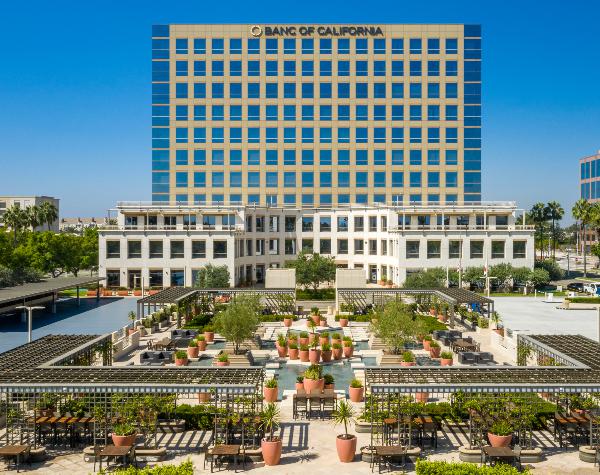
After almost four years of struggling to reorganize itself, the second-largest bank by assets in Orange County (NYSE: BANC) last week said it will buy Costa Mesa-based Pacific Mercantile Bancorp (Nasdaq: PMBC) in an all-stock transaction valued at $235 million.
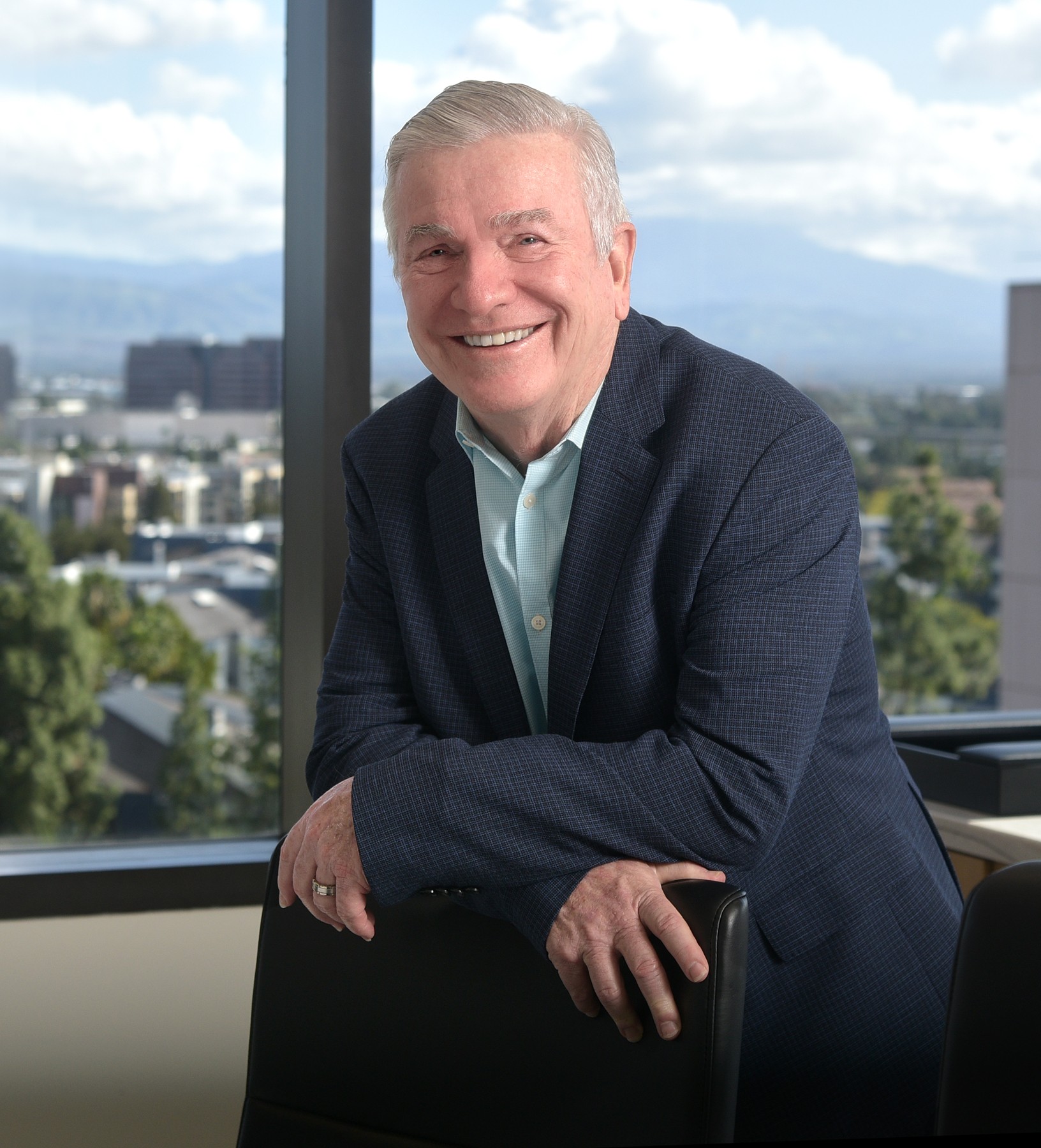
“This deal checked many boxes,” Banc of California Chief Executive Jared Wolff told the Business Journal.
“While the outlook isn’t fully clear, people are feeling optimistic. Things are looking brighter. We’re certainly in growth mode.”
The deal continues a shake-up of Orange County banks.
Last June, Pacific Premier Bancorp (Nasdaq: PPBI), the largest OC bank, bought Opus Bank, then the third largest, in a $743.9 million acquisition.
Opus founder Steve Gordon, meanwhile, has announced he’ll be starting a new bank sometime around May, called Genesis Bank.
First Foundation Inc. (Nasdaq: FFWM), currently the county’s third-largest bank, recently announced it’s moving its holding company’s headquarters to the Dallas region.
Notable Local Ties
Last week’s announcement ends the legacy of Pacific Mercantile, which began in 1999 and by 2010 had grown to become the largest headquartered in Orange County, with $1.1 billion in assets.
Its board members have included savvy entrepreneurs like George Argyros and Ed Carpenter.
In the past decade, its growth stalled as its relatively large amount of debt hindered expansion; it currently has $1.6 billion in assets, well below the largest three banks in the county.
Wall Street wasn’t overly impressed either, as its market cap rarely topped $250 million.
After Santa Ana-based Banc of California made its offer, shares of Pacific Mercantile jumped 10% to $8.90 and a $212 million market cap. Pacific Mercantile’s shares traded as low as $2.95 a year ago during the height of the pandemic.
“Banc of California is a great merger partner for Pacific Mercantile given our shared focus on business and relationship banking,” CEO Brad Dinsmore said.
“Like Pacific Mercantile, Banc of California has become an attractive choice for small and middle-market operating companies with a strong emphasis on service and solutions. Our customers will benefit from the greater range of services, capital and resources the combined company will be able to offer, while they receive the same high quality, personalized service they have always enjoyed.”
Spending Spree
Banc of California was known for its aggressive growth after it was formed in 2013 when then-CEO Steve Sugarman combined two banks.
Sugarman, who was 38 when he became CEO, quadrupled the assets to $11 billion through a series of acquisitions to become the largest bank headquartered in Orange County.
However, investors criticized the bank for diluting its shares almost fivefold to about 50 million to fund the acquisitions.
Investors also questioned loans given to relatives and friends and the lavish spending such as paying board members three times the going rate.
Sugarman made headlines by agreeing to pay $100 million for the naming rights to the Los Angeles Football Club’s new soccer stadium in downtown L.A., which cost $350 million to build.
Sugarman resigned in early 2017 after an investigation into how the bank responded to a blogger’s criticism. The results of the SEC investigation weren’t revealed.
Sugarman in 2017 founded Irvine-based Change Co., which aims to service Black, Latino and other underbanked communities. “The Change Co.’s mission is to bank the unbanked, fairly and responsibly,” Sugarman said last month.
After his departure, the bank dumped its residential mortgage unit, cutting its workforce in half to about 700. A proxy fight was avoided when the board was reshuffled.
After longtime banker Doug Bowers was hired as CEO in 2017, Banc’s problems continued, including being the victim of a $13.7 million fraud on a line of credit.
The Wolff Era
Even after Wolff began in May of 2019, he found major problems, such as having to take a $36.1 million charge in 2019 because one of its borrowers was the victim of a scam. The charge was higher than the $23.7 million in net income that the bank reported in 2018.
Wolff concentrated the bank on building relationships in two industries—real estate and healthcare. It dumped higher paying deposits, shedding more than $2 billion in assets, which were $7.9 billion as of Dec. 31.
He reduced the headcount from 652 at the end of 2019 to 611 by the end of 2020. The CEO also cut expenses, including the naming rights to the LAFC stadium, which was costing the bank $7 million a year.
By the fourth quarter of 2020, the bank was on a roll, boosting net income 70% to $17.7 million.
Approaching $10B
The acquisition of Pacific Mercantile will result in a bank with $9.5 billion in assets. On a pro-forma basis, the combined banks will count $7.5 billion in deposits and $7.1 billion in loans.
Banc of California expects the transaction to be 13% accretive to EPS in 2022 with a 2.3-year earnback period to tangible book value per share based “on a conservative and achievable cost savings estimate of approximately 35%.”
Wolff doesn’t expect to cut employees at Pacific Mercantile, which had 146 as of Dec. 31.
“We still need people to serve those clients,” he said. “Having more bankers with feet on the street is going to be helpful.”
Instead, the cost savings will come from combining technologies and reducing the combined branch count to about 28 from its current 31.
It will also accelerate its non-interest bearing accounts to 30% of deposits from its current 26%. Such accounts, which help increase a bank’s bottom line, are typically difficult to obtain, Wolff said.
Other benefits of the deal include relatively low execution risk and the new customers, many of which are operating companies. It also picks up Pacific Mercantile’s Horizon Analytics, a proprietary program that the bank has used to help smaller customers obtain market data.
“The deal is favorable to both sides, in our view, given the announced premium for PMBC shareholders and guided EPS accretion at a reasonable tangible book earn back period,” KBW analyst Jacquelynne Bohlen wrote in a note to investors.
“We also note the transaction accelerates Banc’s balance sheet transformation as it increases noninterest-bearing deposit concentration (to 30% from 26%) while increasing commercial loan exposure.”
Existing Banc of California stockholders will own approximately 81% of the outstanding shares of the combined company and Pacific Mercantile shareholders are expected to own approximately 19%.
The transaction is expected to close in the third quarter.
Investors, who typically sell the stock of acquiring companies, sent the Santa Ana bank’s shares down 5.8% to $18.41 in the trading session after the announcement. The bank has a $932 million market cap.
The Third Year
On a conference call with analysts last week, Wolff said the bank was internally focused during his first year at the helm, and then had to concentrate on doing business with COVID-19 in the second year.
In his prior jobs, Wolff had a reputation of making acquisitions, leading more than 20 when he serviced in multiple roles at Beverly Hills-based PacWest Bancorp (Nasdaq: PACW).
Wolf said the PacMerc acquisition is not necessarily the start of a buying spree.
“We have to demonstrate that we can deliver for shareholders before we start thinking about what’s next. We want to make sure we do this one right.”