

Cypress-based Bandai America Inc. wants kids to watch more TV.
The U.S. arm of Tokyo’s Namco Bandai Holdings Inc. has carved out a piece of the $21.5 billion yearly toy market with action figures and other products based on Japanese-inspired TV shows.
Bandai makes toys from Time Warner Inc.’s “Ben 10,” Los Angeles-based Saban Brands LLC’s “Mighty Morphin’ Power Rangers” and Fort Worth, Texas-based Funimation Productions Inc.’s “Dragon Ball Z.”
Now Bandai is looking to mine a 1980s cartoon that’s making a comeback with a new version on Cartoon Network next year.
The company has acquired the rights to toys from “Thunder-Cats,” a show about a group of cat-like aliens.
Financial terms of the licensing deal weren’t disclosed.
“What’s old is new and what’s new is old,” said Gerrick Johnson, an analyst with Canada’s BMO Capital Markets Corp. “In tough economic times, classic and retro toys are popular to bring back because toy manufacturers and parents don’t want to take many risks.”
Bandai is hoping a revived “ThunderCats” will spur more action figure sales by reaching kids of those who grew up watching the show in the 1980s.
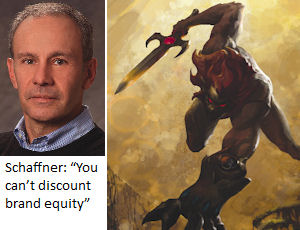
“You can’t discount brand equity,” said Mark Schaffner, executive vice president of toys at Bandai. “The kids who grew up with the cartoon have come of age and have kids; now they can have shared experiences with the reimagining of the series.”
Parents who had a good experience with a toy are more likely to buy that toy for their kids, according to Johnson.
Bandai also is hoping to see new life from its Power Rangers toys as the campy series gets relaunched next year on Viacom Inc.’s Nickelodeon with new episodes and reruns.
In May, media mogul Haim Saban paid $100 million to buy back “Power Rangers” from Walt Disney Co., which had acquired it in 2001.
Saban’s deal with Nickelodeon calls for 20 new episodes along with some 700 older ones.
Bandai is looking to acquire rights to other “popular children’s programming,” Schaff-ner said.
“Our strategy is three-pronged with licensed properties, original toys and an M&A strategy that puts the right properties in our barn,” he said.
Namco Bandai, which was created with Bandai’s 2005 acquisition of Japanese video game maker Namco Co., has yearly sales of $4 billion. It is the third largest toymaker with 6% market share after El Segundo-based Mattel Inc. and Rhode Island’s Hasbro Inc.
Toys make up the biggest part of Bandai’s revenue followed by video games and amusement parks in Japan.
The company’s toys are developed in Japan with the U.S. unit handling sales, marketing, licensing and administration.
Bandai employs about 130 people in Cypress.
U.S. toy sales have been sluggish for the past few years, hurt in part by the rise of video games. That could be shifting, according to Johnson.
“Toys are gaining share on video games in the past year,” he said. “The fastest growing segment of the toy population in 2009 was 10- to 12-year-olds, who for years have been held by video games.”
Bandai has done well with toys based on the animated series “Ben 10.” But it otherwise has seen weak U.S. sales amid the recession and sluggish recovery.
In the March quarter, the company’s U.S. toy sales fell 18.5% from a year earlier to $165 million.
The mediocre success of the 2009 movie “Dragonball Evolution” failed to spur much in the way of toy sales for Bandai last year.
The action figure market, which sees about $700 million in yearly sales, has held up better, according to Johnson.
“The action figure market has been pretty strong since 2005,” he said.
Bandai’s Ben 10 line has been one of the top 10 action figures since its debut in 2007, according to Port Washington, N.Y.-based market tracker NPD Group Inc.
