

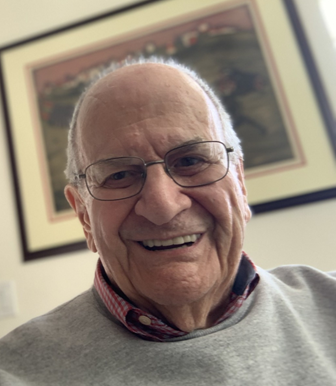
Marshall Kaplan, a prominent leader in the Orange County community for more than 20 years, died Dec. 8 at the age of 90 after a brief illness.
Marshall came to Orange County in 2004 at the age of 68, not to retire, but to write several new chapters in an already full life. He truly made a difference for the better in our community.
Born in the Boston area during the Great Depression, Marshall realized early in life that public policy and urban planning were his calling. He loved to tell the story of how he attended Harvard Law School for just a few days before deciding that he was not cut out to be a lawyer and walked over to enroll in a city planning program at MIT.
Marshall eventually earned several degrees in public policy, planning and architecture from Boston University and MIT and became a leader in urban policy and planning during the 1960s and 1970s, writing extensively on national urban policy issues. He worked closely with Bobby Kennedy on urban renewal efforts in the Bedford-Stuyvesant neighborhood of Brooklyn and went on to serve in various roles in the Carter White House.
In 1975, Marshall co-founded the national policy advisory firm of Marshall Kaplan, Gans, and Kahn, which became known for important studies on urban planning and community development. During this period, his firm conducted one of the first housing studies for Mission Viejo on behalf of the Irvine Company. Marshall authored several books, including “Urban Planning in the 1960s: A Design for Irrelevancy”; “The Politics of Neglect: Urban Aid from Model Cities to Revenue Sharing” (co-authored with Bernard J. Frieden); and “The Community Builders” (co-authored with Edward Eichler).
The Next Chapter
In 1981, Marshall became dean of the University of Colorado Denver’s Graduate School of Public Affairs and directed the Wirth Chair in Energy, Climate Change and Community Development. I met Marshall in 1994 shortly after we moved the corporate headquarters of our frozen food manufacturing company—the maker of Hot Pockets—from Los Angeles to Denver. What began as a professional acquaintance quickly became a lasting friendship.
In 2003, after we sold Chef America and relocated to Orange County, my wife Lilly and I began focusing more on our philanthropic efforts. It was immediately clear to me that Marshall was the right person to help lead that next chapter. I asked him to move to California to become the director of our foundations. Marshall agreed.
For him, it was a significant transition—geographically and professionally—but entirely consistent with the values that had guided his life.
For Marshall, leadership was never about position or recognition; it was about service and impact. At the Merage Foundations and the Merage Institute, Marshall brought vision, discipline and credibility. He believed profoundly in opportunity, dignity, and the power of education to change lives. He helped shape initiatives focused on opportunity, civic leadership and community development, always emphasizing collaboration and long-term thinking. He had an extraordinary ability to bridge worlds—academia and philanthropy, policy and practice, vision and execution. People trusted him because he was authentic, intellectually honest and deeply committed to the public good.
Marshall was thoughtful, principled and quietly persuasive. His counsel always reflected both wisdom and moral clarity. His greatest legacy lies in how he lived—guided by principle, generosity and an unwavering belief in the common good. He was a mentor, friend and trusted advisor to many. He leaves behind a remarkable legacy of service and a standard of leadership that is increasingly rare.
A Dream for the Marginalized
Marshall was a great believer in the American Dream for immigrant and marginalized populations. Both during his tenure at the Merage Foundations and thereafter, he devoted much of his substantial energy to working with El Sol Science and Arts Academy, a public charter school in Santa Ana founded in 2001.
Marshall served as an advisor to El Sol for more than 20 years and was still active as an advisor at the time of his death. He established a foundation that raised funds to help replace the school’s collection of trailers with modern buildings.
He was also instrumental in adding various community services to the campus, including a state-of-the-art health clinic developed in cooperation with Share Ourselves to provide a wide range of health care programs both to El Sol students and to the Santa Ana community generally without regard to insurance coverage or ability to pay.
Marshall also developed a scholarship program that has to date awarded more than $1 million in scholarships to more than 100 El Sol graduates to help them with their college expenses.
Nothing gave Marshall more joy than his work with El Sol, which substantially completed its major building projects shortly before his death. The school recently named its outdoor amphitheater in recognition of his many contributions.
Monique Daviss, executive director of El Sol, who worked with Marshall for more than twenty years, said it well:
“Marshall cared deeply for the people of El Sol and for the boundless potential of both its students and the community. He believed opportunity was a right that every member of the Orange County community deserved, and he chose El Sol as a pathway to that purpose. He was confident that leaders in business and philanthropy would join once invited, and Marshall was legendary for his nonstop invitations. From relationships with CEOs to university presidents, he also played Santa in a borrowed suit. He found joy in mentoring scholarship students, over breakfast, or long phone conversations. Determined and tenacious, Marshall made the difference he so deeply believed in.”
The UCI Connection
In his work with the Merage Foundations and later with El Sol, Marshall also collaborated closely with UCI. As a former university dean, he found UCI to be a natural partner in philanthropy, intellectual endeavors and in university community partnerships. During the pandemic, his work with UCI kept El Sol at the forefront of implementing health and safety protocols.
In addition to his work with The Merage Foundations and El Sol, Marshall established the nonprofit group Pathways to Opportunities with Merage Foundation support and served as its first President. He also served on the Advisory Committee of OC World.
I agree fully with the assessment of Shelley Hoss, chief executive of the Orange County Community Foundation:
“Orange County is a magnet for those seeking to cap successful careers and gradually transition into retirement, but that was never Marshall Kaplan’s plan. Marshall was fueled by a vision to transform Orange County into a community of abundant opportunity where all could share in our region’s economic prosperity and civic life. And with every challenge he surmounted, his eyes were already on the next hurdle to overcome.
He was a force of nature, a relentless champion for the children and families of El Sol and the broader OC community, and a one-man maelstrom of good trouble. Orange County will forever be the richer for becoming his adopted home, and his legacy will continue to grow in the countless lives he touched. May he rest in well-earned peace.”
