

Seal Beach is set to play a key role in making a highly touted biotechnology drug come 2011.
As expected, the Food and Drug Administration last month approved Provenge, a prostate cancer treatment being made by Dendreon Corp., a Seattle drug developer that’s building a Seal Beach plant.
Provenge trains the body’s immune system to fight prostate cancer. Provenge is called a vaccine, even though it treats cancer rather than prevents it.

Dendreon is building its plant at the Pacific Gateway Business Center near the Garden Grove (22) Freeway and expects to finish it by the end of 2010.
Plans call for several hundred jobs, 36 workstations and the capability to make $375 million to $750 million worth of Provenge a year, Greg Schiffman, Dendreon’s chief financial officer, said in an interview earlier this year.
Approval of Provenge, which is designed for men whose prostate cancer has spread and is resistant to most traditional forms of treating the disease, was expected.
Analysts believe Provenge could reach “blockbuster” sales status of more than $1 billion by 2016 as Dendreon expands production. Besides Seal Beach, Dendreon is building a plant near Atlanta and expanding its New Jersey operation.
Provenge is Dendreon’s first commercial product. The company makes it from white blood cells harvested from individual patients. After each patient’s cells are harvested, they are sent to Dendreon’s plants, which will convert them to Provenge and then supply it to doctors for treatment.
Dendreon still faces potential commercialization hurdles, according to Lazard Capital Markets analyst Joel Sendek.
Sendek wrote that patient demand for Provenge is strong, “but distribution, administration and reimbursement issues could hamper a strong launch trajectory.”
Reimbursement, according to Sendek, is a cause for concern because doctors “will not willingly assume the upfront cost of Provenge. We anticipate some insurer hesitation as well.”
Provenge is expected to cost $93,000 per treatment.
Teva Warning
The Irvine operation of Israeli drug maker Teva Pharmaceutical Industries Ltd. came under scrutiny by the FDA last month.
Teva’s intravenous medicines unit failed to correct manufacturing problems in Irvine that caused contamination in batches of a sedative used in surgery, according to regulators.
The FDA sent Teva a warning letter in December citing the contamination and posted it on its Web site at the end of April.
Denise Bradley, a spokeswoman for Teva, whose U.S. headquarters is in suburban Philadelphia, told Reuters that it was working with regulators to address the concerns.
The FDA said Teva failed to correct issues with bacterial contamination found in vials of propofol, a sedative used during surgery that gained fame in the death of Michael Jackson.
Regulators said they found several other violations focusing on drug manufacturing and contamination issues stemming from a July 2009 inspection.
Among other things, the FDA said Teva failed to test each lot of raw material used to make propofol to determine the levels of bacterial contamination.
The agency also warned Teva about what it called a failure to clean and sanitize equipment and utensils at appropriate intervals to prevent contamination.
Teva has moved up a yearly plant shutdown as a way to address process enhancements at the facility, Bradley said.
Most warning letters from the FDA are addressed without further action. In some cases, the FDA can seek tougher penalties such as seizing products or seeking injunctions.
Edwards Patent Case Win
Edwards Lifesciences Corp., an Irvine-based heart valve maker, said it has prevailed in an overseas patent infringement lawsuit concerning less-invasive heart valves.
The company said in late April that a German federal patent court found that a transcatheter heart valve patent held by Bloomington, Ind.-based Cook Inc. was invalid.
Cook had sued Edwards in 2008 alleging that Edwards’ transcatheter heart valve infringed on its patent.
The federal patent court’s ruling followed a favorable ruling by a district court in Dusseldorf in 2009 that determined Edwards didn’t infringe on the Cook patent. Edwards won similar victories against Cook in British courts last year.
Cook said in a statement “we respectfully disagree” with the German patent court’s decision and “we will evaluate all options.”
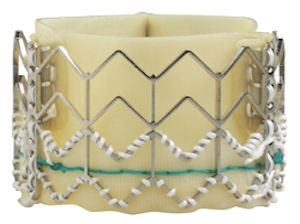
Transcatheter heart valves are a major thrust for Edwards, which got into the devices roughly six years ago. The device maker’s shares have shot up in recent months amid investor enthusiasm for the valves, which are inserted into a patient’s beating heart via a catheter, eliminating the need for open-heart surgery.
The Food and Drug Administration could approve Edwards’ Sapien for domestic use as soon as late 2011.
