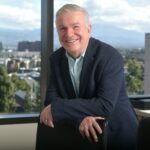
Kevin Manemann dislikes the clipboards that doctors made ubiquitous.
“It’s 2021!” the chief executive of Providence Southern California exclaimed when asked why.
“What are we doing here (with clipboards)? People expect to experience healthcare the way they do other industries like airlines or hotels or Amazon. Eliminating clipboards was the first tiny step.”
If anyone could help doctors shift from paper documents to electronics, it’s Manemann, who last March took the hospital chain’s top role in Southern California, replacing Erik Wexler, who was promoted to president of operations and strategy for Providence’s southern footprint in California, Texas and New Mexico.
Providence, headquartered in Renton, Wash., reported $25.7 billion in revenue in 2020.
Manemann oversees its largest unit, which generates about $8 billion a year in revenue, including around $4.8 billion at Orange County hospitals that include Mission Hospital in Mission Viejo, St. Joseph Hospital in Orange and St. Jude Medical Center in Fullerton, as well as affiliate Hoag Memorial Hospital Presbyterian.
Altogether in Southern California, he leads a team of 31,000 caregivers, including 5,200 physicians at 13 hospitals.
“It’s all about building a vision that makes caregivers excited,” Manemann said during an interview at his fourth floor office at Irvine’s Park Place campus.
“When you get people rowing in the same way, the job isn’t as hard.”
Iowa Native
A native of Iowa, Manemann spent part of his childhood growing up on the East Coast as his stepfather was a Marine. When he was a teenager, he moved back to Iowa.
“I was going to go to a high school with 5,000 students and then I moved back to Iowa where the whole town was 5,000 people. That was a shock.”
He attended the University of Iowa where he earned a business administration degree with an emphasis on marketing. At one of his early jobs, he input the data from focus groups into computers.
Then something “crazy” occurred that propelled him deep into the tech world, when the CEO of his small company got into a fight with the director of operations.
“The CEO fired him and looked at me, saying ‘you need to take over the IT unit,’” he recalled.
That company sent the marketing specialist to school where he became certified as a Microsoft systems engineer and earned a network certificate from Cisco Systems. He knows project management and how to write code in languages like SQL (Structured Query Language).
Electronic Documents
Afterwards, he worked at Allscripts Healthcare Solutions Inc., where he helped hospitals around the nation change their systems from paper-based to electronics.
“I saw a lot of the country and saw a lot of different healthcare systems and how they were put together,” Manemann said.
One gig was in Fullerton, where he worked on a 30-day engagement for what was then known as St. Jude Heritage Medical Group.
“I thought, ‘this place is awesome.’ It connected me with my own beliefs and values. They asked me to stay.”
He implemented new systems, such as redesigning clinic operations. He became a Lean Black Belt, a training program to implement lean systems in enterprises.
Manemann was eventually offered a job as vice president of operations at St. Jude Medical Center, for which he told his superiors that he felt unqualified.
“They said, ‘You’re a good leader and you’re innovative and you have directors who have been here 25 years and don’t need to be told what to do. They need to be more innovative and work together more effectively.’”
While he didn’t know how to run a lab or pharmacy, he did know how to study data and improve processes. Plus, it was about that time he finished a graduate degree in organization from Gonzaga University in Washington.
“The timing was good in that I had to put all that to work right away.”
Up Ladder
Manemann continued climbing the ladder, becoming CEO of Heritage Medical Group, St. Joseph’s physician practice. After Providence’s acquisition of St. Joseph, he took over the companywide physician group operations. He said yes when approached about running Southern California operations.
“I think I can put all the pieces together and take us in a little different direction,” he said.
“We’re going to build networks to support the patient community.”
One way is development of a “patient journey map” to show where patients are in every step while getting healthcare.
“A lot of things are problematic in handoffs where stuff gets dropped when you’re moving from one care setting to another,” he said.
“When you go from a clinic to surgery to rehab facility, it will feel way smoother. It will feel like a concierge experience.”
It’s launching a framework for healthcare called “Providence Promise” that provides consistency among the various facilities.
“We have to sew it together so that people experience some similar experiences when they come through our hospitals and clinics.”
Data Gathering
Another area of attention is combining the health data being generated on new apps, such as the Apple Watch.
“We have to systematically take that data and bring information to the provider when there is a reason for them to have it,” Manemann said.
“If I’m a provider, I don’t want to know if your blood pressure is good every day. I want to know if you went four days in a row with high blood pressure, then I’ll intervene. What you cannot do is inundate people with data where it’s data overload.”
For example, data that shows big spikes in people with hypertension or diabetes can be sent to a medical team that can contact the person.
“That’s the smart way to do it.”
Seismic Demands
The California seismic regulations are estimated to require an investment in Providence’s Orange County hospitals of more than $1 billion over the next eight years if the current regulations are not amended. This will likely result in major improvements at facilites like Mission Hospital.
“If you’re a hospital and cannot afford to do the seismic change, you’re not going to be here after 2030.”
Still, hospitals in general won’t play as a prominent a role as more services are moving to smaller clinics, he said. Providence will continue to increase its service lines in areas like cardiac, neuroscience, cancer and mental health.
“We’re trying to be smart about where we think healthcare is going,” Manemann said. “We don’t want to overbuild on the hospital side because we want to invest in the ambulatory side.”
Manemann: Software Hot Health Investment
In a wide ranging interview, Providence Southern California Chief Executive Kevin Manemann touched on a variety of topics. Here are some highlights:
• Investors who want opportunities in healthcare should study software that can help manage systems, he said.
• Hoag Memorial Hospital Presbyterian has sued to end an alliance with Providence, which is trying to keep the alliance going. The dispute is still winding its way through a legal process with a possible court date next year.
“We don’t want to get things unraveled,” Manemann said.
• Lessons learned from the pandemic include having a well-managed supply chain and the success of telehealth means that it will probably take up 15% to 20% of all visits to doctors.
• The recent surge in coronavirus cases is very much a pandemic for the unvaccinated, as 90% to 95% of cases in intensive care units are unvaccinated.
“I cannot express more the importance of getting vaccinated. People who are vaccinated have mild symptoms.”
Also, victims nowadays are about 10 years younger, around 60 to 65 years old, than earlier this year.
• Hospitals are seeing a shortage of workers.
“Our caregivers are stressed. There’s a significant burnout. A lot of people in healthcare are deciding to leave it.”
• Providence wants to build a healthier Orange County.
“We have much higher rates of obesity, diabetes, hypertension than we should. We should be a much healthier community.”
• Insurers are giving Providence a portion of the premiums paid by customers. Providence currently has 650,000 such members and the goal is 1 million in both Los Angeles and Orange County.
“Premium dollars motivate us to do the right thing for the patient and not do too much. “We’re motivated to keep them healthy because we still get the revenue. The healthier we keep them, the more revenue we get.”
• “Healthcare is a crazy industry in the way it pays, the complexity of it.”
• “There’s a bunch of science in healthcare, but the reason you go to doctors is you want them to take that science and you want them to interface with art because they know the nuances of how you are built.”