

Use of Botox, the flagship drug of Irvine’s Allergan Inc., is growing in Europe despite the continent’s sovereign debt crisis and deepening austerity measures.
That’s the word from David Pyott, Allergan’s chief executive, in a recent interview with the Financial Times in London.
Global sales of Botox rose 16%, to $397 million, in the third quarter. Allergan had about $1.31 billion in revenue for the period.
Allergan doesn’t break down sales by regions, but Pyott told the Financial Times he’d been “very favorably surprised” that there have been no signs of weakening demand for the drug in Europe in the face of continuing economic woes.
“My surmise is that societal forces of people wanting to look younger and better are overpowering the economic environment,” Pyott said.
Double-digit growth “tells me that those societies place high value on appearance,” he said.
The Financial Times noted that growing European demand for Botox, along with the Natrelle breast implant line and Juvéderm, a facial filler that reduces mouth creases, is occurring as use moderates domestically.
Sales growth was “still pretty good” in the U.S. but has softened since August as consumer confidence waned and the market became more competitive, Pyott said.

The Financial Times quoted analyst Gregg Gilbert of Bank of America Merrill Lynch, who suggested that Botox sales could be inversely correlated to economic downturns.
“Maybe this story on fillers in Europe is Europeans are getting more worry lines and Americans are feeling better for some reason,” Gilbert said.
Alternative Approaches
Rising costs and lingering fallout from the recession continue to prompt employers to alter health benefits, according to a new study from the Center for Studying Health System Change.
The center, a nonprofit funded by the Robert Wood Johnson Foundation, examines the healthcare landscape in Orange County and 11 other markets nationwide.
The study concluded that employers continue to shift healthcare costs to employees, with the trend more pronounced in small, midsize and low-wage businesses.
The cost shifts include adoptions of narrow and tiered-network health plans, under which certain providers are either excluded or restricted; limited-benefit, lower-premium plans; and high-deductible plans typically paired with saving accounts, or consumer-directed plans.
The study noted that limited networks “have not gained much traction with large employers.” In addition, employers and health-plan providers “are frustrated with their inability to influence medical cost trends by controlling (usage) of medical services or negotiating more favorable provider contracts.”
Smile Brands Expansion
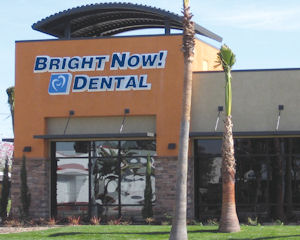
Smile Brands Inc., an Irvine-based dental management company, opened new offices in two of its larger markets in October.
Smile provides dental offices with services that include administrative, marketing and financial support with the goal of freeing up dentists to spend more time on patient care.
The company works with more than 1,100 dentists and hygienists practicing in more than 330 offices in 18 states under the Bright Now! Dental, Monarch Dental and Castle Dental brands.
In late October, Smile opened a Monarch Dental office in Granbury, Texas, a suburb of Dallas-Fort Worth. The opening was the company’s 55th in that metropolitan area.
Earlier in the month, the company opened new Bright Now! offices in Simi Valley, Upland and Murrieta, bringing its total in Southern California to 55. Smile also said it plans to open offices in Pico Rivera, San Jose and Stockton later this year.
Agilent Devices for Ambry
Aliso Viejo-based Ambry Genetics Corp., a commercial clinical laboratory, said it signed a deal with Agilent Technologies Inc., a Santa Clara-based maker of devices for measurements used in chemical analysis, life sciences, electronics and communications.
The deal calls for Ambry to use Agilent’s SureSelect Target Enrichment system for exome sequencing services.
Exome sequencing is used to selectively sequence the human genome’s coding regions to identify novel genes associated with both rare and common disorders. The process requires relatively little sequencing compared to a whole genome.
Ambry, which is privately held, was established in 1999. It provides genetic services focused on clinical diagnostics, as well as genomic services.
Bits and Pieces
CT/KDF Community Development Partners, an Aliso Viejo developer, said it provided $9.4 million in new tax-credit financing to help develop Living Fit in Tennessee, a $28.3 million wellness center in Jackson, Tenn. … Cortex Pharmaceuticals Inc., an Irvine drug developer, said it completed a private placement of $500,000 in common stock and warrants with Samyang Value Partners Co., a South Korea-based investor. Cortex had done an earlier private placement of $1.5 million in convertible promissory notes and warrants with Samyang’s parent, Samyang Optics Co., in 2010 … Steven Plochocki, chief executive of Irvine healthcare software manufacturer Quality Systems Inc., was named an information technology executive of the year at the International Business Awards ceremony held in Dubai.
