

Irvine-based startup Harbor MedTech Inc. is aiming to plunge deep into the wound-healing business.
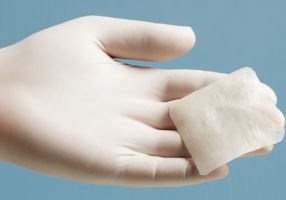
The company recently received marketing clearance from the Food and Drug Administration for Architect, an advanced collagen biologic tissue designed to treat partial- and full-thickness skin wounds.
Harbor, established in 2011, grew out of an animal-tissue treatment process that it licensed from Irvine-based heart valve maker Edwards Lifesciences Corp.
Edwards had been exploring alternatives to glutaraldehyde, a preservation agent, to process animal tissue for its replacement heart valves.
“In some animal studies, it showed that it didn’t work well on heart valves, but it looked like it worked excellently as a wound dressing,” said Jerry Mezger, Harbor’s chief executive.
Mezger worked out a deal to exclusively license from Edwards the technology that led to Architect for wound-care uses. Edwards received an equity stake in Harbor in exchange.
Edwards maintains the rights for the technology in cardiovascular uses, spokesperson Sarah Huoh said.
“Friends and family” now fund Harbor, Mezger said.
The company has raised $2.2 million without the aid of venture capitalists.
“With that money, we’ve gotten FDA approval of our first product,” he said.
But he noted that Harbor’s biggest challenge will be funding, because “the venture capital world is a very, very difficult world these days. … That’s one reason why we did friends and family, and we continue to do that.”
Harbor is seeking potential strategic partners for Architect, and Mezger said the company could be a buyout target within the next two to three years if growth meets expectations.
He said he expects Harbor to have “a couple of million dollars” in revenue during its first 12 months of actively offering Architect and expects the company to turn a profit within 24 months.
Other Companies
Other companies that participate in the market include Organogenesis, a privately held company based in Canton, Mass.; Shire Regenerative Medicine, a San Diego-based unit of Shire PLC in Ireland; and LifeCell, which is based in Bridgewater, N.J.
Architect differs from existing wound-healing products because it’s applied only one time, as opposed to multiple times, according to Mezger.
“Our product does not dissolve in the wound,” he said. “It heals the wound and protects it from infection.”
An entrepreneurial desire led to Harbor’s creation.
It “really came about from me wanting to start my own company,” Mezger said. “I had run seven previous companies for venture capitalists.”
Those included Neomend Inc., an Irvine maker of sealants and products that prevent internal scarring during surgeries. Neomend was sold last year for $140 million to C.R. Bard Inc. of Murray Hill, N.J.
Another Irvine-based startup and wound-care company, Pegasus Biologics Inc., inspired Harbor’s creation. Pegasus raised more than $38 million in venture capital and debt financing prior to shuttering in May 2009 after failing to raise more money.
Pegasus produced biologic products derived from pericardium horse tissue that were used for treating wounds and repairing Achilles tendons and rotator cuffs.
Its assets were sold to St. Paul, Minn.-based Synovis Life Technologies Inc. shortly after it ceased operations. Synovis was eventually acquired by Chicago-based Baxter International Inc., which shut down Pegasus a year ago.
“There’s a whole bunch of customers sitting out there who liked the old Pegasus products, but they’re not available anymore,” Mezger said, adding that Harbor plans to go back to those old customers to peddle Architect.
Mezger contacted a Pegasus official after it was sold to Synovis to learn what worked and what didn’t. He said he learned that the wound-care market opportunity was overlooked by investors in favor of orthopedic applications, among other things.
“Pegasus showed there was a great opportunity with the right technology,” Mezger said, adding that his startup doesn’t have access to the Pegasus technology because of the Synovis sale.
Harbor has 12 employees and aims to double that number by the end of the year.
Architect will be sold via a “hybrid” model using direct salespeople and distributors, Mezger said.
The Centers for Medicare and Medicaid Services plans to have a payment code for the product by the end of the year.
Mezger said commercial insurers are more likely to require additional clinical study data before deciding to pay for Architect; such studies are expected to get under way this year.
