

Irvine-based Edwards Lifesciences Corp. is adding another product to its less-invasive replacement heart valve lineup.
The cardiovascular device maker said late last month that it received European regulatory approval for Edwards Sapien 3 and will start selling it in the European Union immediately.
Sapien 3 features an outer skirt, or a cuff of fabric surrounding the valve’s frame that provides a seal that addresses leaks. Edwards said Sapien 3 can be delivered through an expandable sheath 4.7 millimeters in diameter and can be implanted through multiple approaches.
The valve “has a unique design intended to provide a simpler procedure, along with fewer post-procedural complications and a faster recovery for patients,” said Larry Wood, corporate vice president, transcatheter heart valves, in a news release.
Sapien 3 is not yet commercially available in the U.S.
Chicago-based brokerage Zacks Investment Research said Sapien 3 “should add some further upside” to Edwards’ European business and pointed out that the company has been making progress with the Edwards Sapien family in other markets.
“We are also encouraged with the company’s strong pipeline updates,” Zacks said in a report.

It noted that Edwards is working toward Food and Drug Administration approval by midyear for Sapien XT with the NovaFlex delivery system.
Zacks did sound a note of caution on the competitive front for Edwards because of the earlier-than-expected FDA approval of Minneapolis-based Medtronic Inc.’s Medtronic CoreValve, another less-invasive heart valve.
“CoreValve, whose market price is expected to remain on par with that of Sapien, might bring down Edwards’ revenue growth significantly by weakening its dominance in the U.S. market,” Zacks said. “Although Edwards is optimistic about the expected approval of the company’s next generation Sapien XT valve in the first half of 2014, this long time lag between the CoreValve and Sapien XT launches may help Medtronic gain traction in the [transcatheter heart valve] market,” the investment service added.
HMO in Tustin Ranch
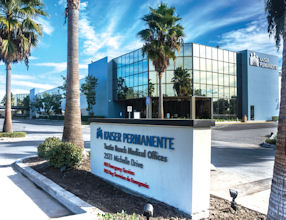
Kaiser Permanente, the Oakland-based integrated delivery system that operates Orange County’s largest health maintenance organization, opened a medical office building in Tustin Ranch in late January.
The 60,000-square-foot building is on Michelle Drive near Jamboree Road and the Santa Ana (I-5) Freeway. It has 42 provider offices.
Services include family medicine, general and specialty pediatrics, podiatry, radiology, medical laboratory and pharmacy. The building will begin to offer eye-related medicine later this month.
Kaiser has 470,000 HMO members in Orange County. It also operates a pair of hospitals, one on Sand Canyon Avenue in Irvine and another on La Palma Avenue in Anaheim, as well as medical office buildings throughout Orange County.
Avanir Submits Drug Application
Aliso Viejo-based drug maker Avanir Pharmaceuticals Inc. said late last month that it submitted a new drug application to the Food and Drug Administration for its AVP-825 acute migraine headache drug candidate.
AVP-825 is made up of low-dose sumatriptan powder, a common migraine treatment, delivered intranasally.
Avanir said in a news release that if the FDA approves the application, it would be the first “fast-acting, dry-powder intranasal form of sumatriptan for the treatment of migraine.”
The drug maker said the application includes data from a pivotal, third-phase trial of AVP-825 for acute migraine. The submission included safety data from 222 people who received AVP-825 in clinical trials, plus reference data from the clinical use of sumatriptan over the past 20 years.
Stem Cell Researchers Get Money
A pair of research teams at University of California, Irvine, received $1.54 million from the California Institute for Regenerative Medicine to further study the structure and function of stem cells.
UC Irvine professors Peter Donovan and Lisa Flanagan received the grants as part of the institute’s basic biology awards program. They’re part of UCI’s Sue and Bill Gross Stem Cell Research Center.
Flanagan and her colleagues will use a $1 million grant to study what happens on the surface of early-stage neural stem cells that causes them to develop into neurons or astrocytes, which are different types of brain and spinal cord cells.
Donovan and colleagues Marian Waterman, Robert Edwards and Michelle Digman will use a $540,000 grant to develop a new type of microscopy to capture images of the metabolic states of cells in living tissue in order to identify stem cell populations.
California voters created the California Institute of Regenerative Medicine by passing Proposition 71 in the 2004 election. The institute has so far granted UCI $98.8 million.
