

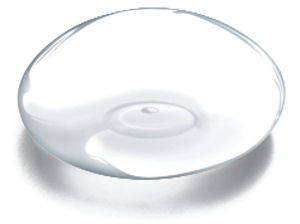
A lesser-known portion of a big deal Allergan Inc. made five years ago is chipping in nicely these days, accounting for a small-but-growing portion of revenue.
The Irvine-based maker of wrinkle-smoother Botox, other drugs and medical cosmetics saw first-quarter sales of its breast implants rise 8% to $84.1 million from a year earlier.
In 2010, Allergan’s breast implant sales grew 11% to $319.1 million. That followed a 7% decline in 2009 to $287.5 million.
For 2011, Allergan has forecast sales of $330 million to $350 million, getting close to 7% of the company’s total.
Allergan posted total product net sales (which are slightly less than revenue) of $1.3 billion in the first quarter and is on pace for about $5 billion for the year.
Allergan’s breast implant business is “now at a place that we are beyond the peak pre-recession,” Chief Executive David Pyott said last month at a Thomson Reuters health summit in New York.
The company got into breast implants in 2006, when it acquired Santa Barbara-based Inamed Corp. for $3 billion. Buying Inamed pushed Allergan deeper into the medical cosmetic business, bringing it the fast-growing Juvéderm lower-face filler and the Lap-Band device for weight loss, along with Botox Cosmetic for wrinkle smoothing.
Pyott’s Pause

Back then, implants gave Pyott pause.
“I literally sat in my office thinking, ‘No, no, no, no, you really can’t be thinking this,’” he said.
Allergan has several competitors on breast implants, including Mentor Worldwide LLC, a Santa Barbara-based unit of conglomerate Johnson & Johnson, which is based in New Jersey.
The breast implant market is more sensitive to economic conditions than most. Most of it is comprised of cosmetic surgeries, which can cost thousands of dollars and generally aren’t covered by health insurance.
It’s growing nonetheless, with sales of cosmetic and reconstructive products worldwide at about $820 million in yearly revenue and growing at a 5% rate, according to Allergan.
Allergan says it has 39% of the market with silicone gel and saline breast implants under the Natrelle brand.
400,000 Procedures
Figures from the American Society of Plastic Surgeons show that there were nearly 400,000 breast enlargement or reconstruction surgeries performed last year nationwide, including those with silicone and saline implants.
Allergan, as is its custom, declined to answer questions on its breast implant business when contacted last week for this story. A spokeswoman said that it plans to discuss the business in early August, when it reports financial results for the current quarter.
Even though breast implants aren’t a large portion of Allergan’s $5 billion in yearly sales, they garner attention from Wall Street because they’re part of its cash-pay business, which represents roughly a third of total revenue.
Prior to the economic downturn, easy credit made it possible for more people to splurge on cosmetic procedures, particularly breast implants.
Allergan doesn’t say how much credit its customers use, but Louise Chen, an analyst at Collins Stewart Hawkpoint, at one point estimated in a Wall Street Journal article that roughly 50% of breast-implant revenue came on credit.
Chen said she now estimates between 30% and 40% of patients use credit to pay for their breast implants.
Pyott said during a recent earnings call that the rebound on sales and use of credit could point to “pent-up demand in the breast aesthetics area.”
“This is a higher-ticket item than facial aesthetics, whether it be Juvéderm or Botox,” he said.
FDA Check-Up
Breast implant makers got some good news last week, when the Food and Drug Administration said silicone breast implants are relatively safe in spite of complications that lead about one in five women to have them removed within 10 years.
It was the FDA’s first safety look at the devices since regulators returned them to market in 2006, after a 14-year period when only saline-filled implants were available.
The FDA pulled silicone breast implants from the market in 1992 after saying that manufacturers hadn’t provided medical data showing their safety and effectiveness.
At that time, there were also concerns about implants’ connection to various diseases, including cancer and lupus, along with cases of implant rupture in some patients.
Dow Corning Corp. of Michigan spent nine years in bankruptcy as a result of thousands of lawsuits stemming from breast implants.
“All the Analyses”
Before Allergan bought Inamed, it “did all the analyses and checks and discovered that really, there was no issue with silicone,” Pyott said at the time of the acquisition. “There’s never been any health connection between the damage that was alleged in the 1990s and silicone. So, really, you can say the plaintiffs’ bar got ahead of the science and put some very big companies out of business.”
Allergan also is looking to other products to build its breast aesthetics business.
Back in January, it bought a cosmetic surgery business from Serica Technologies Inc. for an undisclosed price. The company makes biodegradable, silk mesh scaffolds that help regenerate human tissue and are used for breast augmentation, among other things.
