

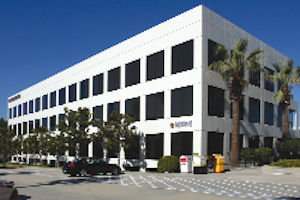
An Irvine company with Chinese roots has received a big investment as it tries to make inroads in a growing business—helping drug makers come up with products.
Pharmaron Holding Ltd. recently raised some $40 million in a third round of funding.
Pharmaron plans to use the money to expand its services, which include chemistry services, testing and drug production for drug makers.
Menlo Park-based DCM and two Chinese investors, Legend Capital and GL Capital Group, took part in Pharmaron’s latest funding.
DCM and Legend are returning investors. GL is a new investor. Pharmaron executives weren’t available for this story.
Shift to China
The company is hoping to take advantage of a push by drug makers to outsource more clinical development work and a shift in research and development toward China.
Pharmaron is what’s called a contract research organization. The global market for contract research organizations is estimated to reach $27 billion in 2011, growing at 15% a year, according to a report by Frost & Sullivan, a San Antonio market researcher.
In the next 10 years, the number of clinical trials that are outsourced could grow to 60% to 70% from a current level of 25%, according to a Dow Jones News Service article.
Contract research organizations have expanded in the past decade amid a push by drug and device makers to cut down on costs by farming out research.
Larger vs. Smaller
The groups run the gamut in size.
Large contract research organizations include Wilmington, N.C.-based Pharmaceutical Product Development Inc. and Princeton, N.J.-based Covance Inc., both with recent market values of $3.5 billion.
Midsize and smaller players like Pharmaron have “got to come up with a clear strategy to either get big relatively quickly or find a unique offering that distinguishes them from the competition,” James Miller, president of Springfield, Va.-based research firm PharmSource Information Services, told Dow Jones. “Their traditional way of competing is disappearing.”
Pharmaron, which was founded in 2003, is looking to its China operations as an edge. It has five plants in Beijing as well as one in Louisville, Ky. It has more than 1,200 workers in the U.S. and China.
