

Inari Medical Inc. was just a 25-person startup when Drew Hykes arrived in 2017 as chief commercial officer.
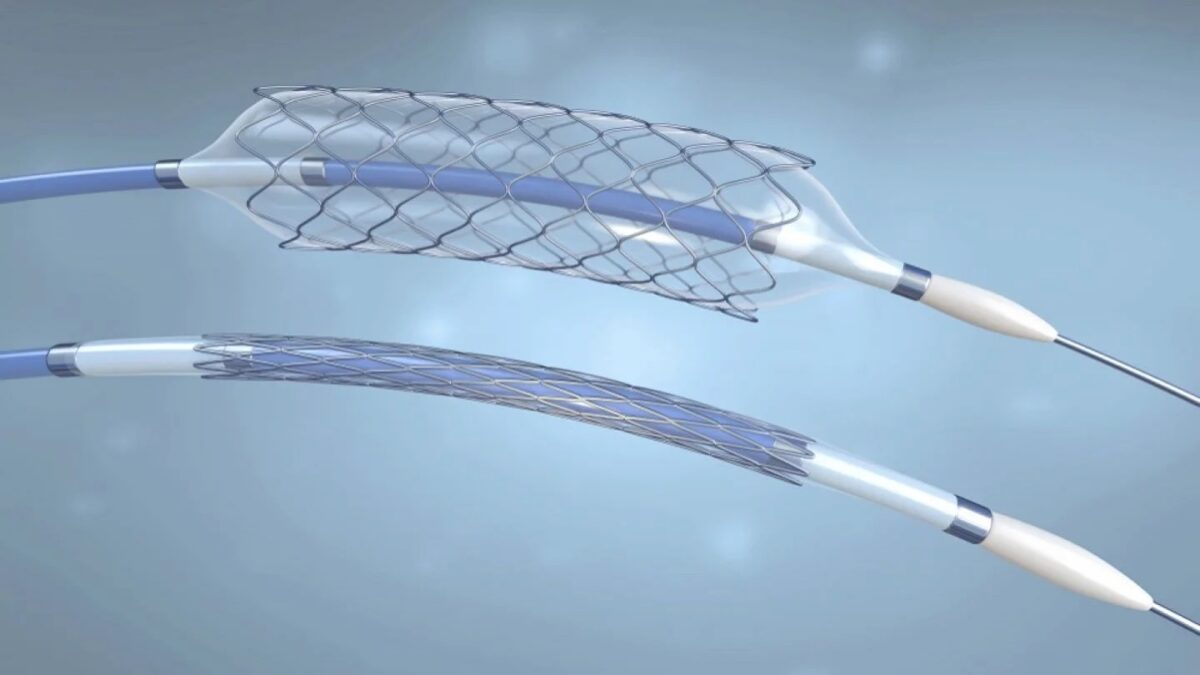
What most impressed Hykes, who had worked for one of the world’s largest medical device makers, was Inari’s technology. The Irvine-based company had developed two catheter-based devices, the FlowTriever and ClotTriever systems, to remove large blood clots from veins, taking a different approach from other medical manufacturers that were repurposing devices designed for the arterial system.
“I had a sense, even back then, of the spectacular unmet need that existed for patients suffering from venous thromboembolism,” Hykes told the Business Journal.
Hykes became one of the key driving forces that helped Inari win believers on Wall Street.
Inari went public in 2020 after raising $156 million in an initial public offering, delivering one of the strongest U.S. IPO debuts of 2020. Shares more than doubled from the IPO price of $19 to above $40 on its first day as a publicly traded company, valuing Inari at around $2 billion.
After the IPO, Hykes took on a broader set of responsibilities as chief operating officer before becoming chief executive in 2023 and oversaw explosive growth during this time.
Revenue soared 63% to $547.5 million over a two-year period from 2022 to 2024, making Inari Orange County’s third fastest-growing public company with a market cap above $500 million.
Inari’s growth trajectory culminated in it being acquired for $4.9 billion, or $80 a share, last February by Stryker Corp., a $140 billion global medical technology company.
Hykes is now beginning his next chapter as CEO and president of Aliso Viejo-based Okami Medical Inc., a medical device maker that creates minimally invasive products to control blood flow to arteries.
In recognition of driving significant growth at Inari and its eventual sale, the Business Journal has named Hykes Businessperson of the Year in the healthcare sector.
Career Pivot from Finance
Hykes, born and raised in Minneapolis, earned a bachelor’s degree in finance from the University of Wisconsin and an MBA from Harvard Business School.
Hykes started his career in commercial banking at ABN AMRO bank in Chicago, where he focused on healthcare transactions before realizing that he didn’t want to be a banker long term and made a career pivot.
“It was clear early on that healthcare resonated with me and I wanted to continue to work within healthcare,” Hykes said.
From there, Hykes spent 10 years at Medtronic, one of the world’s largest medical device makers, in a wide variety of roles including director of investor relations, vice president of marketing for the atrial fibrillation (AF) solutions business and vice president of clinical and regulatory for AF solutions. During this time, he also led the launch of Medtronic’s first drug eluting coronary stent in Europe.
What brought Hykes out to Orange County in 2012 was a role leading commercial operations at Aliso Viejo-based Sequent Medical, a maker of products to treat brain aneurysms.
Sequent, which was acquired by Terumo Corp. for $380 million in 2016, was spun out of Inceptus Medical, the same medical device incubator responsible for the creation of Inari, as well as Okami. Inceptus was founded in 2011 by Robert “Bob” Rosenbluth, a prominent medtech innovator and leader who has founded five successful medtech companies including MicroVention (now named Terumo Neuro) and Advanced Surgical Intervention.
When the opportunity came to join Inari, Hykes said that he was familiar with the team given the overlap of early investors and board members.
“These were people that I had grown to know and respect, and I was excited about the opportunity to work with them at a second company coming out of Sequent,” Hykes said.
Patient First Ethos
Those who have worked closely with Hykes sing high praises of him, including Bill Hoffman, CEO of Inari before Hykes.
“It was pretty obvious he had the skillset to be a CEO. It was only a matter of when,” Hoffman told the Business Journal.
The two met while Hykes was at Sequent. Hoffman moved from Houston to Orange County 11 years ago and was encouraged by Sequent and Inari founders to have lunch with Hykes.
“We like to joke that we dated for two or three years before we got married,” Hoffman said.
Hoffman said that he knew Hykes would make a good successor not just because of his business acumen, but because he embodied the company’s patient-first ethos.
This was proven in a decision they made together when Hoffman was still CEO.
Early on, there were challenges with Inari’s technology, according to Hoffman.
“Our devices were clinically successful and patients were getting better, but we didn’t know why,” he said.
The key mechanism wasn’t taking out as much clot as they expected, and they realized that two of the three components, a device that went inside the catheter and a handpiece at the back of the catheter, weren’t necessary.
Taking out the two components meant sacrificing much of the intellectual property the company had protecting the system, as well as 80% of the device’s selling price, leaving them with just a catheter.
“Anybody could replicate it. We opened ourselves up to competition,” Hoffman said.
Hoffman said that “it wasn’t even a question” for Hykes because it was the right thing to do for the patient.
“That was probably the single most pivotal moment in the company’s history,” Hoffman said.
“If we had made a different decision we probably would have been successful, but we wouldn’t have treated nearly as many patients, and of course, patient treatments leads to revenue, and that’s the byproduct of doing the right thing for the patient.”
Their bet paid off.
More than 150,000 patients have been treated on Inari’s technologies.
During Hykes’ tenure as CEO, the company also added new technologies to its platform by acquiring Paris-based LimFlow for $415 million in late 2023, adding LimFlow’s products for chronic limb-threatening ischemia.
Next Chapter in Career
Hykes left Inari about three months following the Stryker acquisition.
“I stepped away after about 90 days at Stryker and took some time just to reflect on what my next chapter was going to be and where I wanted to focus next,” he said. “Along the way, I began talking to some of the Okami team members. One thing led to another, and I stepped into this role in early October.”
Similar to Inari, Hykes said he was attracted to the versatility and patient impact of Okami’s technology.
The company has two products that are cleared by the FDA.
The first is the LOBO Vascular Occlusion System, which comes in four different sizes.
Occluders are used by surgeons to obstruct or reduce the rate of blood flow to arteries during operations commonly done on patients with an embolism or aneurysm.
Okami’s LOBO system features the company’s proprietary braided technology and is made up of two to three tightly braided nitinol wires that are barely visible, about one-fourth the size of human hair.
The other device is the SENDERO Microcatheter that is designed for the delivery of the LOBO occluders.
“We’ve been commercially focused for about the last 12 months, but we’re still early,” Hykes said.
Last November, the company closed on an oversubscribed $45 million financing led by new investor Gilde Healthcare with participation from existing investors including Vensana Capital and U.S. Venture Partners. Proceeds from the round will expand the company’s commercial footprint and advance its clinical programs, according to the company.
Okami previously closed on $32.5 million of funding a year prior to the recent round, bringing its total funding to over $77 million since its founding in 2017.
Hykes will be working with Hoffman again, who was appointed to Okami’s board of directors in December 2024.
“I think this is a fundamental change for this company,” Hoffman said. “This is really good technology, but really good technology often fails without the right team and right leadership.”
