

Allergan Inc. is “clearly bullish” about growth prospects thanks to a new use for Botox, an expected recovery in medical cosmetics and steady sales of its mainstay eye drugs.
That’s the latest assessment from Seamus Fernandez of Boston investment bank Leerink Swann LLC, who recently visited top managers at Allergan headquarters in Irvine.
A number of factors are driving the company’s outlook, according to Fernandez.
Extending sales of Allergan’s flagship Botox as a treatment for chronic migraine headaches is one.
Another is sales of medical cosmetics—a discretionary purchase for most users—which appear set to grow as the economy improves.
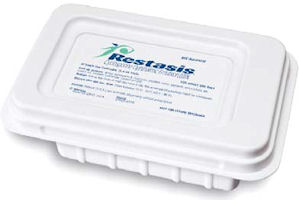
Allergan’s dry-eye treatment Restasis—the only Food and Drug Administration-approved prescription remedy for the condition—has the market to itself for the near term.
“Overall, we remain impressed with (Allergan’s) execution and strategic vision,” Fernandez wrote.
Pyott, through a spokeswoman, declined comment on the analyst’s report.
Allergan isn’t talking about performance or wider use of a number of the company’s drugs until early May, when it reports results for the current quarter.
Botox for Mirgraines
A key growth driver for Allergan will be the coverage of Botox for migraines under health insurance plans.
Regulators granted approval for the extended use in October and Allergan now is “well-positioned due to faster-than-expected managed care coverage,” Fernandez said.
Allergan confirmed that reimbursement now is available for more than 50% of chronic migraine patients who have managed healthcare plans, Fernandez said.
Late last year, Pyott said that Allergan would take data on Botox usage and patients to show insurers that chronic migraine sufferers “are legitimate and have been appropriately diagnosed.”
He acknowledged that getting insurers to pay for Botox migraine treatments would take time, but said “we’ve done that many times before.”
Botox also is approved for cosmetic use for wrinkles as well as for treating muscle and neck spasms, eye muscle disorders and excessive underarm sweating.
Getting broader managed-care coverage for Botox so quickly seems to have surpassed the expectations of many on Wall Street.
In a November report, Marc Goodman, an analyst who covers Allergan for UBS AG, noted that only about 10% of cases that used Botox were covered by insurance.
The Leerink Swann report also alluded to an ad campaign for Botox for migraines, which is planned for an unspecified time this year.
Allergan could see strong gains in part because Botox, with projected sales of $1.4 billion to $1.5 billion this year, is not likely to see any generic competition, Fernandez predicted.
Scottsdale-based Medicis Pharmaceutical Corp. makes Dysport, a competing brand-name drug.
But Botox’s molecule is complex relative to other biologic agents, “so it is highly unlikely that it will be among the first products targeted by generic biologic producers,” Fernandez wrote.
Allergan also is expected to avoid a significant hit from generic versions of Restasis, which accounted for $175 million in sales in 2010, Fernandez said.
“The threat of generic competition to Restasis was viewed as low since emulsion products would likely require clinical data to prove bioequivalence in a large trial,” Fernandez said.
As Allergan has done with some of its other drugs, it is planning a “flanker” version of the drug, known as Restasis X, with the idea of converting doctors to using it.
Allergan is in clinical trials for Restasis X and hasn’t said when it might get regulatory approval.
The probability of a competitor making a Restasis generic seems low.
“The cost of such an undertaking while facing the risk that Restasis X will convert a significant percentage of the franchise, offers additional comfort that generic competition may be limited,” Fernandez said.
Pyott has said that Allergan expects generics to eat into part of its eye-drug business, which accounts for 47% of its $4.8 billion in yearly sales.
“We have to assume we’re going to lose some share to generics,” Pyott said.
Alongside eye drugs, Allergan’s medical cosmetic franchise is “poised for sustained global growth,” Fernandez said.
Medical cosmetics include Botox Cosmetic, breast implants, the Juvéderm lower-face wrinkle filler and the Lap-Band weight-loss device.
Allergan typically is conservative on forecasts. It has said it expects cosmetic product sales to come in at $860 million to $920 million this year, which would represent growth of 2% to 9%. That category excludes some cosmetic products, such as Botox Cosmetic and Latisse, an eyelash grower.
Debt Rating Upgrade
Sales growth in Juvéderm as well as a shift toward facial fillers that contain lidocaine, which diminishes pain, is driving Allergan’s numbers in the U.S., Fernandez wrote.
Performance of those businesses, much of which are paid for by patients in cash, factored into Fitch Ratings Inc.’s upgrade of Allergan’s debt ratings last week.
Fitch raised Allergan’s debt rating to “A” from “A-,” both of which are high levels of investment grade.
Fitch said recovering economies across the globe boosted Allergan’s cash-pay business, which represents about 30% of revenue.
The ratings company said Allergan’s businesses, including Botox Cosmetic, lower-face fillers and breast implants, exceeded expectations in 2010.
The report from analyst Fernandez also touched on “under-appreciated” opportunities in Allergan’s lineup.
One of those is the possibility of Botox for treating overactive bladder.
Allergan managers agreed with feedback that Leerink received on Botox for treating overactive bladder in second-phase clinical trials, Fernandez said.
Those trials showed that Botox was effective for patients for whom traditional drug treatments failed.
Allergan also could see gains from its Ozurdex biodegradable implant, which is placed in the back of the eye and delivers a targeted amount of drugs to the retina, Fernandez said.
The report quoted an ophthalmologist who said Ozurdex had the potential to be “the Windows operating system” for delivering drugs to eyes.
Allergan got Ozurdex in 2003 when it bought Bay Area company Oculex Pharmaceuticals Inc. The FDA approved the implant in 2009.
Ozurdex has more than 100 patents filed and Allergan is looking at other potential drugs and uses for Ozurdex.
