

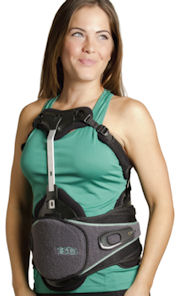
Aspen Medical Products Inc. specializes in making plans along with its orthopedic medical devices.
Both played key roles in landing the Irvine-based company in the No. 125 spot on the Business Journal’s list of fastest-growing private companies based here (see related stories throughout issue; list starting on page 36). Aspen posted a 42% revenue hike over the past two years ended June 30, to $47 million for the 12 months ended June 30.
Chief Executive Dan Williamson said planning was a big part of the recent growth and will continue to lead to a steady stream of new products from Aspen. The 19-year-old company has about 100 workers, with 87 in Orange County, and makes braces to immobilize the upper and lower spine in people with back pain or who are recovering from injuries.
“We plan to develop [and introduce] at least three new products every year,” Williamson said. “I would say it’s from our strategic planning. We plan our growth—it just doesn’t happen by accident.”
Market Analysis
Planning for Aspen includes a focus on the markets it serves and the outlook in each of them. The company reviews data to check the size of the various markets, customer characteristics, and how to best approach sales.
It relies on its own sales force instead of distributors. Company brass regularly meets with the sales staff “and looks at the products we’re currently selling, plus market research from my business development group,” Williamson said.
The planning session allows Aspen to hire more sales representatives for certain products, as needed, Williamson added.
He said the planning also includes time for extensive training for salespeople. New hires are teamed with a veteran representatives for training that typically lasts for eight to 12 months.
“We train them and we take our time,” Williamson said. “We don’t just put the people out in the field. We want our customer to get a benefit from us.”
Aspen products released in recent years include the Aspen Summit line of back braces for the pain management and chiropractic markets and Vista, a lower-spine back brace that is targeted to orthopedic surgeons and orthotic professionals. There’s also the Vista Collar neck brace found in Level I trauma centers in hospitals.
Williamson said he and partner Geoffrey Garth have no plans of selling the company or taking it public.
“My partner and I have planned to keep it private,” Williamson said. “Our main goal is not driven by how much money we make. It’s about the people who work here and keeping the culture.”
Garth is Aspen’s cofounder and vice president of research and development and clinical research. He established predecessor California Medical Products because he wanted to produce a neck brace that he originally designed for paramedics’ use.
Williamson, who worked as an executive of American Hospital Supply Corp. and Baxter International Inc., later joined the company as chief financial officer.
Both Garth and Williamson were with California Medical Products when it was sold in 1992 to Laerdal Corp. in Norway.
Laerdal eventually sold a brace called the Aspen Collar back to Williamson and Garth, and the product became the basis of today’s Aspen.
Aspen has been in OC for about a decade. Williamson, a San Clemente resident, said he moved the company from Long Beach because he was “getting a little tired of making the commute.”
