

Irvine drug maker Allergan Inc. has built itself into a multibillion dollar company by going after, and even creating, new markets.
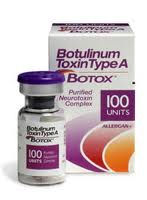
Now it’s looking to do that with flagship drug Botox as a treatment for chronic migraine head-aches.
The Food and Drug Administration cleared Botox for migraines last month. According to analysts, the new use eventually could add $1 billion to yearly sales of Botox, which now are $1.3 billion.
The approval is the biggest expansion for Botox since the drug was approved for temporarily removing wrinkles in 2002.
Regulators approved Botox for use in people who have at least 15 headache days per month. Allergan estimates that 3.2 million Americans have chronic migraines.
The approval also gives doctors the ability to prescribe Botox for other headache sufferers if they see fit.
Allergan plans to start training doctors on how to prepare the drug and how to inject it. The company also will work on getting reimbursements from insurers and the federal government’s Medicare health program.
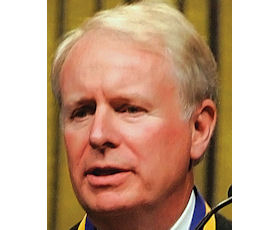
The company plans to take data on Botox usage and patients to show insurers “that these people are legitimate and have been appropriately diagnosed,” Chief Executive David Pyott said.
Getting insurers to pay for Botox migraine treatments stands to take time and effort, “but we’ve done that many times before,” Pyott said.
Along with cosmetic use, Botox is approved for treating muscle and neck spasms, eye muscle disorders and excessive underarm sweating.
Only about 10% of the drug’s use now is covered by insurers, according to Marc Goodman, an analyst with UBS AG.
“Management expects a slow ramp due to injector training and limited reimbursement,” he said.
Allergan has moved salespeople who had promoted GlaxoSmithKline PLC’s headache drugs Imitrex and Amerge under a pact with the British drug maker to Botox for migraine.
The GlaxoSmithKline pact “was a very good way for Allergan to learn the headache market,” Pyott said.
“That gave us knowledge and relationships” with doctors who could use Botox for migraines, he said.
Allergan doesn’t plan to create special packaging for Botox for migraines, like it did with the cosmetic version of the drug, which goes by Botox Cosmetic.
“This is just the Botox that is used for all the different therapeutic indications,” Pyott said. “The product is on the market, so we don’t have to do anything. These days, the FDA accepts the fact that our package insert is online (and will be) updated to include the chronic migraine (information).”
Allergan plans to showcase Botox for migraines at a meeting of the Mount Royal, N.J.-based American Headache Society later this month in Phoenix, according to Pyott.
Some doctors already are familiar with Botox and had been using it to treat migraines in what’s known as off-label use.
Once the FDA approves a drug for any use, doctors can prescribe it for other conditions.
Q3 Results
Approval of Botox for migraines came during a quarter that saw Allergan post a profit in line with Wall Street’s expectations.
Allergan’s third-quarter earnings before charges came in at $236.5 million, up 11% from a year earlier and matching what analysts expected on average.
After charges, Allergan saw a net loss of $670.5 million after it took a $609 million charge related to the settlement of a federal probe into marketing practices for Botox.
The settlement stemmed from government charges that Allergan marketed Botox for unapproved conditions from 2000 to 2005. The settlement was widely seen as a precursor to having Botox approved for migraines.
Allergan’s third-quarter sales came in at $1.19 billion, up 6% from a year earlier and topping Wall Street expectations of $1.18 billion.
Third-quarter Botox sales were up 4% to $342 million.
“We still like this story,” UBS analyst Goodman said of Botox.
Botox is “more sustainable than believed,” the analyst said, with migraine clearance and possible approval for treating overactive bladders in 2012.
Sales of eye drugs, Allergan’s largest product group, rose 6% to $569 million in the third quarter.
Allergan has been able to withstand generic competition for its eye drugs, according to Pyott.
The company has had to deal with generic versions of its Acular drug for treating itchy eyes and its Alphagan glaucoma drug.
In 2009, Allergan reached a patent infringement lawsuit settlement that allowed Switzerland’s Alcon Laboratories Inc., which has some 800 workers in Irvine, to make a generic version of Alphagan.
Alcon’s version sells for 30% less than Alphagan.
“With hindsight, we shouldn’t have done that,” Pyott said of the settlement. “When we finally went to trial in Delaware, the judge upheld all of our patents. So we effectively have patent protection going on to 2023.”
Allergan developed two new formulations of Alphagan that have helped sustain sales, according to Pyott.
Another eye drug, the antibiotic Zymar for treating pinkeye, is being replaced by a new formulation dubbed Zymaxid.
Allergan’s converted 43% of its doctor customers to Zymaxid, Pyott said, even though Zymar has yet to see generic competition.
Other Approvals
Other Allergan products approved this year include Lumigan 0.01%, a new formulation of glaucoma drug Lumigan, and a Canadian approval for Restasis, a dry eye drug. Allergan also launched eyelash grower Latisse in Canada.
“We can say on our 60th anniversary, this has been the best year for R&D approvals ever,” Pyott said. “We can count up to 13 significant approvals in the U.S. and around the world, very rare in our industry where most people are starving for approvals.”
In Allergan’s customary conservative forecasting, the company projected a fourth-quarter profit of $264.9 million to $271 million, below the $274 million analysts had been expecting.
The profit outlook “looks beatable to us,” wrote analysts David Amsellem and Misha Dinerman of Minneapolis-based Piper Jaffray.
Sales of Botox, lower-face wrinkle filler Juvéderm, Lumigan and Restasis should help Allergan beat the forecast, the analysts said.
Allergan projects fourth-quarter revenue of $1.22 billion to $1.27 billion.
