

TECHNOLOGY
Person to Watch: SIMON BIDDISCOMBE

It looks like our bet on QLogic Corp. Chief Executive Simon Biddiscombe as a person to watch turned out to be a push.
Aliso Viejo-based QLogic makes chips, boards and switches that speed up the flow of data on storage networks. It counts Hewlett-Packard Co., IBM Corp. and Dell Inc., among others, as customers.
Biddiscombe gets credit for furthering the company’s inroads in the growing 10-gigabit Ethernet networks market while establishing himself in the corner office.
Yet QLogic shares are down more than 13% so far this year, to a market value of about $1.5 billion, despite a rally in the past three months.
Biddiscombe was elevated from chief financial officer to take over the chief executive’s post from H.K. Desai, who spent 16 years at the company’s helm and remains chairman.
Biddiscombe’s transition wasn’t guaranteed. An earlier attempt by Desai to step back from day-to-day operations didn’t pan out—IBM veteran Jeff Benck signed on as president and chief operating officer in 2008 but resigned after about a year, becoming chief operating officer at Costa Mesa-based rival Emulex Corp.
Company watchers said the two couldn’t come to terms about the timing of Benck’s ascension to chief executive.
Biddiscombe’s tenure has seen QLogic score a moderate increase in its market share lead in fibre channel adapters, which connect storage equipment to servers, according to Redwood City-based market tracker Dell’Oro Group.
That’s where the company should be, according to Tam Dell’Oro, founder of the research firm.
“QLogic has dominated that market with over 50% share,” she said. “This is a market that will continue for many years to come.”
QLogic is investing in new products amid a shift from fibre channel to Ethernet-based solutions. It appears to be in good position to benefit from the shift, but the “competitive landscape stands to be much stiffer in that arena,” according to JPMorgan Chase & Co. analyst Mark Moskowitz.
The adoption of fibre channel over Ethernet has been slow, however, and the prospect of new information technology projects being tabled or delayed if the economy doesn’t pick up steam remains an ongoing concern for QLogic, Moskowitz wrote in a late October note to investors.
Moskowitz revised his 12-month outlook on QLogic downward to adjusted earnings of $1.35 per share on $590 million in revenue, below Wall Street expectations.
“We expect shares of QLogic to lack above-peer appreciation potential,” he said.
—Chris Casacchia
Company to Watch: WISPRY INC.
Our suggestion to keep a close eye on Irvine-based chipmaker WiSpry Inc. this year proved right on the money.
The company makes chips that manage internal antennas in cell phones—often the most finicky part of a phone. It recently began production of its first product as part of a deal with a “major cell-phone customer.”
Founder and President Jeff Hilbert wouldn’t disclose the name of the cell phone maker behind the recent deal, saying only that it has cell phones on the market today with WiSpry chips embedded in them.
The deal led WiSpry to chalk up revenue for the first time in its nine-year history.
“It’s been 12 months of solid progress and execution,” Hilbert said during a recent business trip in Asia. “We not only met but exceeded our expectations of getting into production and revenue.”
The company is shipping “several hundreds of thousands” of units per month, Hilbert said.
“We’re still in the early stages of ramping up production,” he added.
Hilbert expects to ship millions of units next year.
The company makes microscopic machines that are thousandths of an inch in size and go on chips that help extend battery life, make for fewer dropped calls and allow for slimmer, sleeker phones.
WiSpry is known as a fabless chipmaker. It struck a deal in 2009 to have chips made at an IBM plant in Burlington, Vt. It also relies on suppliers in Malaysia.
The company is completely financed by venture capitalists and has raised about $70 million to date, making it one of OC’s best-funded startups.
In November WiSpry closed its fourth round of venture financing, raising about $14.7 million from its current roster of investors, which include Irvine-based TechCoast Angels and Murata Manufac-turing Co. Ltd., a big electronics equipment manufacturer based in Shanghai, China. Others include Washington, D.C.-based Paladin Capital Group, American River Ventures in Sacramento, Blueprint Ventures in San Francisco, San Diego-based Shepherd Ventures and New York-based L Capital Partners.
The proceeds from the latest round will “accelerate sales and marketing efforts” and product development, according to Hilbert.
The company employs 42 people and expects to boost that to 55 to 60 by the end of next year. Most of its workers are engineers.
The company is working on a new version of its chip and hopes to have three separate products in development next year.
In January it opened a research and development office in Denmark on the heels of an $8 million contract with the Danish government.
WiSpry engineers went to Denmark to work on what’s called the “smart antenna front-end project” to develop tunable antennas based on WiSpry’s chip technology.
The company was formed in 2002, when it split from the radio frequency and wireless business unit of Austin, Texas-based Coventor Inc.
WiSpry projects it will reach profitability within about six quarters. An exit for its investors—most likely via a sale of the company—is further down the road, Hilbert said.
—Chris Casacchia
REAL ESTATE
Person to Watch: CRAIG ATKINS
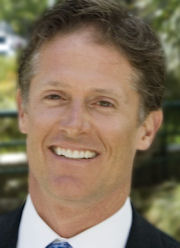
City Ventures LLC Chairman Craig Atkins took a big step and left a green footprint in 2011, when he transitioned from a land buyer to a homebuilder.
City Ventures was founded in early 2009 and has been one of the more aggressive buyers of land in Southern California since its formation. The buys amount to a bet on the ability of Atkins and his team efficiently to build attractive, innovative homes that can find buyers in today’s tough market.
Last year saw the company ramp up its building in some of its coastal markets, with its first 10 developments moving ahead. They include projects in Brea, Signal Hill and Santa Ana, where a project next to that city’s artist village has already sold out.
The company’s new projects count their share of innovations. City Ventures is giving prospective buyers 3-D virtual tours for homes at its Brea development. The technology eliminates the need for model homes, helping keep overhead costs low for the builder and buyers.
Green features have become a key selling point for the builder. In addition to using solar power—and incorporating cost-saving, all-electric features in many of its new homes in projects such as the Signal Hill development—City Ventures is adding electric vehicle charging stations for electric cars in the homes’ garages.
—Mark Mueller
Company to Watch: IRVINE COMPANY
We didn’t go too far out on a limb last year predicting that Irvine Company, the dominant real estate company in Orange County, would be a big mover and shaker in 2011.
Still, the Newport Beach-based real estate investor and developer made more than its share of headlines—through a combination of development, acquisitions and lease transactions—over the past 12 months.
The company made the biggest local splash of the year in the commercial development sector when it announced in March plans to build a new office tower in Newport Center as the headquarters for investment manager Pacific Investment Management Co.
The 20-story building, which is seeing early work done now, should be completed by mid-2013. The high-end tower might be OC’s most valuable office once it’s completed when factoring in the location and the rents Pimco is expected to pay.
Irvine Co. also is planning to build new offices, and perhaps apartments, in Silicon Valley. It has made several purchases there this year, including a $132 million office buy in Sunnyvale.
In Costa Mesa, the landlord is in the midst of an estimated $25 million renovation of Pacific Arts Plaza, which it bought late last year. And in the Irvine Spectrum, the company inked one of the most notable leases of the past year, signing data and analytics company CoreLogic Inc. for its 40 Pacifica tower.
Irvine Co. chairman Donald Bren, normally one to stay out of the limelight, also got his share of attention in 2011, speaking at real estate conferences and other events highlighting the Irvine Ranch.
—Mark Mueller
HEALTHCARE
Person to Watch: MICHAEL MUSSALLEM
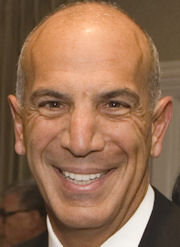
We picked Michael Mussallem, the only chief executive that Edwards Lifesciences Corp. has known in its 11-year history, on expectations that the cardiovascular device maker would reach a milestone in 2011.
That milestone came in early November, when the Food and Drug Administration approved Irvine-based Edwards’ Edwards Sapien replacement heart valve for domestic use. The domestic market is estimated to be worth up to $150 million to $250 million in annual sales for Edwards in its first year, according to industry analysts.
Sapien, which is inserted through a catheter, and related valves are seen as the biggest developments in the industry in years, holding the potential to open up the market to people who can’t handle traditional open-heart surgery.
Mussallem prepared Edwards for Sapien’s U.S. introduction, including telling analysts and investors that the company would spend up to $40 million to introduce the valve domestically.
Sapien, which had sales of $240.6 million through September, has been sold in Europe since late 2007 (see related story, page 1).
—Vita Reed
Company to Watch: BECKMAN COULTER INC.
We hit the bullseye on our outlook for Beckman Coulter Inc.
Last year, we tabbed the Brea medical diagnostics maker as a company to watch and predicted that it could be bought after a turbulent 2010 that saw it addressing issues from a recall of a test to detect heart attacks.
That happened in February, when Washington, D.C.-based Danaher Corp., a conglomerate best known as the maker of Craftsman tools sold at Sears stores, said it would buy Beckman for $6.8 billion.
Danaher struck its deal after several months of jockeying for Beckman among a field of bidders.
Beckman’s former chairman Glenn Schafer and former general counsel Arnold Pinkston in August gave a behind-the-scenes look at what played out in the Beckman sale.
Schafer talked about how Beckman “lost an engineering discipline” in the run-up to problems that led to the recall of its profitable troponin test in 2010. He also said that a special committee that Beckman put together to tackle the problem faced internal resistance, something that led to the departure of former chief executive Scott Garrett.
—Vita Reed
MANUFACTURING
Person to Watch: HENRIK FISKER
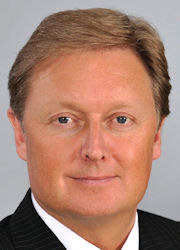
The Business Journal placed Fisker Automotive Inc.’s Chief Executive Henrik Fisker on last year’s watch list as the automaker’s first product, the Karma, was set to debut amid a good deal of hype.
The hype’s still there, although not all the cars have been delivered.
The developer of electric vehicles remains one of the most watched startups in Orange Coun-ty, with notable progress and continuing challen-ges drawing attention.
The Karma made headlines a number of times this year, drawing praise for its design, and frustration for delays on initial deliveries.
Fisker began production of the hybrid luxury sedan in March and only recently began delivering the vehicles to buyers.
The Karma was produced in Finland on a contract basis. The automaker had about 3,000 orders on backlog, including preorders from celebrities and other high-profile customers. It’s expected to deliver only 1,500 cars by the end of this year, falling well short of its original goal of 7,000.
Fisker attributed the miss to interruptions in production caused by faulty electric harnesses and a flood that damaged leather stocks. It also faced a delay on a final approval from the Environmental Protection Agency, which came in October.
The company already has trimmed its sales projections for 2012, from 15,000 vehicle sales to between 10,000 and 12,000. Some of the trim stems from concerns about the Karma’s $96,000 sticker price in an economy that remains uncertain.
Fisker is gearing up for U.S. production of the company’s next wave of plug-in hybrid vehicles.
Fisker’s lower-priced hybrid Project Nina is slated for development next year at a 3.2-million-square-foot assembly plant in Wilming-ton, Del. The automaker bought the Delaware assembly plant for $20 million in General Motors Co.’s bankruptcy in 2009.
Some automobile trade publications have reported on the likely delay in the production of the $47,000 sports sedan, but Fisker has disputed the claim.
The company also expects to begin building the Surf—a spinoff of the Karma—in Finland in mid-2012.
Fisker earlier this year projected that it plans to add hundreds of jobs.
The company has tapped more than $600 million in private equity capital since its inception in 2007, including a $115 million round in June. It’s currently out to raise another $150 million.
—Jane Yu
Company to Watch: TRI ALPHA ENERGY INC.
A veil still covers the operations of Tri Alpha Energy Inc. a year after we put the Rancho Santa Margarita-based company on our annual watch list.
Tri Alpha is known for being one of the most secretive clean-tech businesses.
It’s developing technologies to merge hydrogen and boron to make helium in a device known as a “field-reversed configuration.” A high-temperature plasma, or ionized gas, is confined in the device to achieve nuclear fusion.
The reaction releases energy and could be used to generate electricity, as well as eliminate waste produced at nuclear power plants.
Tri Alpha was started in 1998 as a brainchild of Norman Rostoker, professor emeritus at University of California, Irvine.
A public presentation in Seattle in August—at the opaquely named Innovative Confine-ment Concepts and U.S.-Japan Compact Torus Plasma Workshops—featured some of the results of Tri Alpha’s research so far. It indicated that Tri Alpha has seen improvements in its plasma performance, including better flux confinement time and a record plasma lifetime exceeding two minutes.
Tri Alpha also has developed effective “wall conditioning,” an element that controls impurities generated through plasma surface interactions.
The nuclear energy company is backed by venture capital and has raised more than $100 million, including a $50 million last year. Backers include billionaire Paul Allen’s Vulcan Capital in Seattle, Palo Alto-based Venrock Associates and Goldman Sachs Group Inc. in New York.
How does Tri Alpha plan on making money on all that brainy research?
Quietly—for now.
“When they get a specific set of results—and you can’t really put a date on when that will be—it will be made public,” spokesperson Eric DeRitis said.
—Jane Yu
APPAREL
Company to Watch: QUIKSILVER INC.
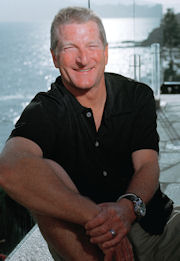
We placed Huntington Beach-based Quiksilver Inc. on our watch list last year with the action sports apparel maker a rumored acquisition target.
That didn’t happen but a lot did, as the company got back on offense after several down years.
Quiksilver makes clothes, shoes and accessories inspired by surfing, skateboarding and snowboarding across three core brands—Quiksilver, Roxy and DC Shoes—and a handful of other, smaller brands.
The company reached a critical juncture in its business at the end of last year with signs of a turnaround emerging amid speculation that Paris-based PPR SA was interested in acquiring Quiksilver, according to reports from French newspaper La Tribune.
The buy would have placed Quiksilver among high-end luxury brands Gucci, Yves Saint Laurent and others in the PPR portfolio.
Though the acquisition never panned out—PPR instead paid $608 million for Costa Mesa-based Volcom Inc. in June—Quiksilver hit the ground running this year with new marketing, store openings and other growth strategies that some analysts believe could still make it an attractive buy next year.
It’s a sign of a re-engineered Quiksilver that has emerged from darker days. The company was nearly sunk by its 2005 acquisition and subsequent sale of the underperforming Skis Rossignol SA business.
It’s gotten over that miss, with the company expecting revenue for the 12 months through October to be up slightly from the $1.8 billion it reported last year.
Adjusted earnings before interest, taxes, depreciation and amortization are expected to be roughly in line with the $204.4 million it had last year.
Much of the progress has come in Quiksilver’s Americas division.
The company’s overall revenue was up 14% from a year earlier to $503.3 million for the July quarter, with the Americas division spearheading that growth.
Quiksilver Americas revenue for the three months through July ended up 11% from a year earlier, at $260.2 million.
Quiksilver hopes its domestic successes—which former Americas President Craig Stevenson is credited with leading—will rub off on its international business. A recent executive promotion could aid that goal.
In November, Stevenson was promoted to global brand president and chief operating officer of the company, charged with helping grow its product offerings internationally.
Quiksilver saw the opening of several stores this year as it got back to growth under Chief Executive Bob McKnight.
Its first Waterman store opened in July at Newport Beach’s Fashion Island. The store sells the company’s Waterman line, which is geared to an older crowd of men in their 30s or older who are active in surfing, paddleboarding and other water-related sports.
Quiksilver also debuted a new flagship store concept—a format it had already tested in Europe—in the Abbott Kinney neighborhood in the Venice district of Los Angeles during the summer. The store sells Quiksilver brands plus surfboards, skateboards and other hard goods.
Internationally, Quiksilver opened a Portugal store with an indoor skate park, plus the DC Embassy skate park, which also serves as a showroom for DC products.
Marketing efforts included Quiksilver’s first surfing event on the East Coast, held in New York in September.
On the operations side, the company is in the process of implementing new software that allows the company to streamline finance, distribution, sales and other departments. The first phase of that software program was implemented in September.
—Kari Hamanaka
FINANCE
Person to Watch: STEPHEN GORDON
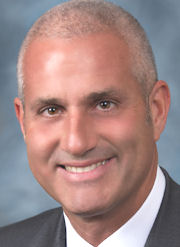
Opus Bank Chief Executive Stephen Gordon made us look smart with acquisitions and other growth.
Opus made news in 2011 for acquisitions and relocating its corporate headquarters to Irvine from Redondo Beach. That made it official—Opus had been run from offices in Irvine with Redondo as its on-the-books headquarters for about a year.
The Business Journal picked Gordon last year as the person to watch based on his move to recapitalize what had been Bay Cities National Bank. He quickly began laying down plans for acquisitions.
He delivered.
“The company is still in its infancy, but it has come a heck of a long way,” Gordon said. “We started the company virtually from scratch, recapitalized it with five locations, 55 people and $274 million in assets.”
Opus Bank grew assets to about $2.5 billion through two acquisitions this year. It now has 500 employees. It paid $21.8 million for Everett, Wash.-based Cascade Financial Corp. and its Cascade Bank. Cascade Bank had been under an enforcement order by the Federal Deposit Insurance Corp. due to low capital levels since July 2010.
The troubled bank’s holding company had received $39 million from the U.S. government under the Troubled Asset Relief Program. Opus paid $16.25 million to the U.S. Department of the Treasury to retire its investment, and another $5.5 million to Cascade Financial shareholders.
The purchase boosted Opus assets by $1.1 billion. It brought more than 200 employees and more than 20 additional offices in Washington.
Gordon continued to buy.
Opus Bank completed the acquisition of Fullerton-based RMG Capital Corp. and its subsidiary Fullerton Community Bank in October.
The Fullerton deal added about $636 million in assets for Opus Bank.
This October was a particularly busy month for the bank, as it completed its move to Irvine, a shift that made it the largest bank based in Orange County.
Gordon also led a round of equity financing in October with other prior investors, raising $100 million in new capital.
Investors were funds affiliated with New York-based Elliott Management Corp., Fortress Investment Group LLC in New York, and Greenwich, Conn.-based Starwood Capital Group.
Opus Bank now has 37 banking offices throughout Southern California and the Seattle area, “and we’ve now just turned profitable,” Gordon said.
The bank also recently announced that it holds the highest deposit market share among community banks in a number of cities in Washington, including Everett, Marysville and Edmonds.
Gordon said the bank is looking at expanding in 12 new locations, including Northern California.
“I’m pleased with what we’ve done,” Gordon said. “But we don’t forget the fact that we’ve only been around for a year. We’ve got so much more to do.”
—Jane Yu
Company to Watch: JPMORGAN CHASE & CO.
We chose JPMorgan Chase & Co. as a company to watch last year as the New York-based bank continued to compete for Orange County market share with rivals Bank of America Corp. and Wells Fargo Bank.
It appears to have been a successful year from that standpoint.
Federal Deposit Insurance Corp. data show Chase held local deposits of $6.7 billion as of June 30, or 7% more than a year earlier.
That boosted its share of all local deposits in the market to 9% from a previous 8%. The increase doesn’t shake up the rankings among Orange County’s big banks, but Chase’s performance this year appears to be outpacing its rivals.
Charlotte, N.C.-based Bank of America had total deposits of $16.5 billion, a 2% increase from 2010. It continues to lead the bunch of commercial banks operating here with about 22% of the county’s market share.
San Francisco-based Wells Fargo had $15.4 billion in local deposits this year, down 2% from a year earlier.
Wells has 20% of Orange County’s depos-its.
Chase also managed to expand physical space while its rivals trimmed branches.
“In Orange County alone, we’ve opened 10 new offices in 2011,” said Paul Kaufman, middle-market banking manager for Chase.
The gains bring Chase’s total local branches to 73, according to mid-year FDIC figures. The bank added about 300 employees here over the year for a total of 2,700.
Chase also has increased its small-business lending.
“We are the largest Small Business Administration lender,” Kaufman said. “Nationally, we’ve extended over $12.6 billion through the year in small-business lending, up 71% year-over-year. We’re lending to the businesses that ultimately create jobs.”
Kaufman said he expects the loan-growth trajectory to continue.
“We’re focusing on lending,” he said.
Chase lends to audiences all across the board, ranging from home loans to small- and large-business loans.
“We also continue to lend to municipalities,” Chase spokesperson Gary Kishner said. “We provided $50.3 billion of financing to governments in 2011 in metropolitan areas.”
A figure wasn’t available for municipal lending in Orange County.
“We’re going to continue to invest in employees to support the growth in this marketplace,” Kaufman said. “We’ll continue to hire, add branches and gain market share.”
—Jane Yu
