

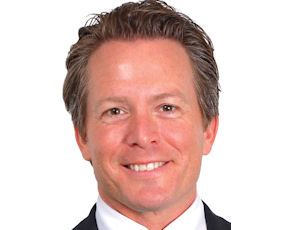
Orange County stem-cell pioneer Hans Keirstead has added another title to his repertoire as the company he now runs revs up its action.
The professor at University of California, Irvine, has stepped into the chief executive’s role at Irvine-based California Stem Cell Inc., a privately held company that is using stem cells to develop treatments for cancer and other disorders.
The Food and Drug Administration last month approved the company’s request to perform a third-stage clinical trial for melanoma, or skin cancer. That trial was also designated “fast-track” by the FDA, which facilitates and expedites the review of new drugs for treating serious or life-threatening conditions, as well as granted a special protocol assessment.
“Those are two gold stars on a phase III clinical trial,” Keirstead said in an interview.
Keirstead has ambitious goals for California Stem Cell, which was founded in 2005 and now has 34 full-time employees, and interns from schools such as Harvard University and the Massachusetts Institute of Technology.
The company manufactures the stem cells it uses for its work.
“We’ve constructed a single shop that has manufacturing, regulatory and clinical expertise,” said Keirstead. “Those are the three pillars that hold up translation.”
The company also is working with UC Irvine faculty on stem cell projects.
Melanoma Trial
California Stem Cell plans to start its melanoma trial in coming months.
Keirstead said he expects the trial to take two to four years, depending on how patient recruitment goes. He said commercialization could come as early as two years after the trial is under way.
“What I would like to do is firmly establish California Stem Cell as the go-to company for clinical translation and clinical development of stem-cell technology,” he said. “We’ve proven we can do that, having a Phase III approval for one stem-cell technology—melanoma.”
Keirstead has taken a leave of absence from his teaching position at UCI, where he founded the Sue and Bill Gross Stem Cell Research Center. He has been with UCI since 2000.
“It’s a permanent situation, should I wish to take it,” Keirstead said of his position at California Stem Cell. “Any time a professor [steps] away to further his or her education and experience, like I’m doing, the university just offers a year in order to retain the right to go back. I have a year to make up my mind, but my intention is to stay with the company.”
Funding
California Stem Cell does not disclose its investors or how much the company has raised over its history.
It is looking for more as it takes tangible steps toward commercial approval.
“The history of funding has been excellent,” Keirstead said. “We are moving into several expensive clinical trials. Therefore, our [capital] needs are much greater; so we are exploring several options.”
He said those options include a public offering, venture capital, or strategic partnerships with other biotechnology companies.
Publicly traded stem cell companies have faced some challenges, according to Keirstead.
“It’s been disappointing—the stem cell sector hasn’t performed terribly well,” he said.
Several companies in the sector, including Newark-based StemCells Inc.; Advanced Cell Technologies Inc. in Marlborough, Mass.; and Carlsbad-based International Stem Cell Corp., have seen their market values plummet in recent years.
Geron Corp.
Menlo Park-based Geron Corp. shuttered its spinal cord injury stem-cell program in 2011 for financial reasons. California Stem Cell is interested in the technology, “but it’s not been on the shelf to acquire,” Keirstead said.
BioTime Acquisition Corp., a unit of Alameda-based BioTime Inc., purchased the spinal cord assets from Geron and assigned them to a subsidiary called Asterias Biotherapeutics Inc.
Asterias is deciding what to do with the technology, according to Keirstead.
Keirstead said he was “maintaining a very open door” with BioTime Chief Executive Michael West and Dr. Thomas Okarma, Asterias’ chief executive, about the former Geron program.
Keirstead also noted that the stem cell industry has had various problems with manufacturing and regulatory issues and that California Stem Cell is attempting to get around those through getting stem cells from patients’ tumors rather than making them and transplanting them into the body.
“We pull the cancer stem cells out of [the] tumors,” Keirstead said.
California Stem Cell is looking at other cancers besides melanoma.
It just finished up a first-phase trial for liver cancer and has applied to the FDA for a second-phase trial for ovarian cancer.
California Stem Cell plans to “continue down that cancer pipeline” for further research and development projects, Keirstead said.
OC’s Eye Sector
The company will also work in other fields. It’s interested in developing stem cells for retinal disease, including age-related macular degeneration, a major cause of blindness.
It received a $4.5 million grant from the California Institute of Regenerative Medicine to pursue retinal disease work.
“If it does make it into the clinic, we would be faced with the opportunity to partner it if we wish or fund it ourselves,” Keirstead said of the retinal disease program.
Orange County’s ophthalmology dominance may allow California Stem Cell a choice of potential partners.
“Allergan [Inc.] is right around the corner,” Keirstead said. “I maintain a very healthy and professional relationship with Allergan executives. They’re aware of what we’re doing.”
