

UBS Financial Services Inc. is growing again in Orange County as it nears the end of a two-year bid to clean up a hard-sell, bonus culture that nearly brought its Swiss parent to its knees.
The massive reform has spanned the globe and brought changes locally for UBS, which counts about $9 billion in assets under management at private banking offices in Irvine, Brea and Newport Beach.
UBS’ local assets under management are up by about $200 million since the end of 2009 with a new approach on private banking services for executives, professionals and others here with at least $1 million to invest, according to the bank.
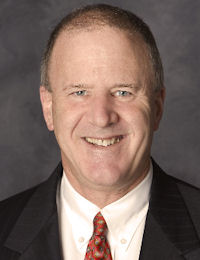
The days of sell first, ask questions later are over, according to Randy Grossblatt, who was tapped in mid-2009 to lead the Southern California market, taking in everything from Bakersfield to San Diego.
“My first job was to stabilize a difficult situation,” said Grossblatt, who arrived on the job as UBS was reeling from bad bets tied to U.S. subprime mortgages, a mess that led to a bailout by Switzerland’s central bank.
UBS took more than $57 billion in write-downs on bad mortgages along the way.
The UBS name was further tarnished and top executives were ousted as charges of impropriety swirled over hidden offshore accounts for wealthy U.S. clients.
OC Case
The taint included a high-profile case in OC, where Igor Olenicoff, president of Newport Beach-based Olen Properties Corp., pleaded guilty in 2007 to filing a false tax return and paid $52 million in back taxes and penalties related to overseas accounts he had with UBS.
Olenicoff now is suing UBS, alleging it led a fraud that brought his federal tax charges. He worked with Bradley Birkenfeld, a former financial adviser for UBS in Geneva who’s now serving three-plus years in federal prison.
Zurich-based UBS since has closed its offshore business and avoided U.S. prosecution by paying $780 million, turning over the names of American account holders and admitting wrongdoing.
The troubles came as many UBS financial advisers sought to rapidly expand the private banking division by pushing stocks and bonds as the financial markets were on the verge of disaster.
The tone is different these days.
“We’re no longer securities salespeople but solution providers,” Grossblatt said. “In the last year and a half we have really changed the culture to one of partnership with clients in terms of financial planning.”
Now local financial advisers sit with clients for a few hours in introductory meetings and listen without pushing products, according to Grossblatt.
They’ll go back to analysts and craft a financial plan over a few weeks before presenting it to clients. That was done in hours in the past.
In another push, economists and strategists from UBS offices in New York visit with OC clients, holding seminars and other informational sessions here every few weeks.
“These meetings are telling, not selling,” Grossblatt said.
The new approach has included a big trimming of UBS’ payroll. Thousands have been laid off as part of a companywide push to consolidate or eliminate positions.
Company watchers contend the constant push for rapid growth was the root of UBS’ problems, something Grossblatt said he ag-rees with.
He said he watched the company announce hirings in the thousands only to see attrition follow.
UBS now plans to hire selectively, adding 150 financial advisers in the next year. The company is being extremely selective, ac-cording to Grossblatt, weeding out applicants who don’t bring long resumes and a solid book of business.
“The failure rates were excessive,” he said, but “our attrition rate is down to nil.”
At 65, Timothy Tunney is relatively new among the 30 financial advisers in the bank’s Irvine office. But he has 30 years of experience, nearly two decades of that in OC.
Past Experience
Tunney joined UBS after long stints with Morgan Stanley Smith Barney LLC and Merrill Lynch & Co. before it was acquired by Bank of America Corp.
BofA, Wells Fargo & Co., Morgan Stanley and JPMorgan Chase & Co. are UBS’ key rivals here.
“The ability to contact key management and analysts is just more open here,” said Tunney, a vice president in the investment division who oversees more than $100 million in assets for private clients and $50 billion in assets for money managers and bank trusts.
“It’s a much smaller shop,” said Tunney, one of the top brokers of municipal bonds in the country. “It’s far more broker-centric with far less emphasis on the ridged hierarchy of management.”
Grossblatt said he sees opportunity to increase business in local branches by enhancing financial planning packages, lending and advisory services that have been added as part of the makeover.
“That’s how were going to grow our business,” he said. “Our volume and assets have picked up. I won’t say it’s a mad rush to get into the market, but people are cautiously optimistic.”
