

There will be no immediate changes for STEC Inc. and the majority of the 200 employees at its Santa Ana headquarters following the drive maker’s sale to Western Digital Corp.’s subsidiary in San Jose.
“For the immediate future, STEC employees will remain in their current work locations,” said Jessica Kersey, a spokesperson with Hitachi Global Storage Technologies Ltd. “During the integration planning process we will evaluate our longer-term global location strategy.”
Hitachi Global, which was bought by Western Digital last year for $4.3 billion, operates as a stand-alone unit. It is the acquiring entity in the $340 million deal for STEC that’s expected to close in the third or fourth quarter.
Hitachi Global Chief Technology Officer Steven Campbell will oversee the integration.
Dissident
The latest development appears to have set aside a potential proxy battle between STEC and one its largest investors, San Francisco-based private equity firm Balch Hill Capital LLC.
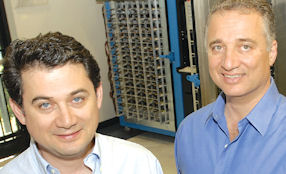
The two were set to face off July 12 at STEC’s annual shareholder meeting, where Balch hoped to replace STEC founders Mark and Manouch Moshayedi, as well as Matthew Witte—a managing partner of Newport Beach-based private equity firm Marwit Investment Management LLC who has chaired STEC’s nominating and governance committee since 2009—with its own nominees.
The shareholder meeting, which was scheduled to be at the Irvine Marriott Hotel, has been postponed.
Balch has quietly signaled its approval of the sale to Western Digital. It said in a recent filing that it had hoped STEC “would have understood and addressed their business issues much earlier,” resulting in a higher valuation, but that it is still “encouraged by the news of the proposed merger.”
Balch was joined by dissident investor Potomac Capital Advisors of New York in pushing for major changes at STEC that included calling for a sale of the company and replacing the management team.
The dissidents have criticized STEC’s response to increased competition by going into new markets. Revenue has been dropping and losses mounting, with more than $100 million in red ink last year.
Solid State
STEC makes solid-state drives, which use chips instead of spinning disks to store data. Its technology, engineers and product designers were coveted by Western Digital as it seeks to make in-roads in the higher-margin enterprise market; that segment is comprised of big original equipment makers such as IBM and HP, as well as data-center builders such as EMC.
Western Digital for years has led the consumer storage market with its lines of hard disk drives that go into computers, external storage devices, corporate networks and consumer electronics.
It is the second-largest publicly traded company in Orange County, with $12.4 billion in annual sales, and the world’s largest disk drive maker in units sold and revenue.
STEC’s headquarters and adjoining property were not included in the deal. The Santa Ana location, which encompasses some 73,000 square feet, is leased through MDC Land Corp. and MDC Land LLC, holding companies owned by brothers Mark, Manouch and Mike Moshayedi.
STEC last year paid $21,000 and $36,000 per month on the leases, which expire in July 2017, according to regulatory filings.
The company has said the leases are “no less favorable” than what could be obtained from an unaffiliated third party.
Western Digital and Hitachi Global said that Mark Moshayedi, interim chief executive of the company, and former Chief Executive and Chairman Manouch Moshayedi will serve as consultants during the transition to Hitachi Global but have “no ongoing role with the company” once the deal is done.
Transition
Mark Moshayedi entered a technical services agreement that will pay him $250,000 over a six-month period. Manouch Moshayedi signed a consulting services agreement that will pay him $125,000 over a three-month period, according to regulatory filings.
Manouch Moshayedi resigned his chairmanship and top post in late 2011 amid insider trading accusations levied by the Securities and Exchange Commission. That investigation is pending.
STEC once had a big lead in what’s referred to as enterprise-grade solid-state drives, or flash drives, used in corporate data rooms.
In its heyday in 2009, STEC’s market value topped $1.5 billion, soaring more than 800% on its way to record sales of $354.1 million.
Its market value was about $317 million last week.
Its reliance on a small group of OEMs became its undoing as big competitors entered the fray and took market share.
Its top three customers in 2011—EMC, IBM and Hitachi—accounted for about 70.2%, or some $216.2 million, of its $308 million in sales.
Those customers accounted for no more than 45.7% of its $168.3 million in sales in 2012, or roughly $76.9 million. That amounts to a 65% drop in revenue from those companies in one year.
Direct Sales
That prompted STEC to initiate a direct sales program earlier this year in a bid to move beyond OEM customers and win business in the oil and gas, federal government, telecommunications, financial services, cloud and social media markets.
A date for a new shareholder meeting where investors will weigh in on the proposed sale has yet to be announced.
STEC’s board and management has approved the deal and recommended it to shareholders.
