

Landing the Sacramento Kings has the potential to nearly double business for Anaheim’s Honda Center.
The National Basketball Association team could generate $30 million or more in ticket sales per season in Anaheim, based on what the team now does in Sacramento and an initial novelty factor it would have.
That’s on par with the Anaheim Ducks hockey team, which now calls Honda Center home and generates an estimated $25 million in ticket revenue per season for the arena.
Including concerts and other events, Honda Center is estimated to do about $50 million a year in ticket and concession sales.
The Kings potentially could boost that to about $80 million, a 60% increase.
A decision about a Kings move from Sacramento to Anaheim is expected April 18. Last week, Anaheim’s City Council approved $75 million in bonds to fund a basketball team relocation, including some $25 million in renovations to Honda Center.
Private investment firms headed by Henry Samueli—cofounder of Irvine-based Broadcom Corp. and owner of the Ducks and the company that runs the city-owned Honda Center—are set to acquire the 10-year bonds.
Landing a basketball team has been a big goal of Anaheim and Samueli, who loves hockey but calls basketball his favorite sport.
Samueli bought the Ducks in 2005 for an estimated $75 million.
He and wife Susan also own Anaheim Arena Management LLC, which took over running Honda Center—formerly the Arrowhead Pond of Anaheim—in 2003.
Samueli now has a few weeks to hammer out a deal with Kings co-owners Joe and Gavin Maloof, bringing together some high-profile business personalities.
The brothers and Anaheim Arena Management officials aren’t talking about any potential move until a deal is finalized.
Basketball Design
Honda Center was designed for an NBA team.
Last week’s the NCAA Men’s West regional gave fans and the county’s corporate base a glimpse of basketball’s future here: a packed arena, sold out suites and an electric atmosphere like that of any big-time sports event.
When the Los Angeles Clippers called Honda Center their second home from 1994 to 1999, those 15 or so games a season often were sellouts.
Preseason games in Anaheim by the Los Angeles Lakers have been major draws.
The occasional visits by the Lakers, Clippers and NCAA teams have been boosted by the novelty status of basketball in an arena without its own team.
And there lies the Kings’ challenge: Can the team be a draw in a more competitive market that includes basketball powerhouse the Lakers and others?
Orange County fans are like others throughout Southern California—they like winners. That’s why the Los Angeles Angels of Anaheim rank high every year in attendance. The Ducks have garnered a loyal following after winning the Stanley Cup championship four years ago.
The Kings are another story. The team has more than twice as many losses as wins and is more than 30 games out of first place as the NBA regular season nears its end.
The team has the lowest average attendance in basketball.
How the Kings might fare here remains to be seen. Many expect a honeymoon of one or two seasons in which the team’s newness here would draw initial fans.
But the Kings could face a high bar after the flush of excitement surrounding their arrival fades.
Southern California poses challenges and opportunities for the Kings, according to Tom Shepard, a marketer who has worked with the Maloofs and other sports franchises.
“They’re going into a fertile market with high interest,” said Shepard, an adviser to 21 Sports & Entertainment Marketing Group Inc. in San Francisco.
Success will depend on hiring the right people to brand and market a competitive team with a focus on providing entertainment and value for fans, Shepard said.
Otherwise “you can have more problems than you do today,” he said.
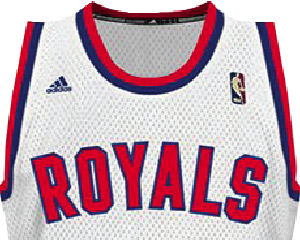
The Kings, which filed for rights to several names including the Anaheim Royals, would find themselves behind the Angels and Ducks in the local pecking order.
Regionally, they’d pale behind the Lakers and be eclipsed by even the perennially disappointing Clippers, which have generated new interest with young star Blake Griffin.
The Kings have rookie Tyreke Evans, a budding star who has fought injuries most of the season. Evans is nowhere near Griffin’s standing and gets even less help from Sacramento’s budget roster.
Attracting a solid following in one of the most competitive entertainment markets in the country will be the ultimate test for the Maloofs and Samueli.
Economic Impact
Gauging the economic impact a move by the Kings might have on OC’s larger economy is tricky since NBA teams keep those figures under wraps.
A recent relocation provides some comparison.
When Hurricane Katrina forced the New Orleans Hornets to temporarily move into the Ford Center in Oklahoma City, Okla., for the 2005-06 and 2006-07 seasons, the team generated an economic impact of about $1 million per home game, according to city documents.
That came to roughly $45 million a year spent on everything from tickets and parking to meals at restaurants near the arena and hotel stays for players, media and visitors in town for games.
It turns out the Hornets did better financially in Oklahoma City than in their hometown.
“Those two years turned that franchise around,” said Roy Williams, president and chief executive of the Greater Oklahoma City Chamber. “They went from losing money to a profit.”
The franchise reverted to red ink in New Orleans and now is owned by the league.
Thunder
The stint in Oklahoma City set the stage for city officials there to lure the Seattle Super Sonics a year later.
The Sonics moved to Oklahoma in 2008 and changed their name to the Oklahoma City Thunder.
Business was helped by Thunder players, staff and front office personnel who bought homes in the area and live there year-round, Williams said.
Oklahoma City estimated the current economic impact at $60 million to $70 million per year.
That falls in line with industry revenue estimates for sports franchises in second- and third-tier markets.
Including television revenue, the Ducks are estimated to have generated about $85 million in revenue in 2010, according to Forbes.
A move by the Kings to Anaheim still faces a number of questions about a lease, NBA rules and the Maloof’s obligations in Sacramento.
The next few weeks should provide some clarity.
If the Kings petition for relocation, a small committee of owners will bring their consensus to the NBA and fellow owners, who each carry one vote for approval.
When the Sonics petitioned to move to Oklahoma City, only two owners voted against the plan: Portland Trailblazers’ billionaire Paul Allen, cofounder of Microsoft Corp., and Dallas Mavericks’ Mark Cuban, who “felt we were intruding in his market,” Williams said.
The owners ultimately approved the move and assessed a $30 million relocation fee from the franchise.
The Kings could face similar objections and a fee in a move to Anaheim.
Lakers owner Jerry Buss and Clippers owner Donald Sterling have yet to make any public comments on the matter.
Scheduling
Adding a basketball team to Honda Center will make scheduling tricky. Besides the Ducks, the arena is home to major concerts and smaller events.
Some could get crowded out in favor of basketball games, which overlap with the hockey season.
It should be manageable, said Dave Brooks, a senior writer at Venues Today, a Fountain Valley-based trade publication that tracks the entertainment and sports businesses.
“I don’t think there will necessarily be less concerts if the Kings come to Orange County,” he said.
He points to Staples Center in Los Angeles, which hosts four professional sports teams, the Lakers, Clippers, Los Angeles Kings hockey team and the WNBA’s Los Angeles Sparks.
Staples Center still maintains a top ranking among West Coast venues in ticket revenue for concerts and other events.
According to Venues Today, last year Staples Center had $40 million in gross ticket sales from 71 special events, everything from musical performances to rodeos, circus acts and Disney performances.
The 17,174-seat Honda Center was No. 2 on the West Coast. Depending on the event, the arena can seat as many as 19,000 people and generated $18.1 million in ticket sales for 39 concerts and other events.
That was down from $23 million and 51 events in 2009. The dip came amid a challenging year for the Honda Center and other venues as fewer performers hit the road.
“In 2010 we saw a lot less acts go on the road,” Brooks said. “We see acts making up for that in 2011.”
The Honda Center landed eight of Billboard magazine’s top 25 grossing concerts last year, including Bon Jovi, Aerosmith and Coldplay.
