

Newport Beach-based Griffin-American Healthcare REIT III Inc. has filed documents with the Securities and Exchange Commission outlining a plan to sell up to $1.3 billion of stock to raise funds to buy healthcare real estate.
The real estate investment trust was formed last month and aims to invest in “a diversified portfolio of real estate properties, focusing primarily on medical office buildings, hospitals, skilled nursing facilities, assisted living facilities and other healthcare-related facilities,” according to its filing.
The company’s SEC filing says it will offer 120 million shares at $10 a share in its primary offering. It’s also offering a little more than 10.5 million shares at $9.50 a share under a dividend reinvestment plan.
Griffin-American Healthcare REIT III is set to see net proceeds of just over $1 billion from the offering, according to its filing.
Executives of the company declined comment in the run-up leading to the offering.
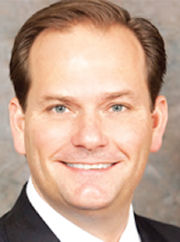
The non-traded REIT is headed up by Jeff Hanson, the former head of the investment management division of Santa Ana-based commercial real estate brokerage Grubb & Ellis Co., which now operates as Newmark Grubb Knight Frank.
Griffin Capital Corp. of Los Angeles and American Healthcare Investors LLC of Newport Beach are the REIT’s co-sponsors.
Griffin-American said in its filing that it believes the market for healthcare-related real estate will expand. It included figures from the U.S. Department of Health and Human Services, which projects national healthcare expenses will reach 19.8% of the national gross domestic product by 2020, up from 17.6% in 2010. It also projected that healthcare expenditures would reach $4.6 trillion by 2020, an increase of about 77% from $2.6 trillion in 2010.
The REIT is counting on increased demand for several reasons, including demographics.
“We believe that healthcare expenditures for the population over 65 years of age will also continue to rise as a disproportionate share of healthcare dollars is spent on older Americans since they require more treatment and management of chronic and acute health conditions,” Griffin-American said in its filing.
Construction Costs
The filing also noted that medical office space demand will grow due, in part, to the rising cost of hospital construction.
“With people visiting the doctor more frequently and hospitals scaling back on exportable patient care, we expect demand for medical office space to continue to rise,” it said, adding that it also expects more development of clinics, outpatient facilities and ambulatory surgery centers.
Griffin-American said its offering was a “blind pool” because it hasn’t yet identified any real estate that it will be buying with the net proceeds.
“As a result, you will not be able to evaluate the economic merits of our investments prior to their purchase. We may be unable to invest the net proceeds from this offering on acceptable terms to investors, or at all,” its filing said.
Griffin-American mentioned that it was not obligated at this point to have a strategy to cash out of its investments. It said it might not have one within its targeted time frame of five years after completing its offering.
“If we do not effect a liquidity event, you may have to hold your investment in shares of our common stock for an indefinite period of time,” the company said in its filing.
Grubb Ties
Griffin-American’s first REIT came about in November 2011 at a time when speculation was swirling over former parent Grubb & Ellis’ future.
Grubb & Ellis turned over management of Grubb & Ellis Healthcare REIT II Inc. to a pair of local companies, one of them led by Hanson and Danny Prosky, president of the REIT.
Griffin Capital, which has sponsored other non-traded real estate investment trusts, and American Healthcare Investors later renamed the operation Griffin-American Healthcare Trust Inc.
Other REIT
Griffin-American wasn’t the only healthcare offering that separated itself from the former Grubb. The other is Scottsdale, Ariz.-based Healthcare Trust of America Inc., which is run by former Grubb Chief Executive Scott Peters.
—Business Journal staff reporter Mark Mueller contributed to this story.
