

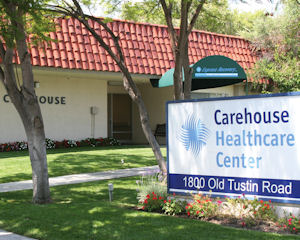
Publicly traded nursing home operators based in Orange County are beginning to weigh in on how a double-digit Medicare reimbursement cut will hit their businesses.
The cut went into effect Oct. 1 and is expected to average 11.1%.
Irvine-based Sun Healthcare Group Inc. recently lowered its financial guidance.
Sun had withdrawn its previous guidance in August to give it time to review the cuts. The outlook now: Sun expects earnings to come in between $21.7 million and $24.6 million for this year, compared with a previous range of $34.1 million to $38 million.
Analysts expect Sun’s full-year profit to be $27.5 million.
The nursing home company said it expects full-year revenue of $1.925 billion to $1.945 billion, compared with a previous expected range of $1.95 billion to $1.995 billion.
Wall Street projects Sun’s revenue to come in at $1.94 billion.
Sun said it has started what it calls “a broad-based mitigation initiative, which includes infrastructure cost reductions.”
The company didn’t specify what might take place in the initiative.

“Our analysis demonstrates that the rate reductions imposed by (Medicare’s) final rule have far exceeded the stated goal of parity with prior Medicare rates, and we remain concerned that these reductions may have serious consequences for our entire industry,” Sun Chief Executive William Mathies said.
Last month, Foothill Ranch-based Skilled Healthcare Group Inc. said it expected the cuts to reduce its 2011 revenue by about $45 million, or 5.5% of 2010’s total revenue of $820.2 million.
Skilled also said it expected full-year profit of $40 million to $41.9 million, down from an earlier forecast of $45.6 million to $49.4 million. Analysts now expect Skilled to make $41.5 million in 2011.
The company projects full-year revenue of $857 million to $877 million, compared to Wall Street’s expectations of $870.3 million.
Orange County’s third publicly traded nursing home chain, Mission Viejo-based Ensign Group Inc., did not revise its guidance in the wake of the reimbursement cuts. Analysts who follow Ensign have said the company would likely buy some distressed nursing homes after other operators go out of business.
In August, Ensign said it expected full-year profits of $46.7 million to $48.8 million, compared to analysts’ projection of $48.2 million.
Ensign said its 2011 revenue should come in at $755 million to $770 million. Analysts expect the nursing home chain to have full-year revenue of $767 million.
The Medicare cuts might be just a warm-up.
Nursing homes could see more reductions on reimbursements from the federal government come out of $320 billion in healthcare cuts proposed by President Obama last month. The cuts primarily target drug spending, but they didn’t overlook skilled nursing facilities altogether.
The White House told Bloomberg that nursing homes with high rates of patients who were readmitted after being discharged would have their Medicare payments cut by 3% starting in 2015.
FDA, Device Makers Pull Back
Medical device trade groups and the Food and Drug Administration appear to be toning down their rhetoric over device fees.
Late last month, Jeffrey Shuren, who heads the FDA’s device division, told attendees at a conference sponsored by Washington, D.C., trade group AdvaMed that it would take more money and time to fix delays in device reviews.
“Since 2004, we’ve seen worsening times, and much of the cause resides with the FDA,” Shuren said. He said a lack of resources had meant high staff turnover and low training in new technology and science, and that those problems would take years to fix.
Device makers and regulators have long argued over higher fees for medical device review applications. They’ve been negotiating on a new fee agreement that will be submitted to Congress by January.
Industry representatives and FDA officials have made progress on a user-fee deal, AdvaMed Chief Executive Stephen Ubl told Reuters.
Some in the industry contend that higher fees in the past haven’t sped up review times.
James Mazzo, president of Santa Ana-based Abbott Medical Optics Inc. and board chair of AdvaMed, recently said higher device fees weren’t enough and that the FDA should address deeper problems of inconsistent reviewer questions and unpredictable regulations.
“I’m not a big believer of throwing money or people at a problem,” Mazzo said. “You first need to identify the problem and then you address it correctly. That’s how successful businessmen run their companies.”
Other executives who heard Shuren’s speech said they were encouraged by the FDA’s apparent willingness to address their concerns.
“I view (higher fees) like an R&D investment, where you have a few years before you see results,” said Stephen MacMillan, chief executive of Kalamazoo, Mich.-based orthopedic device maker Stryker Corp.
User fees from devices and drugs provide about a third of the FDA’s budget.
