

Anduril Industries, whose valuation has soared as it challenged traditional defense firms, has come under scrutiny by three major national media outlets in the past two weeks—
and the company started by Palmer Luckey is pushing back.
The Wall Street Journal and Reuters recently published articles raising questions about Anduril’s products and procurement process—coverage that Anduril says only highlights a “tiny fraction” of test failures.
“The playbook is familiar: cherry-pick facts, elevate anomalies into cautionary tales, and assemble it all into a broader indictment of an entire company or category of companies,” Anduril wrote in a pre-emptive strike memo published online and dated Nov. 24—a few days ahead of the forthcoming critical articles.
“What is disappointing is that multiple journalists from different news outlets like Reuters and the Wall Street Journal have recently sought to write articles—suddenly and all at once—that seek to portray a small handful of alleged setbacks at government experimentation, testing, and integration events, minus any context, as somehow evidence of a broader shortcoming of our company and of defense technology companies more broadly,” Anduril wrote.
“The few incidents of ‘failure’ that news outlets suddenly want to write about are actually a tiny fraction of the thousands of times per year that our more than 200 test site engineers are straining our systems, breaking our hardware, and crashing our software at the six large test sites that we operate around the world.”
Anduril, co-founded by Luckey in 2017, has seen its valuation more than triple in the past two years to at least $30.5 billion. The firm has grown to 6,000 employees and is building a nearly $2 billion factory complex to manufacture weapons outside Columbus, Ohio.
Last week, it announced plans to open an office in Tokyo, headed by former Raytheon executive Patrick Hollen.
Anduril is constantly announcing production of an increasing array of AI-guided products, ranging from underwater drones to a fighter-like attack aircraft dubbed Fury, as well as testing on NATO’s Eastern flank to deter Russian aggression. The privately held company has won several military contracts, including a potentially $22 billion agreement to develop high-tech battlefield headsets for the U.S. Army.
An IPO is in the offing.
It aims to challenge gargantuan defense contractors such as Boeing and Lockheed Martin for Pentagon work.
Anduril’s nearly 2,000-word memo hinted that large unnamed defense contractors may be behind the slew of negative stories. It said reporting contains “many of the same factual errors, almost as if they stem from common sourcing.”
“These and other articles seek to present a few narrow snapshots, stripped of all context and clearly sourced by the very competitors of the companies they seek to criticize, as evidence that new defense technology companies cannot deliver,” Anduril said.
The Media Criticism
The Wall Street Journal, in a Nov. 27 article written by four reporters, said a mechanical issue damaged the engine in Anduril’s unmanned jet fighter Fury in a ground test over the summer ahead of a critical first flight for the Air Force and a test involving its Anvil counter-drone system caused a 22-acre fire in Oregon in August.
Citing Navy documents, the Journal said failures by Anduril drone boats during testing off the California coast “alarmed Navy personnel, who said in a routine follow-up report that company representatives had misguided the military.”
A day later, Reuters published an article by seven reporters detailing failures of two Altius drones and setbacks for its Ghost drone program.
The setbacks “highlight a gap between the U.S. company’s claims of battlefield readiness and the performance of some of its drones in testing and combat, according to interviews with more than a dozen people, including former Anduril staff, military officials, and people working with drones on the Ukrainian battlefield,” Reuters said in an article that it labeled as an “exclusive.”
‘We Do Fail’
While hitting back against the critical stories, Anduril also acknowledged setbacks.
“We recognize that our highly iterative model of technology development—moving fast, testing constantly, failing often, refining our work, and doing it all over again—can make the job of our critics easier,” the company said on its website. “That is a risk we accept. We do fail… a lot.”
At the same time, the company has continued to receive numerous new military contracts and forge various partnerships.
“Going faster and changing quickly necessarily means that we will not always get it right the first time we try something new or test something differently. We will stumble. We will learn. And then we will try again,” the company said.
Anduril said it intends to share more information about its products.
“The narrative attacks we’ve described are largely unfounded—but they’ve made clear that we need to be more transparent about how this process actually works. That means sharing more about our testing cycles, our failure rates, our resolution timelines, and what distinguishes productive iteration from institutional dysfunction,” the company said.
The Times, an AI Czar and Anduril
Anduril Industries also found itself on the periphery of a major New York Times investigation of David Sacks, the artificial intelligence czar in the Donald Trump Administration.
The article, under the headline, “Silicon Valley’s Man in the White House Is Benefiting Himself and His Friends,” said Sacks has invested in Anduril.
The article noted that Sacks in July hosted a major forum that unveiled an “A.I. Action Plan.”
“In September, Anduril announced a $159 million contract with the U.S. Army to build a new type of night vision goggles with A.I.,” said the Nov. 30 article that was written by five reporters.
Before the article was published, Sacks’ legal firm, Clare Locke, which specializes in defamation lawsuits, sent a letter on Nov. 24 to the Times’ deputy general counsel.
The Times threw “its last Hail Mary” by suggesting “that a $159 million contract between defense contractor Anduril Industries and the U.S. Army to work on night vision and mixed reality technology must be the result of Mr. Sacks’ influence,” the letter said.
“Their evidence? The fact that the contract was announced a month after the release of the AI Action Plan. It is hardly necessary to explain how ludicrous this allegation is. The Pentagon was already working with Anduril when the AI Action Plan was released, and Mr. Sacks has no involvement in military procurement.
“The Times has produced no evidence to the contrary. Its attempt to link these issues based purely on the timing of unrelated announcements is deceptive.”
In a post on the X platform, Sacks fired back at the Times’ article, accusing the publication of being a “hoax factory.”
For its part, a Times spokesman issued a statement saying it “remains confident” in the article and its reporters “do not have an agenda.”
—Peter J. Brennan
A 1,900-Word Defense
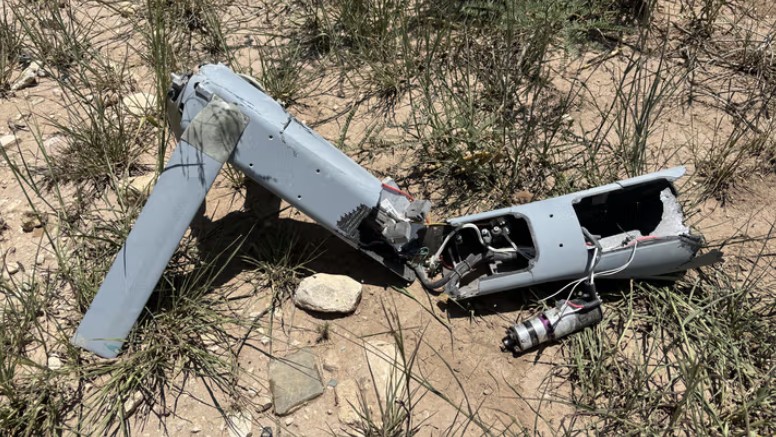
Under the headline, “How Defense Technology Actually Gets Built,” Anduril posted a 1,900-word rebuttal that appeared on Nov. 24, days before the Wall Street Journal and Reuters published critical articles. The website post included a photo of a damaged weapons-related part.
What follows are some of its comments:
————————————————
“It is not surprising that Anduril, as a leading new defense technology company, is subject to increasing scrutiny. We welcome that scrutiny.”
————————————————
“What’s more interesting, this soon-to-be-published reporting largely relies on the same isolated incidents and even contains many of the same factual errors, almost as if they stem from common sourcing.”
————————————————
“Experiences like this tell the opposite story to us — not that Anduril is failing, but that we are going in the right direction and changing the industry in positive ways that unnerve proponents of the status quo.”
————————————————
“Over the past three years, we have delivered hundreds of Altius systems to Ukrainian units, often ahead of schedule, and those operators have used them to strike a meaningful number of high-value targets despite the degraded environment.”
————————————————
“Some observers have pointed to moments of failure as proof that these systems cannot succeed in Ukraine. That view misses the larger reality. The environment forces constant adaptation from every participant. Conditions shift weekly. What worked last season may not work today.”
—Kevin Costelloe
