

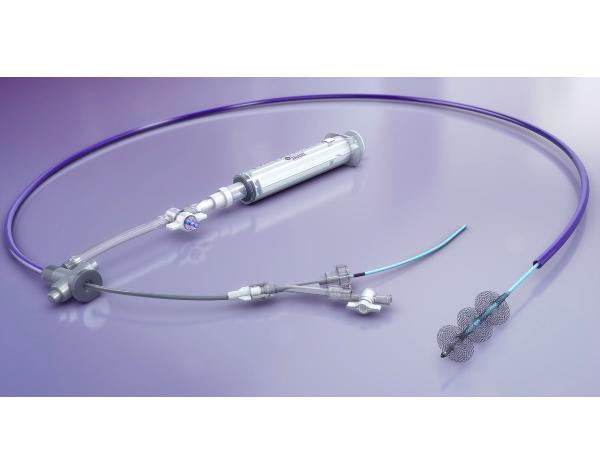
The Irvine-based company’s FlowTriever device is used to treat pulmonary embolism, which is caused by a blood clot or series of clots that travel to the lungs and strain the heart. The condition can lead to heart failure and death in a matter of minutes.
Despite the life-threatening nature of the condition, “recent data has shown that even in the most sophisticated academic programs with established PE Response Teams (PERT), as many as three quarters of intermediate-high risk PE patients are still slipping through the cracks and not benefiting from PERT activation,” Bill Hoffman, chief executive of Inari, said in a statement.
Inari, which went public last May, had a breakout year and generated $139.7 million in full-year 2020 revenue. The company (Nasdaq: NARI) said it expects sales to jump more than 60% between $225 million and $235 million in 2021. Shares in the company are up fivefold from the IPO, giving it a market cap in excess of $5 billion.
Tech, Data Leverage
“We believe that artificial intelligence offers a promising new tool to prevent this from happening, and to ensure that all intermediate-high risk PE patients are identified and assessed for optimal treatment as quickly possible,” he said.
Aidoc said its PE suite and response teams can cut the time from a medical scan to diagnosis from hours to under five minutes, significantly improving detection, treatment and, ultimately, patient outcomes.
Inari’s FlowTriever is becoming a “frontline treatment option” for intermediate and high-risk PE, said Jonathan Paul, who previously led a pilot of Aidoc’s PE suite at the University of Chicago Medical Center.
Thirty-day data from Inari’s “Flash” registry, which included 230 patients with intermediate and high-risk PE treated with its FlowTriever device, showed only one death after 30 days.
By contrast, the PERT Consortium Quality Database recently reported 30-day mortality rates for intermediate- and high-risk PE patients of 6.1% and 25.9%.
“We view this data as positive and supportive of our belief that real-world clinical data will play a critical role in adoption of NARI products as the company has the ability to close knowledge gaps and drive increasing penetration,” said an SVB Leerink report.
Furthermore, “eventual one-year follow-up data [is] likely to make a very strong
High Expectations
Though Inari said it experienced COVID headwinds in its fourth quarter, it noted several strengths of its business including simple procedures that require limited hospital resources and no ICU stay.
The company appeared “relatively insulated” to COVID given the urgent nature of the disease states it treats, “which gives us confidence in the company’s ability to deliver another strong quarter of sales outperformance of over 10%,” SVB Leerink said in a preview report last week.
Inari provided guidance of between $54 million to $56 million in first-quarter revenue, while analysts expect $55 million on average.
