

The next wave of alternative-fuel vehicles zipping around Orange County are hydrogen-powered cars, and an Irvine-based upstart with a growing list of investors, FirstElement Fuel Inc., is ready to lead the pack.
The company, which develops and builds hydrogen fueling stations, will receive a preferred equity investment estimated at several million dollars from French industrial gas company Air Liquide S.A., which also announced plans two weeks ago to build a liquid hydrogen plant valued at more than $150 million to supply FirstElement’s fuel cell stations.
FirstElement co-founder and Chief Development Officer Shane Stephens said the industry has had many detractors—Tesla Motors Chief Executive Elon Musk has called them “fool cells”—but believes Air Liquide’s investment is a sign the technology is gaining consumer interest.
“It’s taken a little while for people to recognize how real this market is, [and] I think Air Liquide really stepped up when it came to making this kind of leap in the amount of investment for this market,” Stephens said.
The technology has already attracted a small batch of area car drivers.
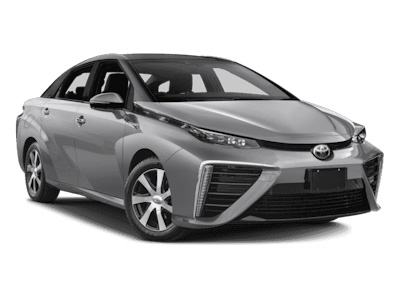
On a recent Wednesday afternoon, half a dozen Toyota Mirai—Japanese for “future”—hydrogen-powered fuel-cell vehicles arrived within 10 minutes to top off at the University of California-Irvine’s single-pump hydrogen fueling station on Jamboree Road. It’s one of the few stations of its type in the immediate area.
The new liquid hydrogen plant’s location has yet to be disclosed, but Stephens said it would be in the western United States, primarily serving California’s hydrogen fuel cell vehicle market.
Construction is scheduled to take place early next year. The plant will have enough capacity to service 35,000 fuel cell electric vehicles.
Fuel cell cars use hydrogen gas to power an electric motor—offering a range of about 300 miles on a full tank—and depending on how the hydrogen is produced, emit zero greenhouse gases. Just heat and water instead.
It’s often compared to electric plug-in vehicles, like Tesla, but a key difference is that fuel cell cars need only about six minutes to completely refuel as opposed to hours of charging in the case of Teslas. Roughly 78% of automotive executives surveyed last year by KPMG said they believe fuel cell vehicles will be “the real breakthrough of electric mobility,” mainly because of its short refuel time.
UCI professor and director of the school’s advanced power and energy program Scott Samuelsen said the market has reacted positively to fuel cell vehicles, thanks to their acceleration, quiet engine and comfortable ride, but that a lack of infrastructure has slowed consumer adoption.
“There was a road map to have by 2015 68 [hydrogen] stations throughout California to enable the market, and the state wasn’t able to reach that goal,” Samuelsen said. “So when manufacturers began to retail their vehicles in 2015, they were kind of stuck with that reality. Even today, we don’t yet have 40 stations.”
Full Tank
FirstElement was founded in 2013 by Stephens, Chief Executive Joel Ewanick and Chief Operations Officer and Principal Tim Brown. It has 20 employees.
Stephens and Brown met at UCI, where they were researchers, authoring work on hydrogen infrastructure and fuel cells and testing prototype fuel cell cars from automakers such as Honda Motor Co., Toyota Motor North America Inc. and Fountain Valley-based Hyundai Motor America at UCI’s National Fuel Cell Research Center. They then met Ewanick, previously vice president and global chief marketing officer at General Motors.
“We were seeing firsthand how ready the technology was and how bullish car companies were in bringing these cars to the market,” Stephens said. “There was no business entity really taking the initiative to build the hydrogen fueling network. Around that time we met Joel, [and] he really helped us round out a business model for starting a company.”
FirstElement received at least $7.3 million in financing from Toyota and $13.8 million from American Honda Motor Co. in 2014. It was able to leverage the funds with a $27.6 million state grant received the same year to build a network of hydrogen fueling stations in California at existing gas stations.
Since opening its first station in January 2016, FirstElement has completed more than 230,000 fills across its 19 stations, including three in OC, which it markets under the True Zero brand.
A dozen more stations are under development.
Operating costs for a hydrogen fueling station are estimated at $1 million to $1.5 million, according to Samuelsen.
Stephens said revenue is similar to a gasoline model, with sales earned from the margin on its retail hydrogen after purchasing it from a supplier, currently Allentown, Penn.-based gas company Air Products and Chemicals Inc.
A full tank of hydrogen for a Toyota Mirai costs about $65 at UCI’s fueling station—one driver said it typically costs him about 35% more than what he would spend on a gasoline-fueled car.
Stephens said its long-term deal with Air Liquide will allow the company to scale and reduce costs over time, savings he said it can eventually pass off to customers. He added that the $150 million facility will be able to serve its needs until about 2024.
“A lot of hydrogen is produced in the U.S.—it’s used for petroleum refining, making ammonia. It’s used in the electronics industry,” he said. “We’ve been able to take advantage of what we call excess capacity from all that industry, but over the horizon, in the next two or three years, we’re going to tap out that excess capacity.”
Its supply from Air Products, which has a plant in Carson, is from the excess capacity.
Sure Thing
As of Dec. 1, the number of fuel cell vehicles sold and leased in California since 2015, when the cars became commercially available, stood at 5,658, with Toyota Motor North America making up nearly 80% of sales.
Setting up a fueling network with a steady supply will be key for FirstElement and automakers in convincing potential buyers to make the switch to fuel cell vehicles.
This past summer, drivers experienced a hydrogen shortage in California, which currently has 35 pumping stations, some stand-alone and others at existing gas stations.
Signs posted at the pumps warned, “Don’t take chances, top off frequently,” according to a photo posted on Twitter.
Lines at stations were reminiscent of the backups at gas stations during the oil crisis of the 1970s, Mirai drivers said.
At the time, Air Products said in a statement that the shortage was “caused by a contemporaneous series of unrelated issues” at several hydrogen production and supply sites.
Stephens said that because the fuel cell vehicles market is still in its infancy, customers running out of hydrogen at a station has a ripple effect that gives the industry a “black eye.”
Golden State Focus
Automakers Toyota, Honda and Hyundai—the only three to offer fuel cell vehicles in the U.S., with sales only in California—continue to drive forward with investment in the technology.
Hyundai unveiled fuel cell SUV model Nexo this year. At about $61,000, it’s reportedly the world’s first dedicated hydrogen-powered SUV and boasts 40% more range than Tesla’s Model X. Sales are scheduled to start late this year.
Meanwhile, Toyota said last month that it hopes to increase its annual Mirai production from 3,000 units a year to 30,000 a year by 2020. Market research firm Information Trends said that at least eight other automakers, including BMW and Mercedes-Benz, will also introduce hydrogen-powered vehicles by 2021.
To meet the growing demand, the state has established a goal to have a 100-station network to support the full commercialization of fuel cell vehicles, backed by a $200 million investment. By 2030, it plans to have 1,000 stations supporting a million fuel cell electric vehicles.
Samuelsen of UCI said he believes state resources will no longer be needed in five years as private investment takes over, citing Shell’s move to add hydrogen fueling stations to its network in California.
“Five years ago, the energy companies were hesitant to jump into the hydrogen dispensing infrastructure, and the automobile companies were investing billions of dollars in the automobile and didn’t particularly have an appetite for jumping into the infrastructure,” he said.
“FirstElement has been quite a substantial catalyst in transitioning this future from some hesitancy for key parties—kind of reminds me of the early computer industry where the early [desk] PCs were by startup companies, then IBM suddenly found that it’s real and decided to go in and buy them out.”
