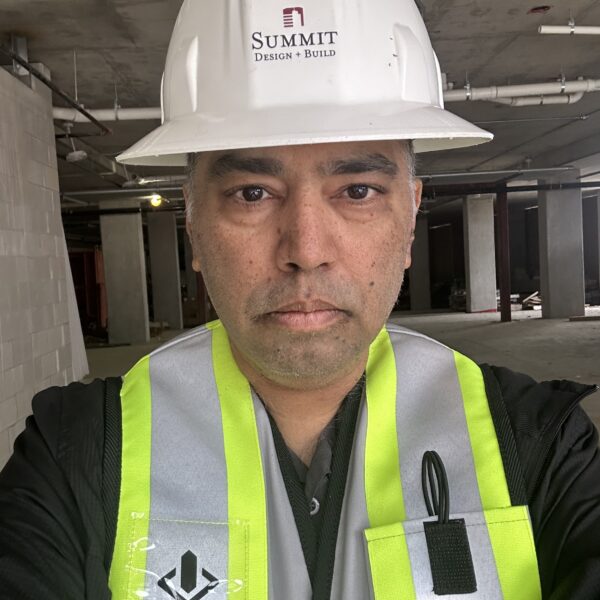

Vinnie Curcie says Orange County’s solar panel industry is swamped until Dec. 31.
The owner of OC Solar predicts that the following six months will be a challenging time for the industry as tax credits expire.
“This is our biggest quarter ever,” Curcie told the Business Journal. “The majority of solar companies are going to have a terrible 2026.
“They call it the solar coaster. It violently goes up and down. The biggest manufacturers go out of the business all the time.”
OC Solar is gaining recognition in Orange County, such as being an official sponsor at the Honda Center in Anaheim. The Irvine Co., OC’s largest real estate company, is so pleased with its tenant that the landlord features OC Solar as an example of its Flex+ program, which enables quick expansion of floor space.
Curcie estimates that sales at his 100-employee company will more than double from $24 million in 2024 to $65 million this year. Despite pessimism for next year’s first half, Curcie is optimistic about the long term.
“In Southern California, we have the most expensive utility prices combined with the most amount of solar. That is what makes Southern California the mecca for solar.”
Golf to Solar
Curcie, who grew up in Villa Park, wanted to be a professional golfer and pursued a career on the links after graduating high school. After the golf career didn’t pan out, he worked with one of his family members in the construction business; his grandfather was a general contractor.
In 2011, he joined a solar company where he became a sales manager, learning the intricate details of the industry. He founded Solar 360, a joint venture, in 2013. He left the partnership in 2016 to start OC Solar, where he is the only owner.
“I wanted to start a company with good service and deliver on promises,” Curcie said.
He said the industry is affected by numerous outside forces, including slim margins, high interest rates, tax incentives, regulations imposed by homeowner associations and government entities and tariffs on Chinese imports, which supply the majority of solar panels.
“There is so much impact from outside forces. It makes it incredibly difficult to do solar,” Curcie said.
“You end up with two installers – Sunrun (the nation’s biggest solar panel installer) and Chuck in the back of a truck with three guys.”
To make it worse, the salespeople who sign up the clients are often outside contractors who don’t work at the same company as the installers, creating problems for what is promised and what is delivered, he said.
“Solar installation and construction have a bad reputation, which are well deserved,” Curcie said.
OC Solar’s edge in the industry is its reputation, he said.
“Transparency is huge at OC Solar. We try really hard to be a contractor that is ethical and gets things done.
“Our reputation ends up being the linch pin in the whole thing. Come and kick our front door if you have problems. We’re top rated in every review.”
The Tesla Edge
The company buys most of its solar panels from QCells, which was founded in Germany and is now a unit of South Korea’s Hanwha Group; its North American division is based in Irvine. In 2019, QCells opened the U.S.’s largest solar panel manufacturer with a 300,000-square-foot plant in Georgia to make 12,000 solar panels a day; it says it has 34% market share in the U.S.
OC Solar uses Tesla’s Powerwall batteries, which he said are the industry’s best “by a lot.”
Curcie is one of 12 installers on the Tesla Pro Council, which meets quarterly with Tesla executives.
In 2018, Tesla introduced roof tiles that double as solar panels. After some hiccups, Tesla is now on Version 3, which is more targeted to certain roofs, he said.
“It looks incredible. It’s by far the best roof and solar system on the market.”
However, since most residential customers already have roofs, Tesla solar panels/tiles account for only about 10% of its business.
OC Solar installs about 150 to 200 solar systems per month, which is triple the rate of a year ago.
“It’s been a crazy last 12 months,” he said.
OC Solar began at Irvine’s Venture Park, occupying approximately 4,000 square feet with no warehouse, with 50% of its team in the office and the other half in the field.
Curcie then moved into a 7,000-square-foot space at Innovation Park, where OC Solar secured a three-year lease. OC Solar signed a new lease agreement for three more years at Innovation Park, this time for 10,000 square feet and building signage. Its website lists eight offices in Southern California as well as a warehouse in Irvine.
The company does not carry any debt or have venture capital, he said.
The Dec. 31 Rush
Curcie, who works with brother Ashton Curcie, chief operating officer, said OC Solar already has a presence in the greater Los Angeles and San Diego areas, and he’s looking to add territories in California’s Central Valley.
That planned growth might be tempered, at least in the near future, due to fewer solar tax credits being offered.
The Big Beautiful Bill, enacted in July, eliminates a 30% rebate for solar panels for homeowners as of Dec. 31. On a $30,000 installation, that meant $10,000 in savings for a homeowner. The result is a rush to complete installations by year’s end, Curcie said.
“The Dec. 31 deadline is causing extreme anxiety for the consumer,” Curcie said. “These construction projects can take from three to six months to install. If they are not installed and operational by Dec. 31, the cost is 30% higher.”
While the direct incentive has gone away, Curcie is seeing a new method emerging using a corporate tax credit that expires at the end of 2027.
Companies are forming new finance vehicles that will own tax credits that they will pass through to consumers. For example, a system that cost $30,000 could get a $9,000 corporate tax credit. The entity would keep $1,000 of it and pass the other $8,000 to the consumer.
OC Solar only completes about five to seven commercial projects a year because California makes it extremely difficult due to high regulations and demands for union labor, he said.
Instead, he sees his company moving to provide residential customers with additional products for energy efficiency and air conditioning. He notes that while solar panels are replaced every 25 years, battery units last about 10 to 15 years.
“I’m pessimistic about January through June. It’s going to be a poor time for many companies,” he said. “You don’t have a pipeline after Jan. 1. A lot of companies won’t be in great situations.
“Solar is definitely going to survive. In June, when the weather gets hot and people start seeing their electric bills jump, people will start to get solar. The best companies will be fine.”
Editor’s note: This article was the last one written by Parimal M. Rohit before he passed away in October.